
“How long for you in the wilderness, son?”
Why it's great
One biblical word turns years of rejection into a spell in the wilderness.
Register
Informal
Use it yourself
How long for you in this city, man?
Chapter 22 of 27 · 2'58"
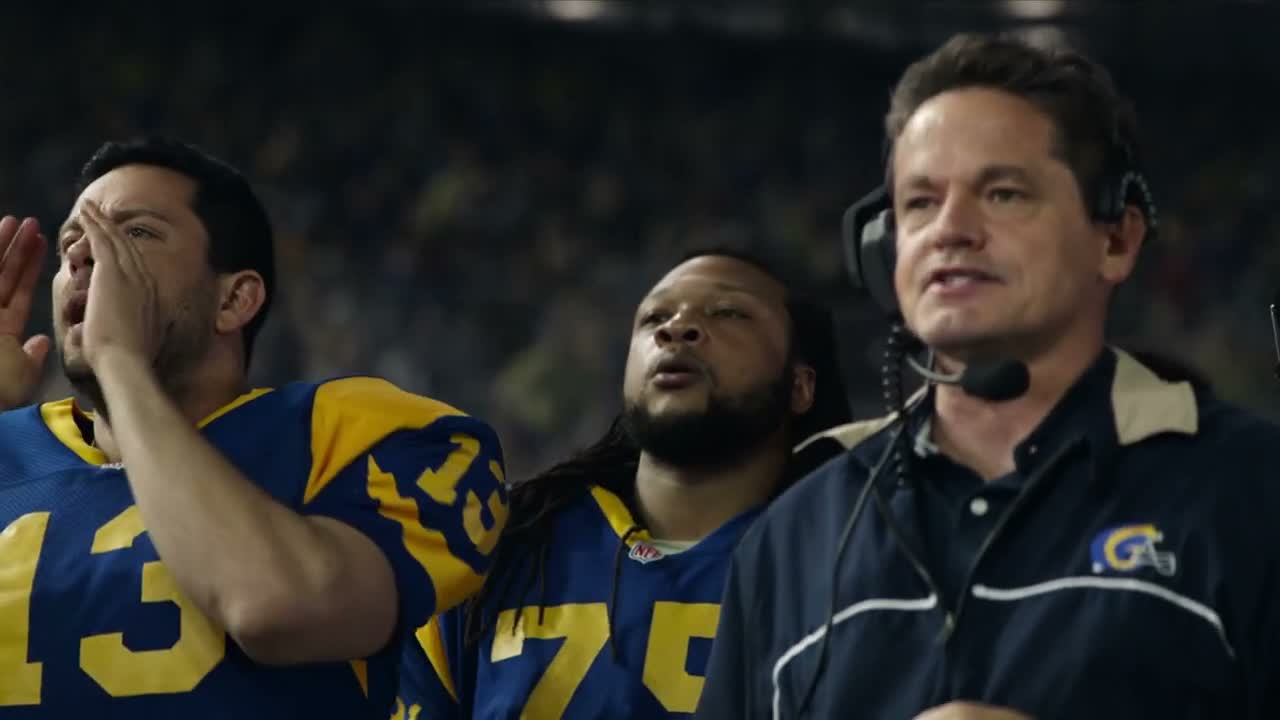
Kurt is ready to give up when Coach Vermeil calls him in, not to cut him but to offer him the team. Instead of a sales pitch, Vermeil tells his own story of burning out and being written off, then names the bond between them: "I see that in you, Kurt." The speech reframes years of rejection as preparation.
❝ Monologue · 12 lines Vermeil's Underdog Speech
On the phone, Kurt tells Brenda that the offensive coordinator hates him and he is getting no snaps. Then he is summoned upstairs to see Coach Vermeil, who does not talk tactics. Vermeil describes his own long exile from coaching and how it shaped him, says he sees the same quality in Kurt, and offers him a place on the Rams.
The scene delivers the film's title idea through the mouth of a coach who has lived it. Vermeil is not a motivational speaker; he starts by admitting weakness — "I burnt out. I'm not embarrassed to say it" — and recounts being called a retread and a has-been before he found his way back. That history is the argument: the years Kurt spent in the wilderness are not wasted time but the thing that "made me who I am." Vermeil then turns the mirror on Kurt with "I see that in you," and names destiny as belonging to the underdogs. The offer is not charity; it is recognition. Kurt's reaction — he has to tell his wife, and calls the signing the best decision the coach has ever made — shows how much the belief itself, not just the contract, has restored him.
A1–C2 is the CEFR scale. Cards above the level you pick fade, and playback will not auto-pause on them.
“How long for you in the wilderness, son?”
One biblical word turns years of rejection into a spell in the wilderness.
Informal
“I burnt out. I'm not embarrassed to say it.”
He names his own burnout without apology, which makes it land as strength.
Neutral
“Took a year off, turned out to be a decade and a half.”
The gap between one year and fifteen does all the work in one breath.
Informal
“All that same stuff that they're gonna say about you.”
He hands down the exact words that once wounded him, as a warning.
Neutral
I burnt out. I'm not embarrassed to say it. Took a year off, turned out to be a decade and a half. And when I did come back, they said I was a retread, has-been, too old. Game had passed me by, all that stuff. All that same stuff that they're gonna say about you. What they didn't know... was all that experience that I had in those years made me who I am. Made me ready for this moment. Gave me something others didn't have. And I see that in you, Kurt. Destiny. It belongs to the underdogs.
 Up next · 23in the driver's seatThe scene: Kurt Tells Vermeil This Is His Time
The offensive coordinator will not give him a chance, so he is not getting any snaps. He tells Brenda he does not think he will be around much longer.
It means a long stretch of being overlooked and without opportunity. Vermeil asks how long Kurt has been in the wilderness, meaning how long he has gone without a real shot.
To show that he understands rejection first-hand. He was called washed up and out of touch, and he argues those hard years were exactly what prepared him for this moment.
He sees the same resilience in Kurt that he developed during his own time away. As he puts it, those hard years gave him something the others do not have, and he senses it in the young quarterback.
Vermeil offers Kurt a place on the Rams. Kurt is stunned and grateful, promises the coach it is the best decision he has ever made, and rushes off to tell his wife.