00:00 / 04:25
00:00 / 04:25

Family Fights Over the Phone Bill, Explained

American Movie · 1999

Chapter 3 of 19 · 4'25"

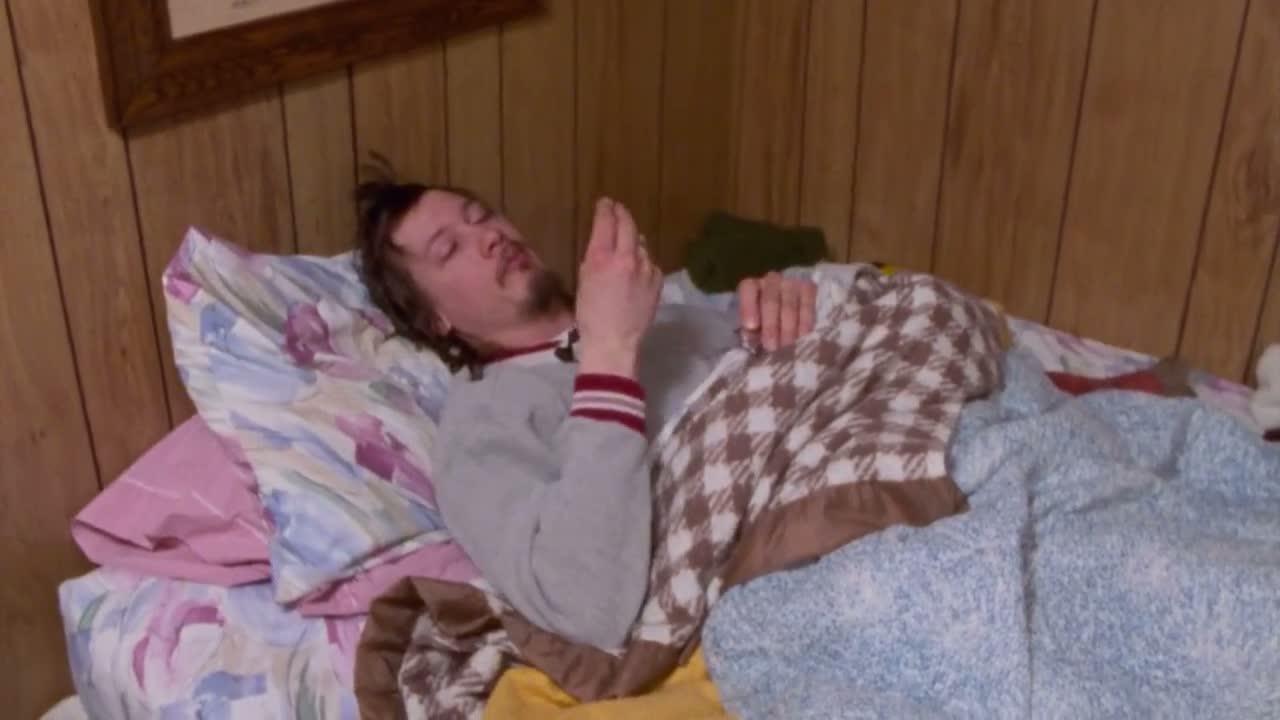
An enormous long-distance call to California turns a household bill into a shouting match. The complaint isn't really about money: "They're making a mockery out of my words." What starts as a fight over 186 minutes on prime time becomes a fight about being listened to and taken seriously.

ArgumentsPhone callsComplainingConfrontingB2mediumamerican

Key moments

Start here, then watch the full scene
  1. A Family Fight Over the Phone Bill

    0:02–0:46
    44s
  2. Mark on Why He Keeps His Dream Quiet

    1:47–2:15
    28s
  3. ❝ Monologue · 5 lines The money men

    It sizes up two men by how they handle money, setting up the whole negotiation.

    2:16–2:37
    21s
  1. ❝ MonologueThe money men5 linesPractice page ↗

Family Fights Over the Phone Bill, explained

What happens

At home, a 186-minute call to California at prime rates sets off an argument about the phone bill. A voice fires back that the brother has psychological problems, and then the talk turns to work: a cast meeting, a scramble to meet the deadline, and Mark grinding out the third draft of Northwestern at the airport.

What's really going on

The bill is the trigger, not the subject. The 186-minute call to California is really about a family that has been carrying the brother's troubles and now sees the cost in black and white. "Not on my phone bill, he doesn't" is the whole argument in one line: sympathy has a limit when it shows up as a charge. From there the film keeps cutting back to the work the anger is supposed to fund, the cast meeting and the deadline Mark and his crew have to "scrape together." What makes the scene land is the gap between the shouting at home and the patient, unglamorous labor of getting a movie made with no money.

Key lines & what they mean

“Who the hell in their right mind would tell the world, "I'm gonna do this"?”
Why announce a film before it exists? The line captures the fear that declaring the dream out loud invites everyone to laugh at it.
“You gotta be in this car. You have no other choice.”
Part encouragement, part self-discipline: by holing up at the airport he cuts off every distraction and forces himself to write.
“One's more primeval and one's more textbook.”
Two filmmakers, two instincts: one works on gut feeling, the other by the book, and the clash shapes how the production runs.
“Now we're gonna talk about high-level negotiations...”
A dry joke as he and Bill start haggling over money, dressing up a squeeze for cash as serious business.

Theme

  • Money — A phone bill becomes the family's scoreboard, turning a brother's crisis into a number someone has to pay.
  • Dreams — Mark keeps pushing the film forward, scraping together cast and crew and rewriting the script so it isn't embarrassing to show.

What this chapter teaches

Teaching points

Review right after watching
My level2/7

A1–C2 is the CEFR scale. Cards above the level you pick fade, and playback will not auto-pause on them.

American Movie: your progress

Chapter 3 of 19 · about 73 min to go

← Previous
Up next · 04ready to rollThe scene: Mark Runs Out of Money

Takeaways

What you walk away with
  1. The phone number is the argument; one fact beats a rant.
  2. High-level negotiations is deadpan for splitting petty cash.
  3. In their right mind quietly calls the whole dream insane.
  4. Scrape together admits the plan is held by string.

People also search

Questions, then the lines
Why is the family so angry about the phone bill?

It's a 186-minute call to California at prime rates, so it's wildly expensive. The fight isn't only about money, though: it's about someone running up a huge charge while the household is already stretched.

What does "take a wild guess" mean here?

It's a blunt way of telling someone to work it out themselves. In the argument it means the answer is obvious and the speaker is too annoyed to spell it out.

Who is Mark making the movie with?

His crew and friends, including Bill, who is traditionally very careful with money; Mark is the one said to be able to pry it loose from him when funds are needed.

Does the movie ever get finished?

The scene keeps pointing at the deadline and the third draft of Northwestern. Whether it lands is the running pressure of the whole documentary, and the shouting at home is part of what it costs.