00:00 / 04:53
00:00 / 04:53

Mark Records the Film's First Line, Explained

American Movie · 1999

Chapter 14 of 19 · 4'53"

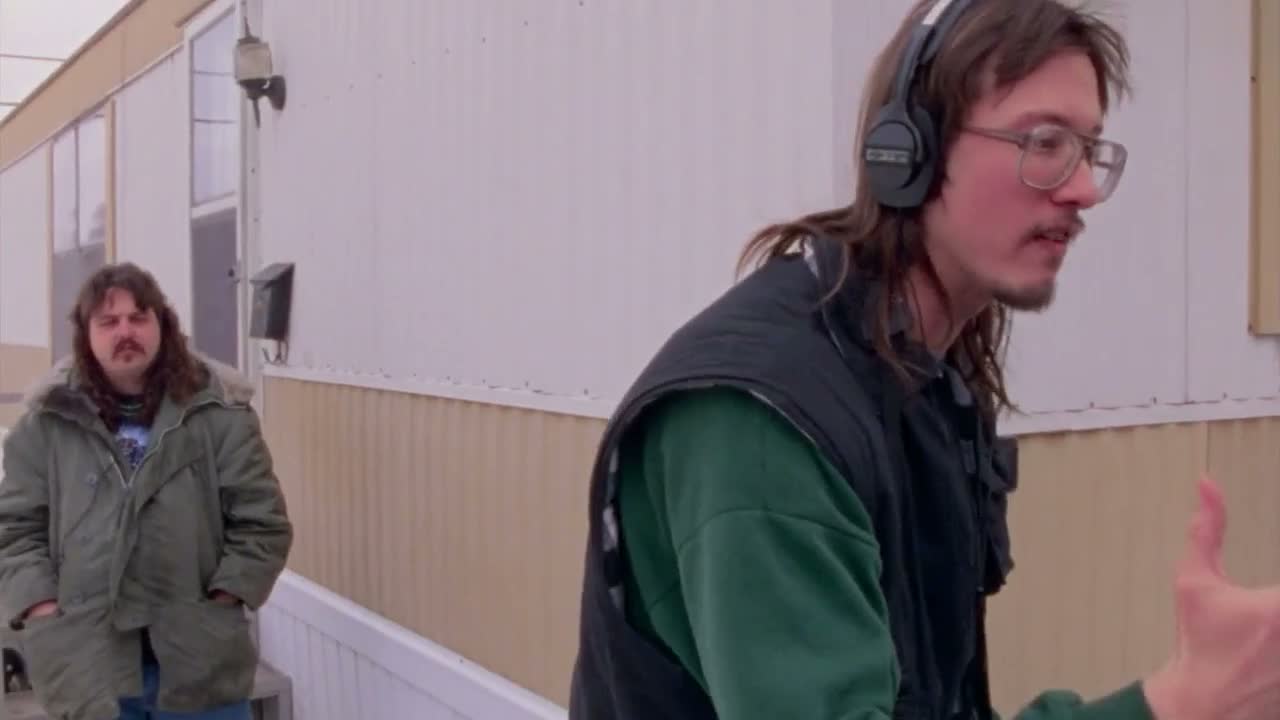
A road trip to record wild sound turns into an argument about whether anyone swore, and then into Mark coaching Bill through the first line of Coven. Bill keeps flubbing it, and Mark insists, "It's the first line of the film, man. It's gotta be on the money."

Small talkStorytellingExplainingComplainingB1slowamerican

Key moments

Start here, then watch the full scene
  1. ❝ Monologue · 13 lines Mark on His Parents' Fighting

    1:45–2:26
    41s
  1. ❝ MonologueOn his parents' marriage13 linesPractice page ↗

Mark Records the Film's First Line, explained

What happens

Mark drives out to a Wisconsin marsh to record ambient sound for Coven, but all he gets are trucks and no birds, so he gives up on the spot. Later, with Bill in the car, he tries to capture the movie's opening line and has to feed Bill the food and coaching he needs to say it right.

What's really going on

On the surface this is a funny sequence about bad location sound and a friend who keeps flubbing his one line. Underneath, it is Mark working out what he believes. Talking about his parents, who "never got along" and were "out of control," he turns his own childhood into a rule for the future: "If you give them a destiny, they've got something to look forward to." The movie's opening line, "It's all right. There's something to live for. Jesus told me so," matters so much because Mark needs it to be more than a line. He needs it to be true, which is why he will not settle for a flat reading and keeps pushing Bill until the words land, on the money.

Key lines & what they mean

“It's the first line of the film, man. It's gotta be on the money.”
Because it opens the movie, this line has to be delivered exactly right, so Mark will not accept a flat or rushed reading.
“"It's all right. There's something to live for. Jesus told me so."”
It is the film's opening line of dialogue, a promise that life is worth living even when it does not feel that way.
“If you give them a destiny, they've got something to look forward to.”
Mark's idea of parenting: give a child a goal and a future, and they have a reason to keep going.
“I wouldn't allow my kids to go through that shit, man.”
Having watched his parents fight, he vows his own children will not grow up in the same chaos.

Theme

  • Dreams — Mark treats the film's opening line as a reason to keep going, and wants to give others a destiny so they have something to look forward to.
  • Family conflict — He describes parents who never got along and were out of control, turning his own childhood into a warning about what he refuses to pass on.

What this chapter teaches

Teaching points

Review right after watching
My level3/8

A1–C2 is the CEFR scale. Cards above the level you pick fade, and playback will not auto-pause on them.

American Movie: your progress

Chapter 14 of 19 · about 21 min to go

← Previous
Up next · 15for the birdsThe scene: Mark Pushes Bill Through 31 Takes

Takeaways

What you walk away with
  1. Something to live for works as hope, not advice.
  2. On the money means exactly right, with no room for error.
  3. Look forward to takes a noun or an -ing, not a bare verb.
  4. Out of control describes people or situations past managing.

People also search

Questions, then the lines
Why does Mark want the first line to be perfect?

He calls it the first line of the film, so it has to be on the money: if the opening sounds flat, the whole movie starts wrong.

Why do they argue about whether someone swore?

One of them thinks he heard a curse word and does not want to be hearing things, while the other insists he never swears, so they keep going back and forth.

What does the line "There's something to live for" mean?

It is the movie's opening piece of dialogue, a statement that life is worth living, and Mark wants Bill to say it with real passion.

What does Mark say about his parents?

He says they never got along and were out of control when he was growing up, though he now calls them great parents.

Why does Mark talk about giving kids a destiny?

After describing his parents' fighting, he says he would not put his own kids through it, and that giving them a destiny gives them something to look forward to.