
“I wanna come out of all of this stuff.”
Why it's great
A plain confession that carries the whole weight of wanting out of his own life.
Register
Informal
Use it yourself
After ten years in this job, I wanna come out of all of this.
Chapter 11 of 19 · 4'55"
Thanksgiving dinner is all jokes and second helpings until Mark starts talking about himself. The others tease him about ripping off a Black Sabbath song, but under the banter is a man admitting he can't "face up to who I am." The holiday table becomes the one place he says it out loud.
❝ Monologue · 6 lines Mark Can't Face Who He Is
❝ Monologue · 6 lines writing his depression in
He turns a private low into raw material for a character, saying it without self-pity.
At the family house on Thanksgiving, everyone cooks, washes up, and pours drinks while Mark drifts between the holiday and his own head. He sits down to dinner, cracks jokes, then suddenly confesses that for years he has tried and failed to face up to who he is, and that he wants out of all of it.
The holiday setting makes the confession land harder. Mark is surrounded by family and friends doing ordinary things, laundry, a hot bath, a turkey dinner, and he still says, "I wanna come out of all of this stuff." Someone else puts a finer point on it: "don't most people want to be somewhere where they're not?" That line turns his private dissatisfaction into something universal. The argument over whether he ripped off a Black Sabbath song is the same anxiety in a smaller key: is any of this really his own? He tries to answer by pouring the feeling into work, "I'm taking my depression into Dawn's character," but the scene never lets him off the hook, which is what makes it feel honest.
A1–C2 is the CEFR scale. Cards above the level you pick fade, and playback will not auto-pause on them.
“I wanna come out of all of this stuff.”
A plain confession that carries the whole weight of wanting out of his own life.
Informal
“But then, don't most people want to be somewhere where they're not?”
A rhetorical question that turns one man's restlessness into something almost everyone shares.
Neutral
“You can't make up an idea by yourself.”
A blunt rebuttal that punctures the fantasy that any idea is entirely your own.
Neutral
“For years, I've been trying to face up to who I am and shit like that.”
One plain line sums up years of self-work: not a refusal to face himself, but a long failure to manage it.
Informal
For years, I've been trying to face up to who I am and shit like that. But I can't. I don't know why, man. It's like I know where I wanna be and what I wanna do, so I don't know. I wanna come out of all of this stuff. He wants to be somewhere where he's not. But then, don't most people want to be somewhere where they're not?
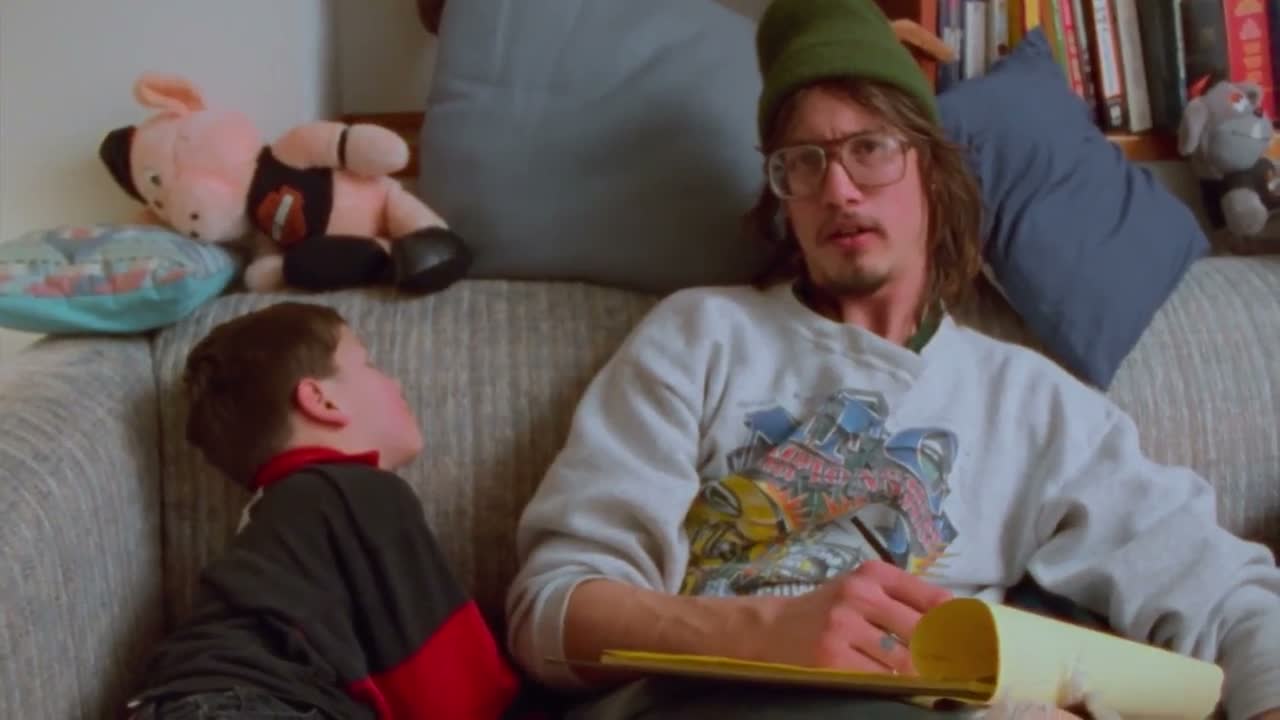
I've really been unhappy probably at least for a good week... and it just got worse. I decided to use it to my advantage... and just start working on Northwestern. It's gonna be a long, tough road writing this script... but I'm taking my depression into Dawn's character...
 Up next · 12let a day go byThe scene: Mark Watches His Old Footage
He hears the riff in Mark's song and calls it an exact copy, saying Mark only changed one word, while Mark insists all the words are his.
He feels stuck in the same place, the same jobs and his own head. Instead of just complaining, he decides to pour the feeling into Dawn's character and start writing Northwestern.
Not really. There is food and joking, but it becomes the place where Mark admits he has been unhappy for a week and cannot face who he is.
It is a literary phrase for people being cruel to each other; someone uses it half-jokingly while doing Bill's laundry.
He says he decided to use it to his advantage by pouring it into Dawn's character while he starts writing the script for Northwestern.