
“Jazz is the last refuge of the untalented.”
Why it's great
It insults a whole genre in one cool, quotable sentence.
Register
Informal
Use it yourself
Reality TV is the last refuge of the untalented.
Chapter 4 of 10 · 4'15"
Tony introduces the Hacienda as if buildings could change how people think, and the opening night is nearly empty. "The smaller the attendance, the bigger the history," he insists, comparing thirty people to the Last Supper. The scene makes self-belief into an art form.
Tony Walks Away From the Deals
❝ Monologue · 4 lines a rant about jazz
Four escalating put-downs turn a music snob into a punchline.
Thirty People and the Last Supper
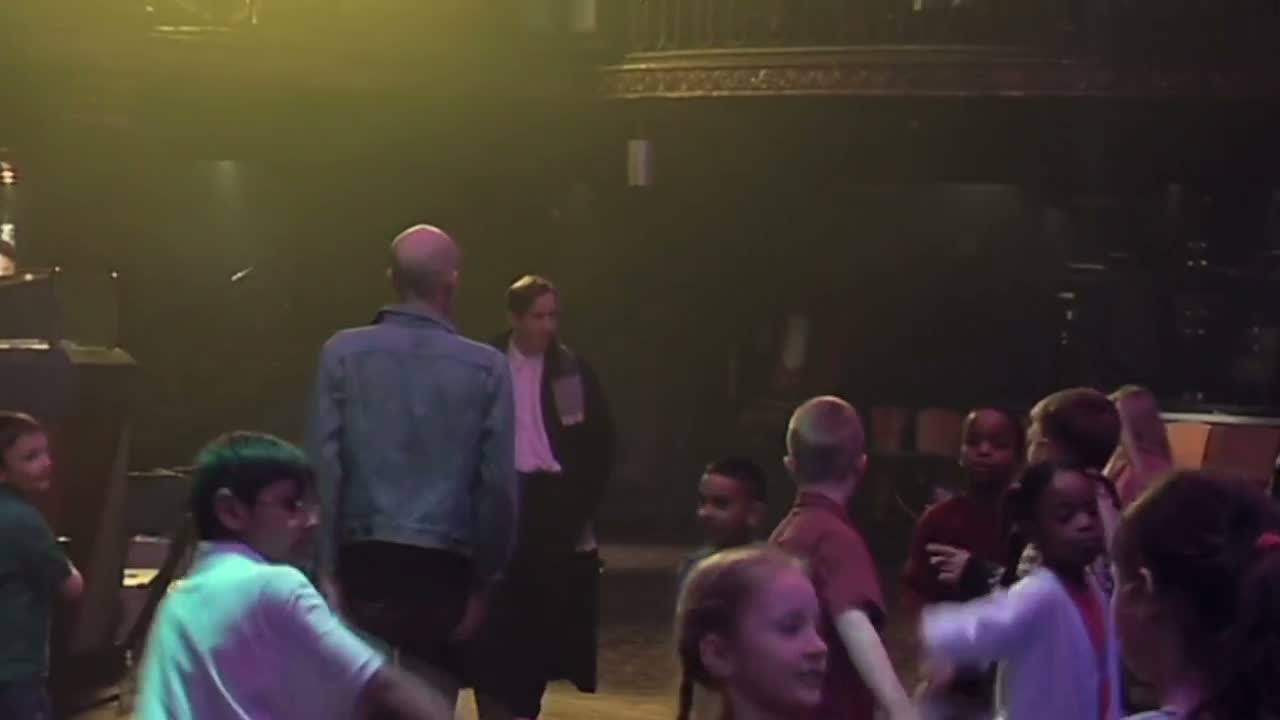
Tony shows off the new club, Fac 51, and talks about how buildings create synergy and change the way people think — the Victorians, he says, went to town when they built railways. Opening night draws only about thirty people, and one partner feels betrayed. Tony shrugs it off: the smaller the attendance, the bigger the history.
The scene is about belief as a business strategy. Tony's pitch for the Hacienda is pure romance — "Buildings create synergy" and "Buildings change the way people think" — and the film stages it against an opening night that is almost empty. Where a normal promoter would panic, Tony reframes the failure as destiny: "The smaller the attendance, the bigger the history." He backs it with a list of small beginnings — the Last Supper, Kitty Hawk, Archimedes in his bath — turning a thin crowd into proof of greatness. Later, the same confidence meets a journalist who tells him, "You take yourself too seriously," and Tony's answer is that he does, proudly. The scene's joke and its argument are the same: in Manchester, self-invention is the whole game.
A1–C2 is the CEFR scale. Cards above the level you pick fade, and playback will not auto-pause on them.
“Jazz is the last refuge of the untalented.”
It insults a whole genre in one cool, quotable sentence.
Informal
“The smaller the attendance, the bigger the history.”
It flips an empty room into a claim on legend.
Informal
“You know your problem? You take yourself too seriously.”
It deflates a proud man without raising its voice.
Informal
“They didn't hand out tickets for the Sermon on the Mount.”
It answers a logistics complaint with an unanswerable historical flex.
Informal
“Well, goodbye. We obviously have nothing in common.”
It ends a relationship politely and completely in one breath.
Informal
Jazz is the last refuge of the untalented. It's like theatre. It's what you do when you can't get a gig. It's one down from Celebrity Squares.
 Up next · 05out of shapeThe scene: Tony Films the Happy Mondays Video
It is his pitch for the Hacienda: a building is not just a venue but social engineering. He wants the club to stand for an idea, not only a night out.
Because it looks like a failure — only about thirty people — and Tony refuses to read it that way. He insists small beginnings are how history gets made.
It means a tiny turnout can matter more than a huge one, because it becomes the story people tell later. Tony uses it to spin an empty room into a legend.
She is annoyed by how grand he sounds about a silly zoo assignment. His reply — that he does take himself seriously — shows the self-belief that drives the rest of the film.
One partner feels betrayed by the club's poor start and walks away, but Tony keeps going, treating the setback as part of a larger story.