
“And he does not need three chairs. He's not three Englishmen!”
Por qué es buena
A joke about three chairs punctures the friends' over-polite fussing.
Registro
Informal
Úsala tú
Relax, she's not three queens!
Capítulo 6 de 19 · 4'20"
A routine sick visit turns into a colonial argument. Mahmoud Ali asks Fielding point-blank, "How is England justified in holding India?", and the Englishman's honest answer — he needs a job, he got in first — offends as much as it disarms.
Fielding Defends England
❝ Monólogo · 4 frases Aziz on his own home
He mocks his own shabby home with a grand phrase and shields his friends.
Aziz Shows His Wife's Photograph
Fielding visits Aziz at his home while Aziz is ill, and finds him surrounded by friends: Hamidullah, Mahmoud Ali, and Dr. Lal, whom Major Callendar has sent to check whether Aziz is malingering. The visit turns political, then intimate, as Aziz privately shows Fielding a photograph of his dead wife and confesses he loved her.
The scene stages the impossible courtesy the film keeps returning to. The Indian friends perform exaggerated respect — Fielding 'condescends' to visit — while Mahmoud Ali attacks the Englishman directly: "How is England justified in holding India?" Fielding refuses both flattery and evasion. He admits he is only here for a job and that 'I got in first,' which is exactly the inequality the question is about, and it disarms the room because it is honest. Later the politics falls away: Aziz shows Fielding his wife's picture and says, "You are the first Englishman she has ever come before." The intimacy is genuine, and it is built on the same unequal ground — a small, private gift offered to a man who arrives carrying all of England behind him.
A1–C2 es la escala MCER. Las tarjetas por encima del nivel elegido se atenúan y la reproducción no se pausa en ellas.
“And he does not need three chairs. He's not three Englishmen!”
A joke about three chairs punctures the friends' over-polite fussing.
Informal
“But how is England justified in holding India?”
One phrase, justified in, turns polite talk into a moral challenge.
Formal
“And I'm delighted to be here. That's my answer and that's my only excuse.”
He offers his enjoyment as the whole defence, honest and a little witty.
Informal
“I wish you weren't under him. But you are, and that's that.”
Wish plus that's that sums up regret and accepts what cannot change.
Neutral
“It is nothing. She was not a highly educated woman, or even beautiful.”
He lists what she was not, which makes his love sound plainer and truer.
literary
Here you see the celebrated hospitality of the East. Look... look at the mess. Look at the flies. - Look at the plaster coming off the wall. - Please. Here is my home, where you come to be insulted by my friends.
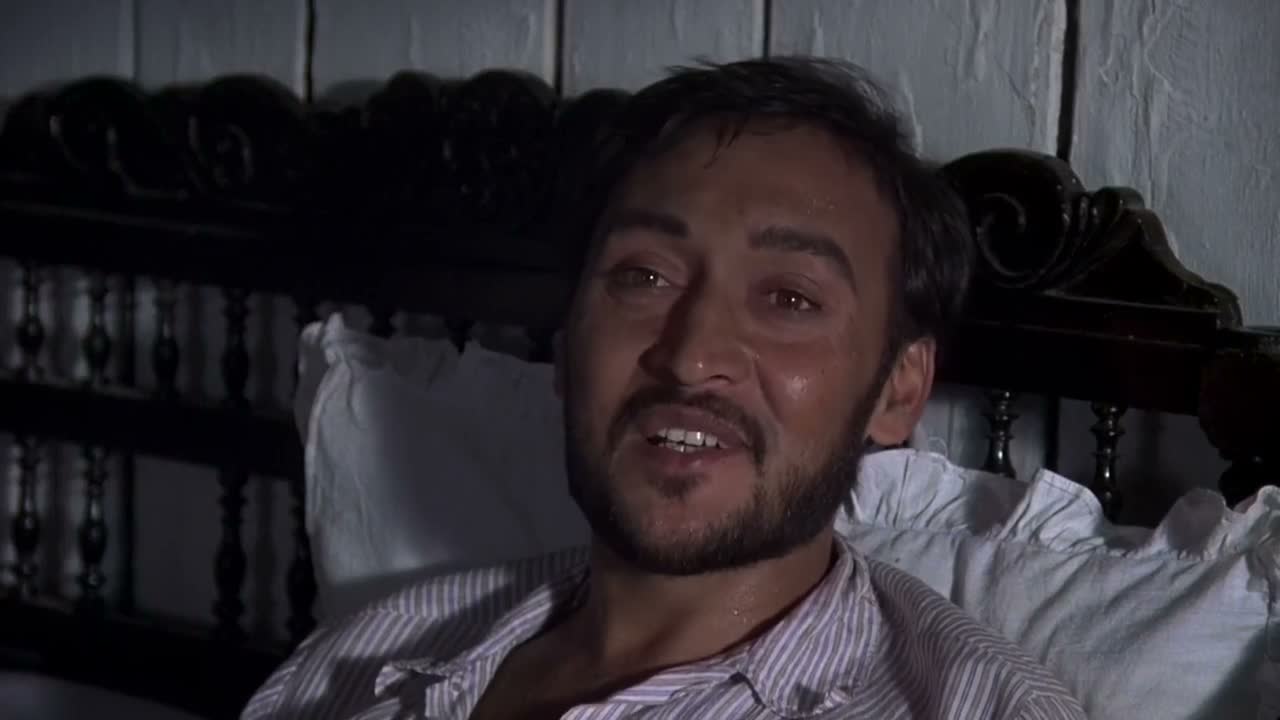 Siguiente · 07call it offLa escena: Aziz Shows Fielding His Dead Wife
Major Callendar sent him to check whether Aziz is really ill or only pretending, which is why Aziz calls him 'Major Callendar's spy.' The visit shows how little the English trust their Indian doctor.
He is admitting there is no noble justification for British rule: the English simply arrived and took the jobs before qualified Indians could. It is his honest answer to whether England belongs in India.
Ali is a nationalist who cannot resist challenging the Englishman in the room. His question is aimed at the empire, not at Fielding personally, which is why he first says 'nothing personal.'
It is a rare act of trust: Aziz's wife is kept in purdah, and Fielding is the first Englishman she has ever 'come before.' Showing the picture is Aziz's way of honoring the friendship.
He is honest and unsentimental with them, and he dislikes the colonial system, yet he also benefits from it. The scene keeps him somewhere between sympathy and privilege.