
“Why did you make such a charge if you were going to withdraw it?”
Por qué es buena
The if-clause frames the contradiction politely, puzzled rather than accusing.
Registro
Neutral
Úsala tú
Why promise to help if you were going to leave?
Capítulo 17 de 19 · 2'35"
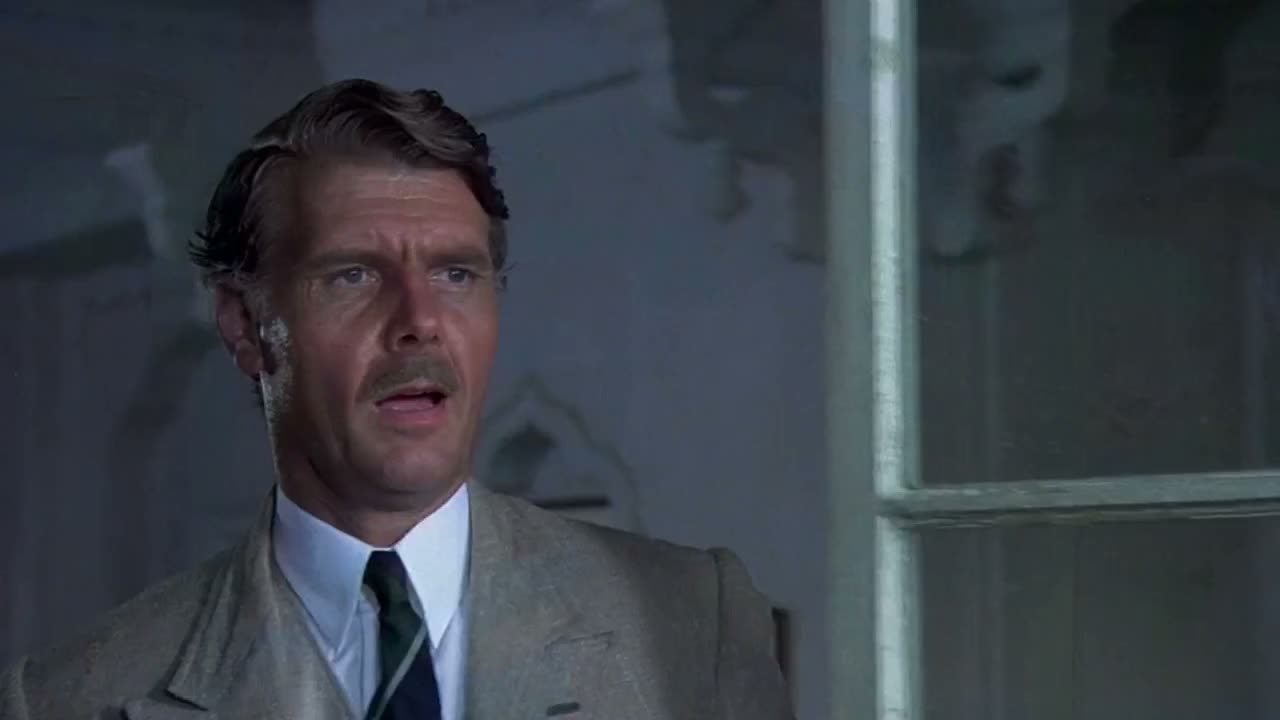
After the charges are dropped, someone asks Adela why she accused Dr Aziz if she meant to withdraw. She answers with "My echo's gone": the noise that has lived in her head since the cave has finally stopped. The talk drifts to ghosts, guilt, and what she can and cannot explain.
Adela Says Her Echo Is Gone
Adela Quested has withdrawn her charge against Dr Aziz, and now she faces the question everyone is asking: why did she make it at all? Sitting with Richard Fielding, she says the noise she calls her "echo" — present in her head since the Marabar Caves — has suddenly gone. They talk about Mrs Moore, ghosts, and the dead.
The awkwardness is that Adela cannot explain her own accusation. When someone asks, "Why did you make such a charge if you were going to withdraw it?", she has no defense — only the news that the noise in her head has stopped. She does not say Aziz is innocent; she says the thing that drove her has left her. Her companion offers a gentler theory: that McBryde's patient questioning took her back into the cave, step by logical step, until she broke down, and the breakdown itself purged the echo. It is an explanation that lets both of them avoid the harder question — whether the charge was ever real. The talk about ghosts and the dead is not idle; it is two people circling the fact that Adela may never know what happened in that cave.
A1–C2 es la escala MCER. Las tarjetas por encima del nivel elegido se atenúan y la reproducción no se pausa en ellas.
“Why did you make such a charge if you were going to withdraw it?”
The if-clause frames the contradiction politely, puzzled rather than accusing.
Neutral
“- I ought to feel grateful to you, I suppose. - I don't expect gratitude.”
He refuses the thanks before it is even given, modest without being warm.
Formal
“I call the noise in my head my echo. I've had it since the cave.”
Naming the inner noise an echo makes a private trauma suddenly visible.
Neutral
“I have a hunch that poor old McBryde exorcised you.”
Hunch plus exorcise turns an interrogation into a kind of healing ritual.
Informal
“No, I only meant that it's difficult, as we get older, not to believe that the dead live again.”
The double negative captures how age makes it hard not to hope the dead return.
literary
 Siguiente · 18extend an open invitationLa escena: Godbole Says Goodbye to Fielding
The film doesn't spell it out, but on the stand she realizes she cannot be sure of what happened in the cave. Rather than accuse a man she may have misjudged, she takes the accusation back, leaving both the court and Aziz without a clear answer.
It's her own word for the noise that has stayed in her head since the Marabar Caves — a kind of lingering disturbance, not a literal sound. When she says it's gone, she means the inner pressure that shaped her accusation has finally lifted.
Fielding leans toward Aziz's innocence and stays loyal to him, yet he treats Adela with patience rather than contempt. He suggests the trial itself shocked the echo out of her, an explanation that lets him stay kind to both sides.
Mrs Moore's talk of ghosts comes up, and the conversation turns to whether the dead return. For Adela, it mirrors the uncertainty she can't escape: she may never know what really happened in that cave, only what she felt.