
“I tell you, the kids will go for those like hotcakes.”
Why it's great
One food metaphor turns a plain sales guess into a confident, vivid promise.
Register
Informal
Use it yourself
If we price it right, this will sell like hotcakes.
Chapter 3 of 27 · 3'38"
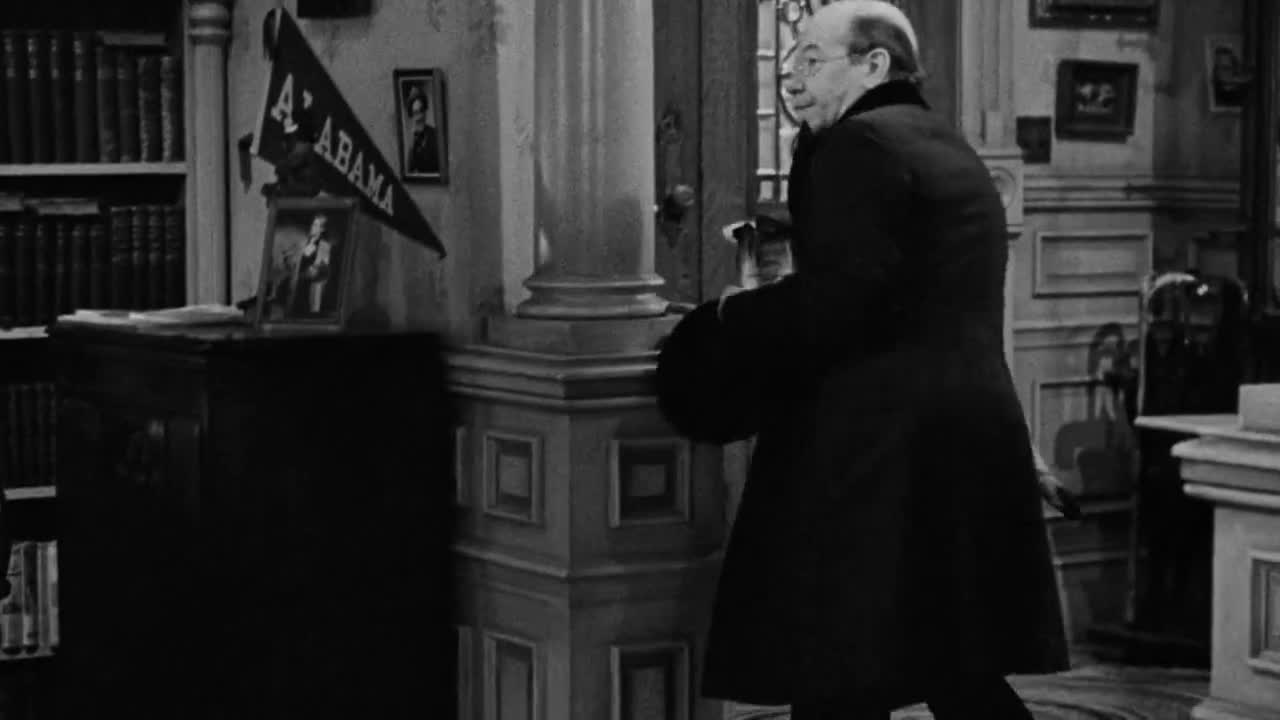
The Sycamore house runs on everyone's private obsession: Essie makes candy, Penny writes plays, Paul builds fireworks, and Ed plays music. Donald grumbles about being put to work, and Grandpa comes home with strangers, asking, "How's my foot? Is that all I get?"
Paul Shows Off His Firecrackers
Donald Complains About Working
The Sycamore household is a collection of hobbies rather than a family routine. Essie makes candy but wants to dance, Paul and DePinna test homemade fireworks, Penny writes a play, and Ed loses himself in music. Donald complains about being ordered around, and Grandpa arrives with a crowd of strangers for dinner.
The chapter is the film's idea of happiness, shown rather than argued. Nobody in the Sycamore house has money or status, and nobody is in a hurry; they simply do what they enjoy, all at once, in the same room. The one sour note comes from Donald, who asks why he has to work for Essie "just because we're engaged," and it is telling that even the complaint is about being made to do something he did not choose. Grandpa's line, "How's my foot? Is that all I get?" is the household's whole philosophy in miniature: people are not their usefulness. Set against the Kirby office, this is the film's real argument about how to live.
A1–C2 is the CEFR scale. Cards above the level you pick fade, and playback will not auto-pause on them.
“I tell you, the kids will go for those like hotcakes.”
One food metaphor turns a plain sales guess into a confident, vivid promise.
Informal
“I don't see why I got to do your work just because we're engaged.”
A small household complaint names an unfair deal with deadpan accuracy.
Informal
“Yeah, you always tired. From what? You was born tired.”
A quick question and a sharper jab land the joke in two beats.
Informal
“If you want to hear a good speech, you ought to hear Father Divine.”
A throwaway comparison that undercuts the official ceremony.
Informal
 Up next · 04the daylights out ofThe scene: Poppins Meets the Sycamores
Essie makes candy but wants to be a dancer, Penny writes plays, Paul and DePinna build fireworks, and Ed plays music. Nobody has a conventional job.
He is asked to set the table and complains that being engaged should not mean doing Essie's work. He is the one character who wants normal rules.
He collects people he meets around the city and invites them to dinner, which is why the family never knows how many guests to expect.
When someone asks about his foot, he is annoyed that it is all they ask about, and answers, "Is that all I get?" It is his way of refusing to be reduced to his ailment.