
“See what I mean? It's the same old shit all the time.”
Why it's great
A failed line and a grumble in one breath; it is how friends admit a flop.
Register
Informal
Use it yourself
It's the same old rush all the time at this office.
Chapter 11 of 17 · 2'54"
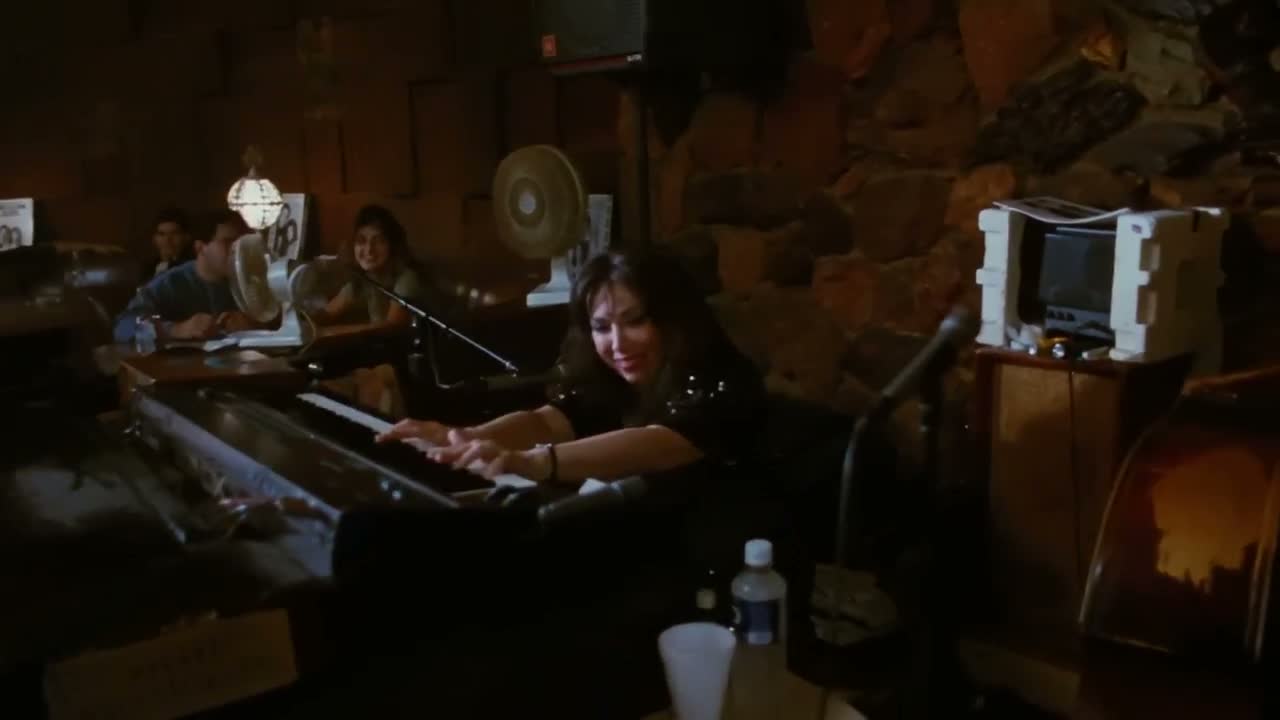
The pickups are going badly: one opening line — "What do you drive?" — earns only a flat answer, and the men keep score like a sport. A woman at the bar delivers a long monologue about her star quality and her ability to "cry on cue," while someone else tears up the number he just got from a girl.
The Worst Pickup Line at the Bar
❝ Monologue · 17 lines The Actress Tells Her Story
The Torn-Up Phone Number
At the bar, one man opens with a famously bad line — 'What do you drive?' — and gets nothing back. Mike and Trent compare notes on who is making progress. A woman explains how she decided to become an actress and proves she can cry on cue. At the end, someone tears up the phone number he just asked for, and they head to the Dresden.
The bar is a laboratory for pickup technique, and most of the experiments fail. The opening line — "What do you drive?" — is so mechanical that it gets a car model instead of a conversation, and the verdict on it is "the same old shit all the time." The woman's monologue about becoming an actress is played straight and long, which is what makes it funny: she insists "I can cry on cue," performing even as she talks about being called dramatic. Behind the bravado, the film keeps showing the same thing — everyone reaching for a connection and mostly missing. The torn-up number is the night's real moral, summed up by the accusation "You asked a girl for her number and you tore it up." The scene ends not with a win but with a move to another bar.
A1–C2 is the CEFR scale. Cards above the level you pick fade, and playback will not auto-pause on them.
“See what I mean? It's the same old shit all the time.”
A failed line and a grumble in one breath; it is how friends admit a flop.
Informal
“My whole life people have told me I have this star quality.”
It sounds like a memoir opening, self-flattering and funny, with a twist coming.
Neutral
“You asked a girl for her number and you tore it up.”
Two acts placed side by side expose the absurdity without a single insult.
Informal
“Kind of a dick move, if you ask me.”
A throwaway verdict that quietly damns the behavior: crude, and he will not pretend otherwise.
Informal
My whole life people have told me I have this star quality. - Is that right? - Well, I don't know if it's true. But, well, this one time- this is really stupid- - but in kindergarten, you know- - It's all right. You know how you have those little crushes? I had this crush on this guy Lee. He was really cute, and he wore Lee Jeans. They said "Lee." Anyway, I really liked him. And then one day he told me I was ugly. I started crying, and my teacher was, like... "Deidre, you are so emotional. You are so dramatic. You should be an actress!" It was, like, that's it! I should be an actress. And you know what? I can cry on cue. - Yeah! Well, totally. - Uh-huh. That's really been sort of my thing, you know. It got me into Juilliard. And the agent said to me afterwards that he thought... he really was reminded by me... of Tina Yothers, you know, from Family Ties. And he said I looked just like her.
 Up next · 12moneyThe scene: Trent's Bear and Bunny Speech
It is a bad pickup line. Instead of getting to know the woman, the man asks about her car, and the flat answer — 'Cavalier' — shows how little the question earns him.
She is performing for the room, telling a childhood story about being called dramatic and deciding to act. It is a long, sincere monologue, which is what makes it funny in a bar.
Because the man asked the woman for her number and then destroyed it in front of others. It turns a small success into a joke at her expense, and the women around him say so.
It is basketball slang for an easy score, used here to mean something that is almost guaranteed to succeed — Trent's way of saying a pickup is a sure thing.