
“I am big. It's the pictures that got small.”
Why it's great
She refuses the past tense and blames the industry instead of herself.
Register
literary
Use it yourself
I am still good. It's the market that got small.
Chapter 4 of 19 · 3'10"
Joe sneaks into what he thinks is an empty mansion and walks into Norma Desmond arranging a funeral for her dead monkey. She assumes he's the undertaker; he insists he's just a writer with a flat tire. Her reply — "I am big. It's the pictures that got small." — is the whole movie in one line.
A Coffin for the Monkey
❝ Monologue · 10 lines I Am Big, the Pictures Got Small
Norma Blames the Writers
Joe Gillis pulls his car into a garage he believes belongs to an empty house, and finds Norma Desmond inside, planning the funeral of her pet monkey. She sizes him up as the man from the funeral home. He explains he's only a screenwriter with a flat tire, but she isn't finished with him.
The mansion is a time capsule, and Norma is its queen. She talks about her dead monkey the way she'd talk about a lost leading man, and the funeral she's planning — white coffin, satin lining — is really a rehearsal for her own vanished stardom. Joe is the audience she has been waiting for, and when he blunders into recognizing her, she corrects him with the line that defines her: "I am big. It's the pictures that got small." From there she turns the conversation into a monologue about silent films destroyed by talk, and the men in the front offices who smashed the idols and replaced them with nobodies. Joe keeps trying to leave, but he has already become a piece of her performance.
A1–C2 is the CEFR scale. Cards above the level you pick fade, and playback will not auto-pause on them.
“I am big. It's the pictures that got small.”
She refuses the past tense and blames the industry instead of herself.
literary
“You used to be in silent pictures. You used to be big!”
Repeating used to traps her fame in the past, which is exactly the wound.
Neutral
“They took the idols and smashed them.”
A short verb and a strong image turn a business shift into iconoclasm.
literary
“And who have we got now? Some nobodies!”
A rhetorical question and a dismissive label do all the contempt in eight words.
Informal
“Well, you've made a rope of words and strangled this business!”
It turns dialogue into a murder weapon, naming the writer as the killer.
literary
“I've made up my mind we'll bury him in the garden.”
A calm decision about a burial in the garden is absurdly matter-of-fact.
Neutral
There was a time in this business when they had the eyes of the whole wide world. But that wasn't good enough for them. Oh, no! They had to have the ears of the world, too. So they opened their big mouths and out came talk, talk, talk. That's where the popcorn business comes in. You buy yourself a bag and plug up your ears. Look at them in the front offices, the masterminds! They took the idols and smashed them. The Fairbankses, the Gilberts, the Valentinos! And who have we got now? Some nobodies!
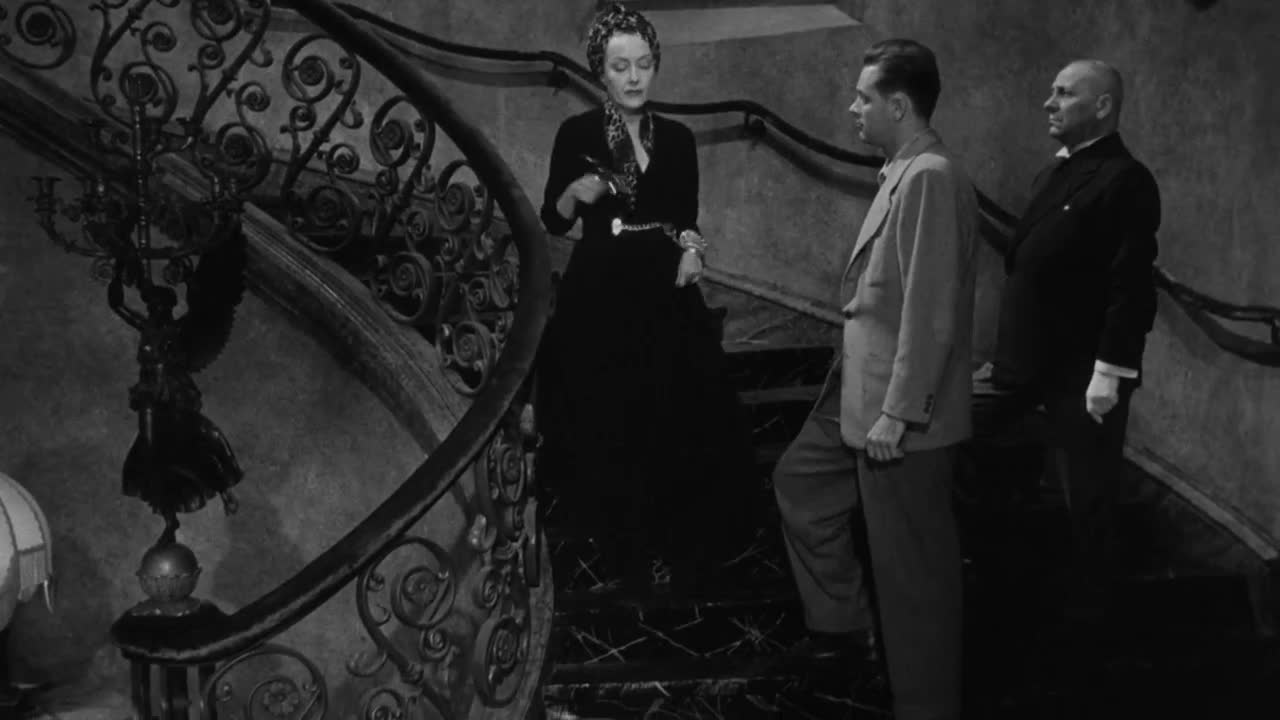 Up next · 05a pressing engagementThe scene: Norma Makes Joe Read Salome
She is expecting a man from the funeral home about her dead monkey, and when Joe walks in, she assumes he is him and starts discussing the coffin.
It's Norma's way of saying the movies shrank, not her. She refuses to be called washed-up and blames the industry, not her own age, for her career ending.
The dead monkey was her pet, and she treats it like family, choosing a white satin-lined coffin and deciding to bury it in the garden.
According to her, the coming of sound did. She says the studios pushed out the silent stars, dismissed the old idols, and replaced them with people she calls nobodies.