00:00 / 03:16
00:00 / 03:16

The Crew Debates Mr. Blonde's Rampage, Explained

Reservoir Dogs · 1992

Chapter 7 of 22 · 3'16"

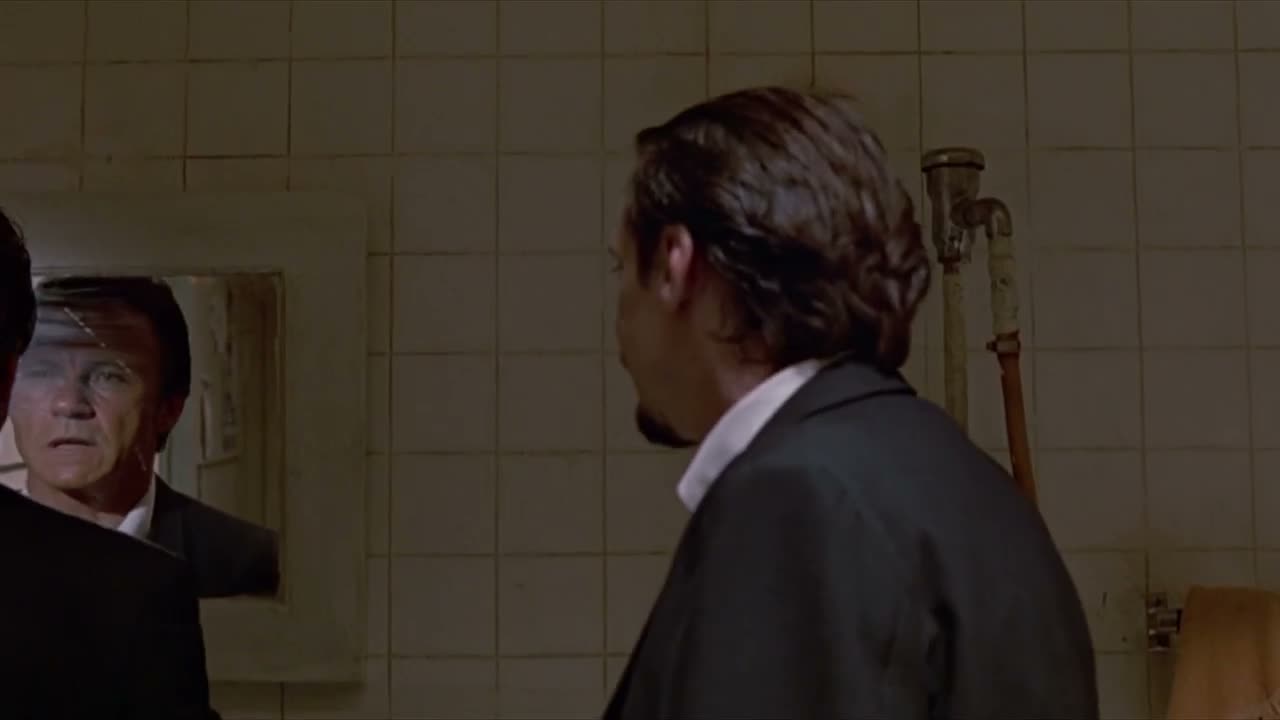
The men in the warehouse compare notes on the robbery, and the argument settles into a distinction: it's human to panic, but a professional contains it, while a psychopath starts shooting. Mr. Blonde's rampage, they agree, means they can't work with him — and worse, they may have a traitor.

ArgumentsInvestigationComplainingExplainingCoworkersB2fastamerican

Key moments

Start here, then watch the full scene
  1. ❝ Monologue · 5 lines It's Human Nature to Panic

    0:02–1:28
    86s
  2. ❝ Monologue · 8 lines A Psychopath Ain't a Professional

    1:28–2:22
    54s
  3. The Plan Is Null and Void

    2:24–3:14
    50s
  1. ❝ MonologueWhite's line in the sand5 linesPractice page ↗
  2. ❝ MonologueProfessional versus psychopath8 linesPractice page ↗

The Crew Debates Mr. Blonde's Rampage, explained

What happens

In the warehouse, two of the crew talk over the botched robbery. One admits he shot a few cops but insists he never kills for fun: anyone in his way gets moved, one way or the other, because ten years in prison is no choice at all. The other argues that panicking may be human nature, but a professional controls it — and a psychopath isn't a professional.

What's really going on

The scene is an argument about what it means to be a professional, and both men are quietly defending themselves. One justifies shooting his way out — 'one way or the other you're getting out of my way' — by separating killing in a corner from killing as a habit. The other draws the line at Mr. Blonde, insisting, 'A psychopath ain't a professional,' which is less a moral judgment than a practical one: you can't predict a madman. Once they mention a rat, the talk shifts from ethics to survival, and the phrase 'every man for himself' tells you the crew has already dissolved in spirit.

Key lines & what they mean

“I don't wanna kill anybody, but if I gotta get out that door and you're in my way, one way or the other you're getting out of my way.”
He draws his own line: he doesn't kill for pleasure, but he won't be stopped. 'One way or the other' makes the threat sound almost reasonable.
“Things get tense. It's human nature to panic.”
His explanation for the chaos: fear is built in, so panic isn't the crime. It forgives everyone — except the man who turned panic into a massacre.
“The plan is null and void once we find out there's a rat in the house.”
The moment betrayal is suspected, the agreed rules stop counting. 'Null and void' is legal language: the plan is cancelled, like a dead contract.
“I came this close to taking his ass out myself.”
He nearly shot Mr. Blonde himself. 'Came this close' insists how little separated order from more killing.
“I can't work with a psychopath.”
A blunt professional judgment, not a moral one: an unpredictable partner is a liability, so he can't be trusted on a job.

Theme

  • Betrayal — Once they suspect a rat, the crew's rules collapse: the plan is void and everyone is out for himself.
  • Survival — The talk keeps returning to what a man does to get out alive, and what line he won't cross.

What this chapter teaches

Teaching points

Review right after watching
My level2/5

A1–C2 is the CEFR scale. Cards above the level you pick fade, and playback will not auto-pause on them.

Reservoir Dogs: your progress

Chapter 7 of 22 · about 50 min to go

← Previous
Up next · 08call it quitsThe scene: The Crew Hunts the Rat

Takeaways

What you walk away with
  1. Forgiving panic is how White keeps his own hands clean.
  2. Null and void turns a suspicion into a rule.
  3. Every man for himself explains why he never looked back.
  4. The diamonds are the only thing still under control.

People also search

Questions, then the lines
Why does the crew say the plan is "null and void"?

Because they suspect a rat. The meeting point and rules only work if no one betrayed them; once betrayal is possible, the plan is cancelled and each man has to look out for himself.

What is the difference between panicking and being a psychopath, in this scene?

Panic is treated as human nature — everyone freezes or fires wildly once. A psychopath, they argue, isn't a professional: you can't predict him, so you can't work beside him.

What does "human nature" mean here?

It means a built-in instinct. Saying "It's human nature to panic" treats fear as normal and forgivable, which is how one man defends the crew's chaos while still blaming Mr. Blonde.

Did anyone get the diamonds?

Yes — one of the men says, "I got the diamonds," and that he stashed them. He offers to take the others to retrieve them immediately rather than keep waiting.

Why do they think Mr. Blonde and Mr. Blue might talk to the police?

They don't know if the two are dead or arrested. If the cops have them, they could be questioned, and even without names they could give up the location of the warehouse.