
“We see what we expect to see.”
Why it's great
The mirrored rhythm makes a whole lesson about perception easy to remember.
Register
Neutral
Use it yourself
We see what we expect to see, so check the facts first.
Chapter 3 of 22 · 2'58"
A quick card test turns into a lesson about perception: name the suits faster and faster, and everyone fails on the black hearts and red spades. "We see what we expect to see" is the point. The mind takes the same well-worn roads again and again, and skips the places in between.
❝ Monologue · 13 lines The Card Test and What It Teaches
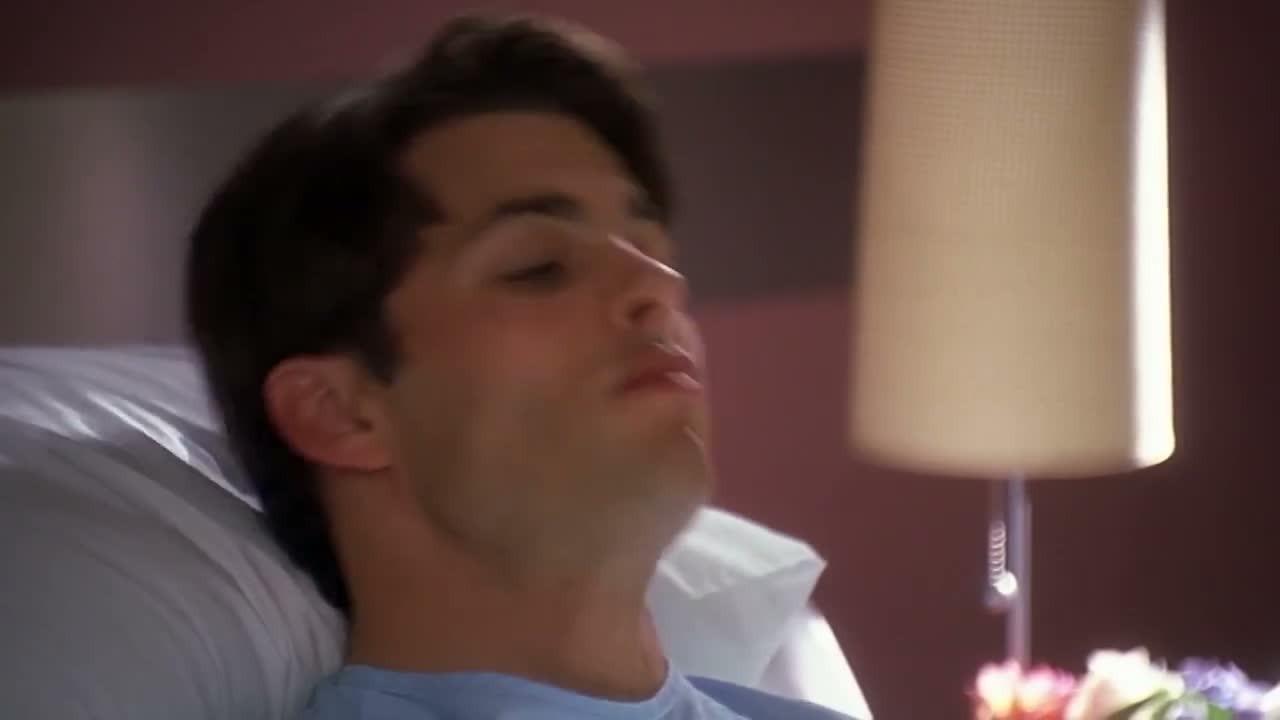
Waking in a hospital room, Neal jokes that it only hurts when he thinks. A visitor runs a quick test: hold up cards, name the suits. Neal keeps up until the trick cards appear — black hearts and red spades. The lesson follows: experience conditions the mind to see what it expects, and the mind, like the highway system, takes the roads it already knows.
The card trick is the film's thesis in miniature. Neal trusts his eyes and fails on the very first trick, because two decades of cards have taught him that hearts are red and spades are black. The visitor's explanation is not a put-down but a diagnosis: the brain is built to take shortcuts, and "We see what we expect to see." The comparison to the Interstate Highway System is the key, because it sets up the road trip to come. A highway is efficient precisely because it ignores everything between the exits, and a life can be the same. "Children who have never played cards always pass this test" is the scene's quiet challenge: expertise can be a cage.
A1–C2 is the CEFR scale. Cards above the level you pick fade, and playback will not auto-pause on them.
“We see what we expect to see.”
The mirrored rhythm makes a whole lesson about perception easy to remember.
Neutral
“Children who have never played cards always pass this test.”
Children become the proof: the less experience you carry, the more you truly see.
Neutral
“Your brain is wired, just like the Interstate Highways System.”
A highway metaphor turns an abstract idea about the mind into something you can picture.
Neutral
“It's easier for your mind to interpret them, based on that past experience, than open to an idea that they can be different.”
It names the mental shortcut we all use: past experience beats new possibilities.
Neutral
- Aah, experience has conditioned you into thinking that all hearts are red, and all spades are black. Because their shapes are similar. It's easier for your mind to interpret them, based on that past experience, than open to an idea that they can be different. We see what we expect to see. Not necessarily, what's really there. Children who have never played cards always pass this test. Makes you wonder how many other things are right in front of you, sight, sound, smell that you can't experience, because you've been conditioned not to? The good news is, if we'll do the test again you will pass. Once you are aware, that there can be black hearts and red spades, you'll be able to perceive them. Your brain is wired, just like the Interstate Highways System. It's easier to go from one well traveled place to another but the places in between, off the highway... Even though they're there, most people just zip right pass them.
 Up next · 04make a big dealThe scene: Neal's Fortune Cookie Is Blank
He has played cards his whole life, so his brain assumes hearts are red and spades are black. The first black heart or red spade is invisible to him.
It means to be built or connected a certain way, usually about the brain or personality. Here it says the mind is wired to prefer familiar roads.
A highway is fast because it skips the places between exits. The mind works the same way, following well-worn routes and ignoring everything in between.
According to the scene, yes — because they have no card habits to override what they see. The point is that experience, not youth, is what blinds people.
Not his eyesight but his assumptions. The test is meant to show Neal that much of what he takes for granted is conditioning, not perception.