
“Drug so powerful that it sublimates the sex drive.”
Why it's great
It sells total control as a medical marvel, and the calm tone is what makes it chilling.
Register
Formal
Use it yourself
The app is so powerful that it shapes what you buy.
Chapter 13 of 22 · 4'43"
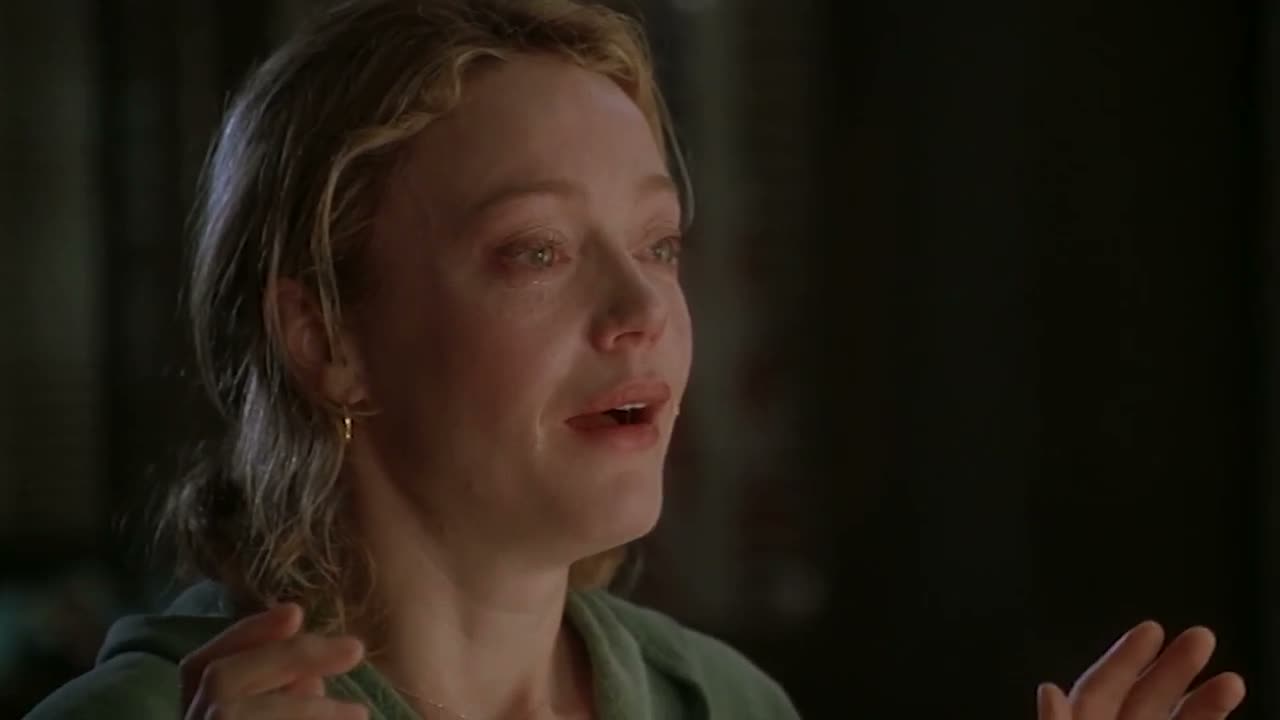
In Banton, a mother tries to take her addicted son home and is told the law can't help her. A town official explains the deal: to control addiction, the town made a powerful drug called Euphoria legal, and now users work for their next dose. "One hit of this, and you are hooked."
❝ Monologue · 14 lines The Town Explains Euphoria
❝ Monologue · 10 lines The official defends the town
He turns a question of human dignity into a mere difference of priorities.
A mother arrives in Banton to bring her son home, but a town official says the young man is of legal age and can't be forced to leave. The official explains that Banton legalized an addictive drug, Euphoria, to control its addicts, who now work for their supply. He then offers the mother three choices.
The scene is a lesson in how a free society can talk itself into servitude. Banton didn't ban drugs; it legalized one and made its users dependent on town work, so control looks like choice. The official's pitch is all logic: 'some folks just wanna get high,' so the town sells Euphoria, warns everyone not to use it, and then 'owns' whoever gets hooked. His sharpest turn reframes slavery as freedom: 'You so sure, that your life is better than theirs?' The mother's objections — her son is just a boy, he has rights, he'll never marry — bounce off a system designed to answer them in advance. The three choices he offers her make the trap explicit.
A1–C2 is the CEFR scale. Cards above the level you pick fade, and playback will not auto-pause on them.
“Drug so powerful that it sublimates the sex drive.”
It sells total control as a medical marvel, and the calm tone is what makes it chilling.
Formal
“You so sure, that your life is better than theirs?”
Instead of arguing, it questions the assumption behind her pity and leaves her nowhere to stand.
Informal
“Americans fought a war for freedom, another one to end slavery.”
Two wars become the setup for a bitter punchline about what people do with freedom.
Formal
“See this, this is the place, the happiest place on earth.”
The theme-park slogan lands as bitter irony inside a drug-run town.
Informal
This town had serious drug problem. And all the problems that go along with it. We tried everything. Punishment for dealing, punishment for using. More enforcement, tougher enforcement, jail, hell, public humiliation. But, it all came down to one thing. Some folks just wanna get high. So... We came up with a radical solution... Euphoria. Synthetic drug, potent, legal, and totally addictive, and we warn everyone, not to use it. But like I said, some folks just wanna get high. One hit of this, and you are hooked. And we own them.
But look at them. They seem miserable to you? They live a simple, happy life. No decisions, no responsibilities. Nah-ah, no problems... They found their answer. You so sure, that your life is better than theirs? - It's like they're animals. - Oh yeah, we're all animals. Just that, some of us have different priorities that's all.
 Up next · 14call the shotsThe scene: Neal Goes to Work for Bob Cody
Because in Banton he is of legal age and chooses to stay. The town's law puts his choice above his parents' wishes, which is the trap the official is defending.
It's a powerful, highly addictive synthetic drug. The town legalized it on purpose to keep addicts under control, since users must work for the town to earn their next dose.
Move to the drug-free zone and hope to see her son, go home and find something else to live for, or give in and join the party herself.
He argues that people who are free often choose to become dependent, so the addicts' life of no decisions and no responsibilities is its own kind of freedom to him.