
“You cannot make an omelet without breaking eggs.”
Why it's great
A kitchen proverb makes death sound like a necessary ingredient.
Register
Neutral
Use it yourself
You cannot build a new habit without breaking the old one.
Chapter 9 of 17 · 2'36"
The guests need a straight answer: is there anyone else in the house? Wadsworth answers 'no', then says his 'no' means yes, so nobody can tell if they are being warned or mocked. Under the wordplay sits the fear that one of them is the killer.
❝ Monologue · 12 lines Mustard's Omelet Speech
The body count is up to two, and Wadsworth will not let anyone leave. When the guests demand to know whether someone else is hiding in the house, he answers 'No,' then clarifies that his 'no' means yes, turning the question into a running gag. The group finally agrees to search in pairs.
On the surface this is a comedy of miscommunication, but the confusion is also a power play. Wadsworth keeps the group off balance because a clear answer would give away his control: 'We're all in this together now,' he insists, then threatens that anyone who leaves will be named a murderer. Colonel Mustard turns the danger into arithmetic — 'You cannot make an omelet without breaking eggs' — as if sacrificing a partner were a fair price. Mrs. Peacock and the others push back, but nobody offers a better plan. The jokes and the threat are the same sentence.
A1–C2 is the CEFR scale. Cards above the level you pick fade, and playback will not auto-pause on them.
“You cannot make an omelet without breaking eggs.”
A kitchen proverb makes death sound like a necessary ingredient.
Neutral
“This is war, Peacock. Casualties are inevitable.”
Military language shrinks real deaths into a line in a report.
Formal
“If I were him, I'd be suspicious already.”
Stepping into the outsider's shoes exposes how obvious their guilt looks.
Neutral
“Mrs. White, no man in his right mind would be alone together with you.”
A polite sentence shell wrapped around a brutal insult, the kind of line people quote for years.
Informal
I suggest we handle this in proper military fashion. We split up and search the house. Split up? Yes. We have very little time left, so we'll split up into pairs. - Pairs? - Yes. Wait a minute. Suppose that one of us is the murderer. If we split up into pairs, whichever one of us is left with the killer might get killed. Then we would've discovered who the murderer is. But the other half of the pair would be dead! This is war, Peacock. Casualties are inevitable. You cannot make an omelet without breaking eggs. Every cook will tell you that.
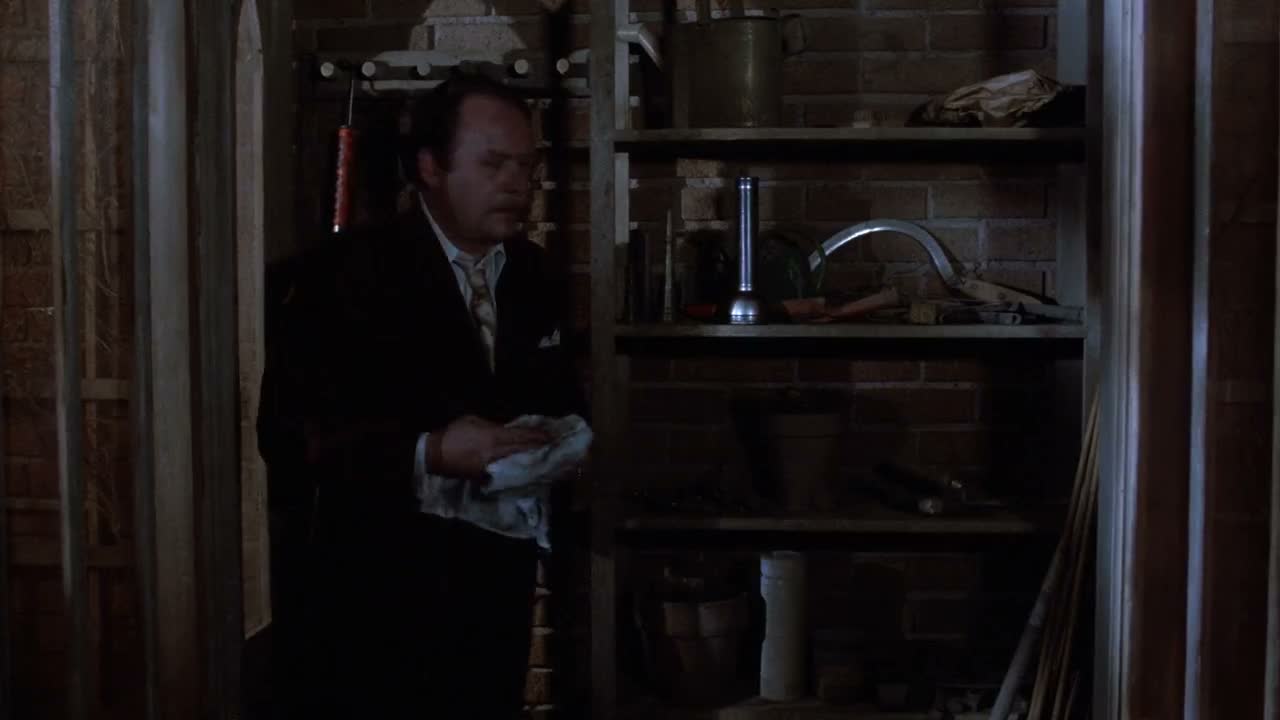 Up next · 10a likely storyThe scene: Trapped in the Secret Passage
He says they have to find out who did it, then threatens that anyone who walks out will be accused of both murders.
It is deliberate. Keeping the guests confused stops them from leaving, and his evasiveness becomes the joke that drives the scene.
Colonel Mustard, who calls for doing it in proper military fashion and sends everyone off in pairs.
It is an old proverb about accepting a cost to reach a goal. Mustard uses it to justify the risk that one of each pair might be killed.
Wadsworth insists there is not, then says his 'no' means yes, so the guests never get a clean answer.