
“You don't have to pay now. I know you're good for it.”
Why it's great
It hands over the goods before the cash and makes trust the real currency of the deal.
Register
Informal
Use it yourself
Take the tickets tonight; I know you're good for it.
Chapter 8 of 14 · 3'06"
Lester finally introduces himself to the new neighbors, then follows Ricky upstairs, where a casual visit becomes a transaction: Ricky shows him the clean urine he uses for drug tests and offers to sell him something better. The price is high, but Ricky waves it off — "You don't have to pay now. I know you're good for it."
❝ Monologue · 6 lines Lester Looks Back on His Youth
At the fence, Lester introduces himself to the new neighbor, Colonel Fitts, and they exchange a few stiff pleasantries. Ricky then invites Lester up to his room to borrow a movie, and the visit turns into a small deal: Ricky explains the clean urine he buys for his drug tests and offers Lester a supply of his own.
The scene pretends to be a friendly introduction and a small favor between neighbors, but almost every line is about a transaction. Colonel Fitts answers a handshake with rank and branch; Ricky turns a movie loan into a sales pitch and then closes it on credit, saying, "You don't have to pay now. I know you're good for it." What makes it eerie is how casual it all is: the same boy who talks about clean urine and cash-only deals also trades memories with an older man about summer jobs, and the exchange ends on a line about self-deception — "Never underestimate the power of denial." Nobody calls the arrangement what it is. The neighborliness is real, but it is also a cover, and the scene lets both read at once.
A1–C2 is the CEFR scale. Cards above the level you pick fade, and playback will not auto-pause on them.
“You don't have to pay now. I know you're good for it.”
It hands over the goods before the cash and makes trust the real currency of the deal.
Informal
“I had my whole life ahead of me.”
It names youth as pure possibility, and the past tense makes it sound already spent.
literary
“When I was your age, I flipped burgers all summer just to buy an 8-track.”
A whole summer of flipping burgers for one small machine makes youth concrete and earned.
Informal
“All I did was party and get laid.”
A whole youth summed up in two pleasures, casual and unrecoverable.
Informal
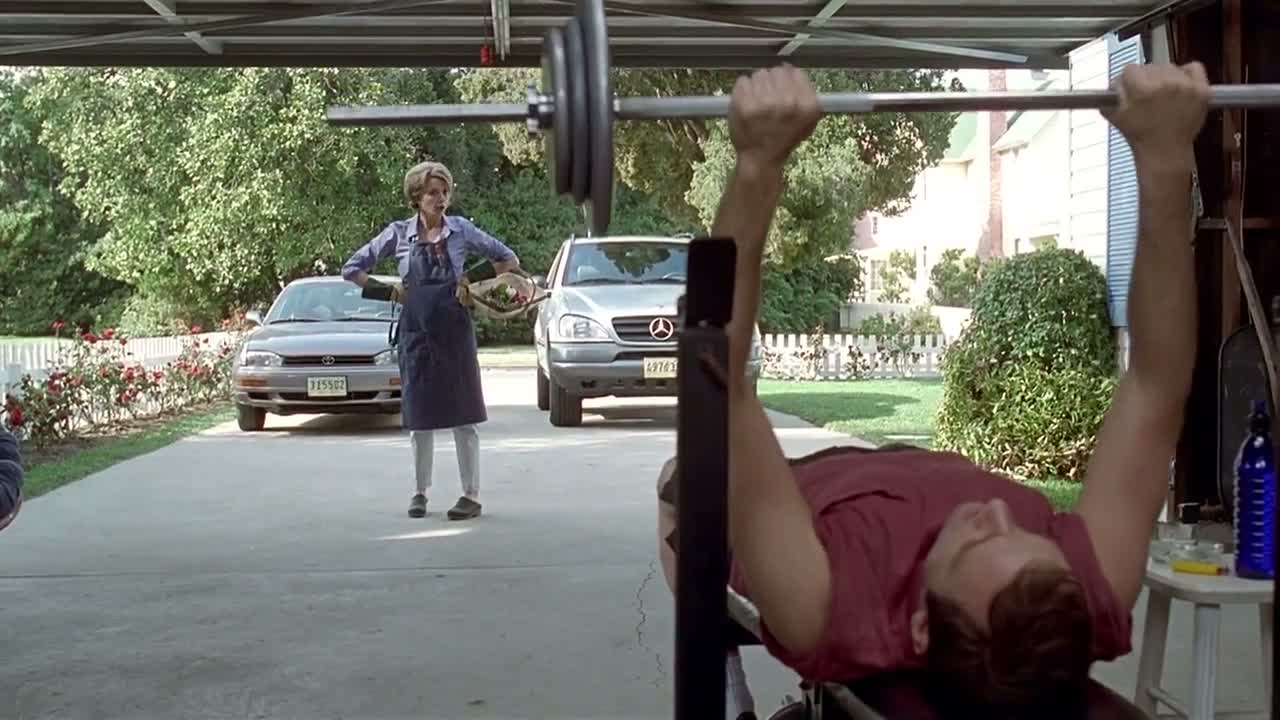
Now I know how you can afford all this equipment. When I was your age, I flipped burgers all summer just to buy an 8-track. That sucks. No. Actually, it was great. All I did was party and get laid. I had my whole life ahead of me.
 Up next · 09nothing to loseThe scene: Lester Blackmails His Bosses
He treats it as an ordinary transaction with a neighbor he trusts. He knows Lester's story and figures he can pay, so he offers credit and a beeper number rather than a hard sell.
His father makes him take regular drug tests. Ricky says he cut a deal with a nurse so he can stay clean on paper while still using, which is why the test means nothing.
It means Ricky trusts Lester to pay later. Offering credit turns a drug sale into something that sounds like a favor between neighbors.
Ricky's room and easy money remind Lester of his own youth. His memory of an 8-track is less nostalgia than a measure of how far he has fallen since then.
Lester says it out loud: "Now I know how you can afford all this equipment." Ricky has clients, cuts deals, and takes cash only, so the same money behind his gear is what he is offering Lester.