
“I can't even feel the joy of this victory.”
Why it's great
Even turns a triumph into a hollow one, naming the feeling without dressing it up.
Register
Neutral
Use it yourself
I can't even feel the joy of getting the offer.
Chapter 17 of 18 · 2'05"
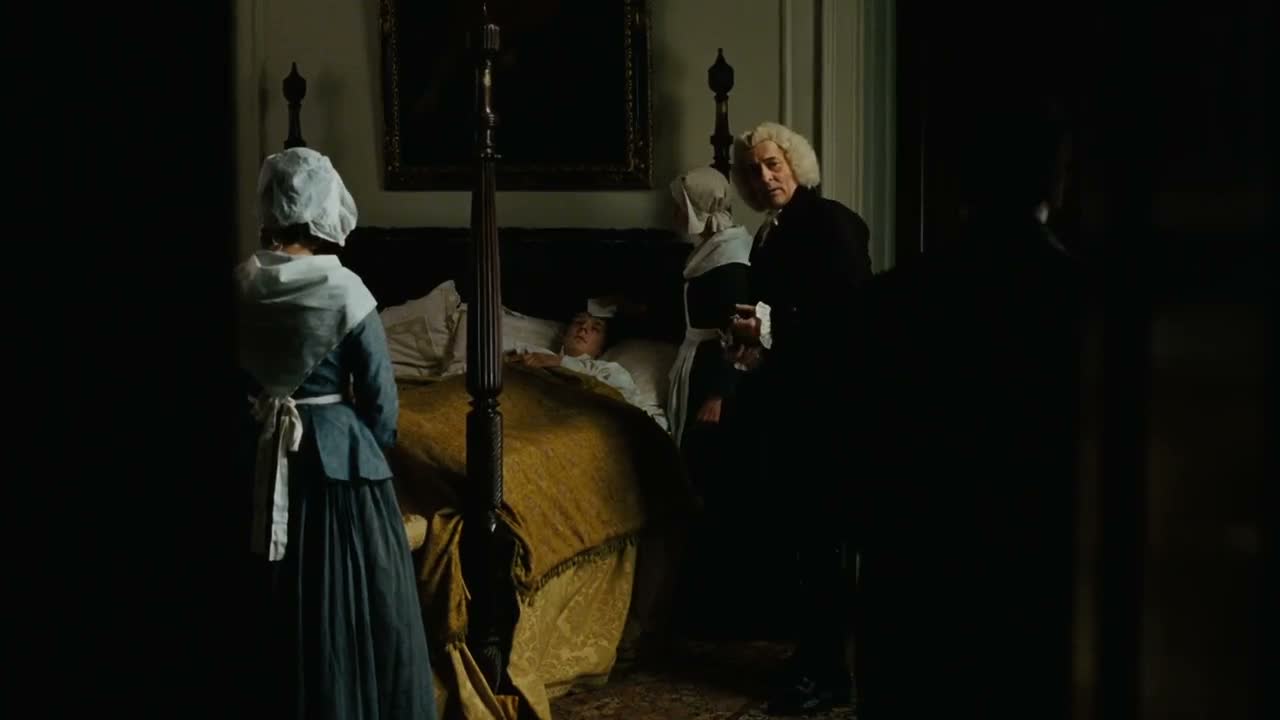
Wilberforce has just won his abolition vote, but instead of celebrating he is pouring away his laudanum and telling his pregnant wife he feels nothing. "I can't even feel the joy of this victory," he admits. Under the surface, quitting the drug is the only way he can imagine being himself again for their child.
Wilberforce Quits Laudanum and Imagines His Child
Wilberforce Imagines His Unborn Baby
At his home after the abolition vote, Wilberforce is weak and shaking as he stops taking laudanum. He has poured the whole bottle away and refuses more. With his pregnant wife Barbara beside him, he says he cannot feel joy even in victory, then the two of them imagine their unborn child and the life they will have.
The victory Wilberforce fought for years to win has finally arrived, yet he greets it in a shuttered room, shaking and unable to feel anything. "I can't even feel the joy of this victory" is not self-pity; it is the honest report of a man whose body and mind have been dulled by years of laudanum. What makes the scene land is the way the two of them turn away from that numbness and start inventing a child: his name, his hair, his singing voice. "This new baby will find me as myself," Wilberforce says, and it is both a promise and a test — the sober version of himself is the only one he wants his son to meet.
A1–C2 is the CEFR scale. Cards above the level you pick fade, and playback will not auto-pause on them.
“I can't even feel the joy of this victory.”
Even turns a triumph into a hollow one, naming the feeling without dressing it up.
Neutral
“This new baby will find me as myself.”
It promises the child a restored father, turning recovery into a gift for someone not yet born.
literary
“I've poured it all away this morning. Every drop.”
Every drop ends the sentence like a receipt, making the resolve sound final.
Neutral
“I saved one for you. A free gift from William Wilberforce.”
She hands him his own political trick as a gift, and the irony stings more than scolding.
Informal
 Up next · 18pushing at an open doorThe scene: Wilberforce Visits a Dying Pitt
He is addicted to the drug and wants to be clean before his child is born. Throwing out the bottle makes the decision final rather than something he can take back.
Years of laudanum and illness have left him numb, so even the abolition victory he fought for brings no emotional relief. The scene shows what the win has cost him.
His wife, Barbara Spooner. She is pregnant, and the two of them imagine their unborn child together while he goes through withdrawal.
It is sarcasm, not generosity. A race ticket is handed over as Wilberforce's 'free gift', needling him while everyone else has gone to Epsom for the day.