
“His enemy is my enemy.”
Why it's great
Six words bind his position to another man's fight and leave no room for argument.
Register
Neutral
Use it yourself
His deadline is my deadline, so I am staying late too.
Chapter 12 of 18 · 3'35"
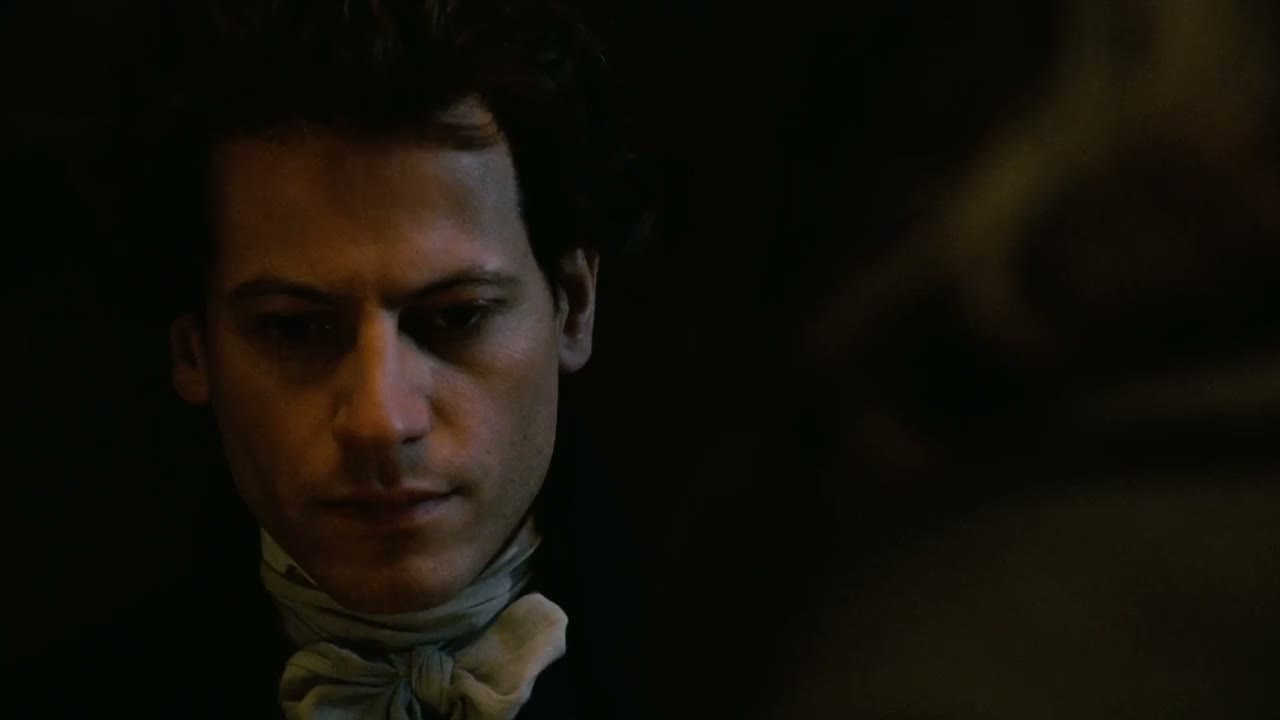
Two old friends play cards and the talk turns to Lord Tarleton's money and the coming abolition vote. 'His enemy is my enemy,' one of them says, choosing politics over the friendship. In Parliament, an opponent praises abolition and then asks for a delay — 'a wave of good intentions' must not sink the ship of state.
❝ Monologue · 12 lines The Gradualist Speech in Parliament
At a card table, an old friend of the prime minister warns him that Lord Tarleton is paying people to speak against abolition. The answer is 'His enemy is my enemy' — a personal break dressed as politics. Then Parliament debates the trade: one speaker admits it is an 'almighty calumny' but asks for a period of reflection rather than a vote.
The scene is built on the idea that politics here is a card game, and everyone is holding something back. The prime minister's friend says 'It isn't money that has made me decide to oppose Wilberforce' and then adds 'His enemy is my enemy,' which is a personal grievance wearing the mask of principle. The offer of East India money has done its work even if it is not the stated reason. The second half shows the same evasion at national scale: the gradualist speaker calls the slave trade an 'almighty calumny' and in the same breath asks for delay, so that no one has to vote against it outright. 'This great ship of state must not be sunk by a wave of good intentions' is the line that gives the whole chapter its title, and it turns other people's decency into the danger.
A1–C2 is the CEFR scale. Cards above the level you pick fade, and playback will not auto-pause on them.
“His enemy is my enemy.”
Six words bind his position to another man's fight and leave no room for argument.
Neutral
“Wilberforce follows no leader but the preacher in his head.”
It reduces a man's conscience to a voice in his head, mocking what is really his strength.
Neutral
“This great ship of state must not be sunk by a wave of good intentions.”
The ship and wave metaphor makes reform sound like weather, not justice.
Formal
“Don't force me to put a pistol to your head.”
It names political pressure as a gun to the head, exposing the friendship's price.
Informal
First, let me be clear. After long consideration and much consultation, I am in favour of the abolition of the slave trade. There's no doubt in my mind that this trade in human beings is an almighty calumny and is a disgrace to this nation. However... I also take the point of my honourable friend, the member for Liverpool. If we were to outlaw the trade tomorrow, it would bring financial disaster to many cities and industries in this country. I therefore suggest a period of reflection. After a year and a half of privy council investigations, what good would it do to delay the inevitable? Inevitable? Is my honourable friend counting the votes before they are cast? I didn't mean that. If the trade were to be abolished, I suggest that we do so gradually. Violent storms sink ships. This great ship of state must not be sunk by a wave of good intentions.
 Up next · 13run with bloodThe scene: Pitt Warns Wilberforce About War
He is using East India Company money to pay people who will speak against abolition in Parliament. The warning lands as a test of loyalty: no true friend would accept such an offer.
He says it is not about money: 'His enemy is my enemy.' Wilberforce's cause puts him on the opposite side of the prime minister, so a personal break and a political one happen at once.
It claims to support abolition, calls the trade an almighty calumny, then warns that outlawing it overnight would ruin cities and industries, and asks for a period of reflection instead.
It turns the abolitionists' sincerity into something dangerous. The speaker says violent storms sink ships, so the state must not be sunk by a wave of good intentions — goodwill as a threat.
It is a warning, not a duel invitation. One man threatens to put a pistol to the other's head; the other answers that both sides would then be armed and might shoot each other.