
“The only man I would trust is you.”
Why it's great
It puts all his trust on one word, you, making a compliment into a burden.
Register
Formal
Use it yourself
The only colleague I would trust with this is you.
Chapter 13 of 18 · 4'35"
Pitt visits his ailing friend Wilberforce, but the talk turns to war. France may declare war within the year, and Pitt warns that once it does, "opposition will soon be called sedition." Wilberforce answers with a question that cuts to the bone: by who? By you? The two old friends are on opposite sides now.
❝ Monologue · 6 lines A vow spoken in pain
He turns suffering into a divine commission, and the parallel lines carry pure will.
❝ Monologue · 5 lines Pitt asks him to stay
He counts five years of effort, then admits no one can replace him.
Pitt Refuses to Oppose the King
Opposition Will Be Called Sedition
Wilberforce is gravely ill, and his old friend Pitt, now prime minister, comes to see him. Their reunion becomes an argument about the French Revolution and the coming war. Pitt refuses to push abolition while Paris is in chaos, and warns Wilberforce that wartime will turn ordinary opposition into something far more dangerous.
This is the friendship that runs under the whole film finally cracking over politics. Pitt is trying to protect Wilberforce and himself: with France at war and Paris in blood, anything that looks like dissent becomes dangerous. "Opposition will soon be called sedition," he warns, and the line is both a threat from the state and a plea from a friend. Wilberforce hears the threat, not the plea, and answers with two questions — "By who? By you?" The exchange also shows Pitt's own bind: he says the only man he would trust with the bill is Wilberforce, yet he asks him to wait. Their loyalty survives the fight, but the alliance that once carried abolition has to be put on hold.
A1–C2 is the CEFR scale. Cards above the level you pick fade, and playback will not auto-pause on them.
“The only man I would trust is you.”
It puts all his trust on one word, you, making a compliment into a burden.
Formal
“I am warning you as your prime minister that when war comes, opposition will soon be called sedition!”
He names his office first, then predicts a dark future, so the warning lands as policy, not anger.
Formal
“I can't be seen to openly oppose the king when the streets of Paris run with blood.”
The blood in Paris makes his caution sound reasonable and cowardly at once.
Formal
“So you will keep your precious conscience intact and let the rest of us do the war's dirty work.”
It mocks a conscience kept spotless while others do the dirty work, an elegant accusation.
Formal
Africa, your sufferings have been a theme that has engaged and arrested my heart. Your sufferings... ...no tongue can express, no language impart. Agh! God has set before me two great objects: The suppression of the slave trade and the reformation of society.
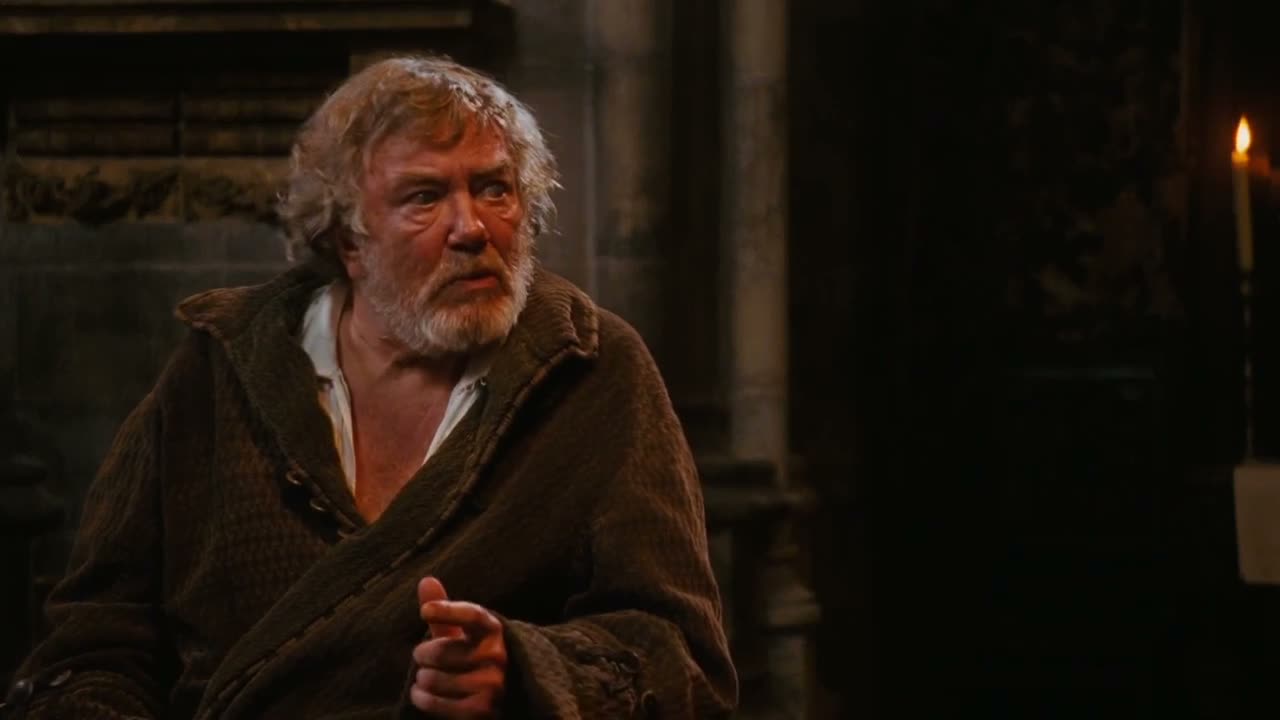
It's now five years since you first brought this bill to the House. And each time we get a little closer. Wilberforce, there are other MPs who could carry the debate. Who? Name one. The only man I would trust is you.
 Up next · 14by halvesThe scene: Newton Gives Wilberforce His Confession
Years of campaigning and overwork have wrecked his health. The doctor says he treats his body as if he didn't have one and prescribes rest, which he refuses.
Britain is on the edge of war with revolutionary France. Pitt thinks openly opposing the king at such a moment would be seen as siding with the revolution.
It means that once war starts, disagreeing with the government will be treated as treason. Pitt is warning Wilberforce that the rules are about to change.
Pitt names Clarkson, who is rumored to be a French spy, and Equiano, whose American birth is used to call him a revolutionary.