
“Here again was the very voice of God.”
Why it's great
The very makes the recognition emphatic, turning music into revelation.
Register
literary
Use it yourself
Here again was the very problem we feared.
Chapter 11 of 25 · 4'51"
Salieri isn't just reading music — he's meeting the mind that wrote it. "Page after page of it. As if he were just taking dictation." Mozart's manuscripts have no corrections, and for Salieri that proves God speaks through a man he despises.
❝ Monologue · 10 lines Salieri sees God in the score
Saying one note moved would diminish it turns jealousy into awe.
Salieri Names His Price
Constanze Returns at Night
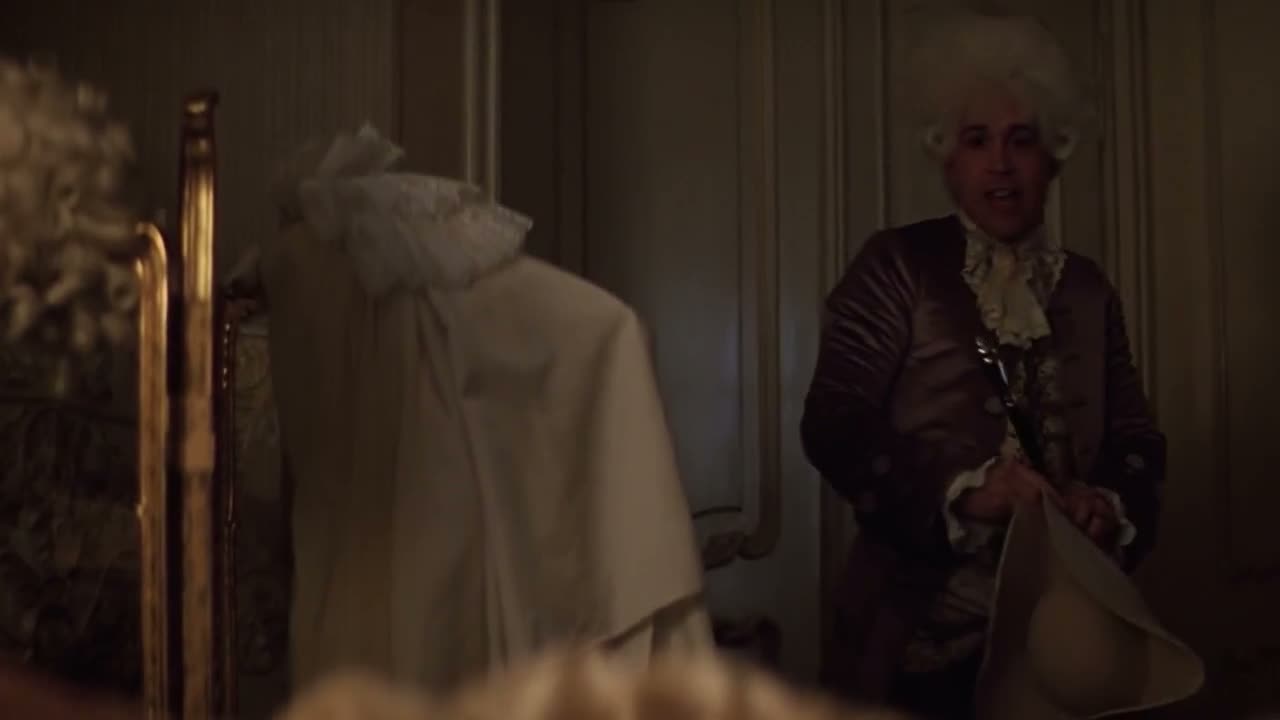
Young Salieri examines Mozart's original scores and finds them flawless — no corrections, not one. He concludes that a power he can't match speaks through his rival. Then Constanze Mozart arrives to ask Salieri to help her husband win a royal post, and he names his price: come back tonight, alone.
The manuscripts are the real turning point: Salieri expected to find a rival's drafts and instead finds something finished. "Here again was the very voice of God." That line isn't admiration — it's a verdict against himself, because God chose the vulgar little man over the pious one. The price he sets for Constanze turns his faith into a transaction: "And not to be vague, that is the price." He is not just bargaining for her body; he is testing whether God will reward him for helping Mozart. When he prays to be entered, the film frames genius itself as something he can only receive secondhand, never own.
A1–C2 is the CEFR scale. Cards above the level you pick fade, and playback will not auto-pause on them.
“Here again was the very voice of God.”
The very makes the recognition emphatic, turning music into revelation.
literary
“One word from me and the post is his.”
One word against a whole post: the power is in how casually he says it.
Informal
“Page after page of it. As if he were just taking dictation.”
Comparing composing to taking dictation says genius in one image.
literary
“And not to be vague,that is the price.”
Not to be vague strips the euphemism away and names the price.
Formal
“I sat there,not knowing whether she would return or not.”
The participle and the whether-or-not question keep the anxiety open.
Neutral
Displace one note... ...and there would be diminishment. Displace one phrase,and the structure would fall. It was clear to me... ... that sound I had heard in the archbishop's palace... ... had been no accident. Here again was the very voice of God. I was staring through the cage... ...of those meticulous ink strokes... ...at an absolute beauty.
 Up next · 12achieve mediocrityThe scene: Salieri Declares War on God
He turns the favor into a transaction. He will push for Mozart's court appointment, but what he wants in return is her, not gratitude.
It means writing down words someone else speaks. Salieri is saying Mozart composed as if God dictated the music and he simply wrote it out.
The scene ends with a servant announcing that the lady has returned and Salieri telling him to show her in, so the answer is yes.
Because he finds no flaw in it and cannot accept that this crude young man wrote it, so he reads it as divine proof rather than human talent.
Not only. He offers to help Mozart in exchange for a sign, but what he is asking for is to be chosen and loved the way Mozart seems to be.