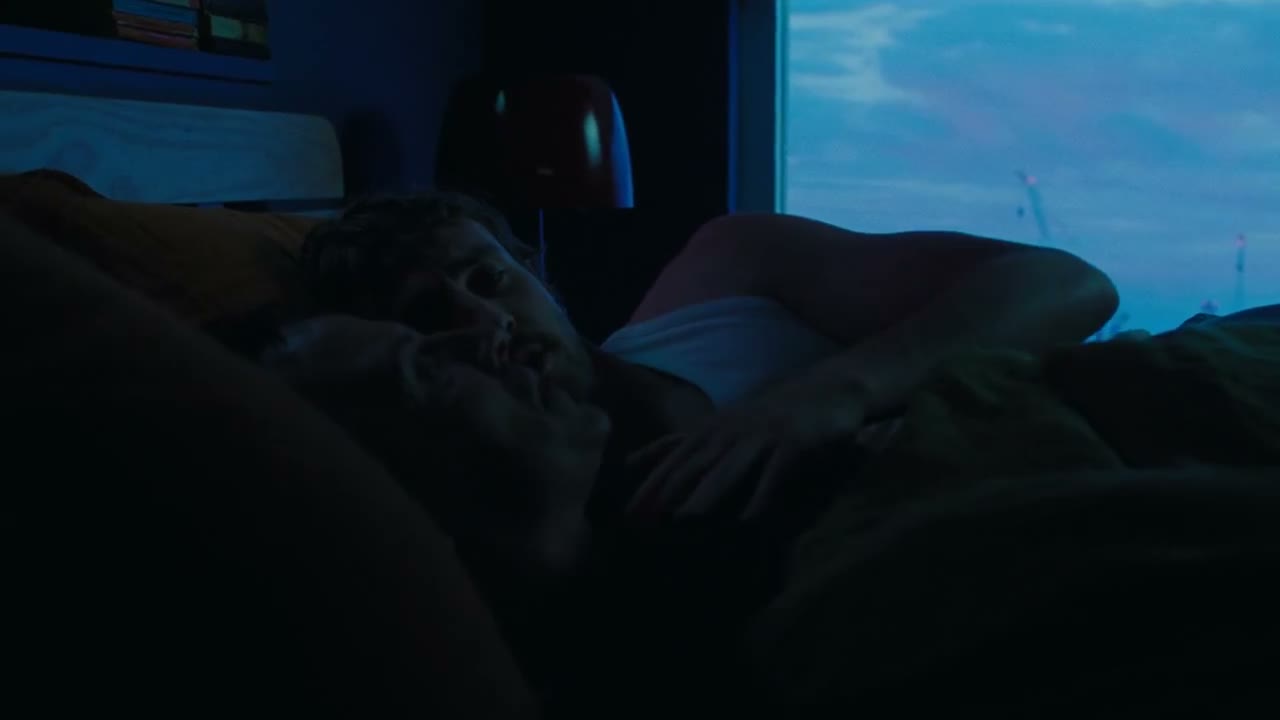
“I hate that we weren't around when you needed us most, sweetheart.”
A confession of guilt spoken as love; the pet name makes the regret land harder.
Informal
Chapter 11 of 15 · 3'28"
A quiet bedroom conversation becomes a reckoning with everything the family lost. Adam's mum says she hates "that we weren't around when you needed us most," and can't accept that his granny got to raise him instead. Then they drift into imagining the trips they never took, until Adam finally cries and asks why she is there at all.
Adam's Mum Says Sorry in Bed
❝ Monologue · 23 lines The life they never had
He narrates the childhood they never had in ordinary detail, and that ordinariness is what breaks your heart.
In Adam's bedroom, his mum asks where he went after she and his dad died. He tells her he lived with his granny in Dublin. She is hurt that someone else raised him, admits she was hardly a perfect mother, and imagines with him the holidays they never had. Adam moves between nostalgia and grief, and by the end he is crying.
The bedroom setting makes the whole conversation a kind of imagined reckoning: Adam is talking to parents he has already lost. The love is real, but so is the blame he can't quite voice. His mum puts it plainly: "I hate that we weren't around when you needed us most, sweetheart," and "I just can't believe that she got to look after you and I didn't." What hurts most is not cruelty but absence. She calls herself hardly Mother of the Year, then turns to a gentler fantasy — the trips, holidays and even the fights they never got to have. Adam takes part in it, then breaks down, and the scene ends with him asking a parent who cannot really be there, "What are you doing here? You're not supposed to be here."
A1–C2 is the CEFR scale. Cards above the level you pick fade, and playback will not auto-pause on them.
“I hate that we weren't around when you needed us most, sweetheart.”
A confession of guilt spoken as love; the pet name makes the regret land harder.
Informal
“I just can't believe that she got to look after you and I didn't.”
The parallel got to / didn't carries envy and loss in one quiet line.
Informal
“They fought and bickered and pretended that they were ruining each other's lives.”
Three stacked verbs turn family conflict into a role everyone performs.
Neutral
“But I like to think that I would've got better at it in time.”
A 'would've' sentence about a chance she never got—an apology, and a whole lost motherhood, in one line.
Neutral
I used to plot it all out. What'd you mean? What we might've done together in intricate detail. Trips to the Whitgift Centre birthdays, trips to London, The Planetarium, the London Dungeon. Oh, I always wanted to go there. - I know. - (CHUCKLES) There were holidays that we might've gone on together. Did we make it to Disneyland? We did. When I was 14. - It rained nonstop. - Oh! And they shut down Space Mountain. And we fought every day. Why did we have to fight? Because that's what everyone did with their parents. They fought and bickered and pretended that they were ruining each other's lives. Did we make up? No, we didn't need to make up. We were together, so, so it didn't matter.
Up next · 12tangled up withThe scene: Adam Tells Harry About His ParentsThe film presents these encounters as Adam's imagined conversations. In the bedroom scene he works through grief and unfinished business with parents he has already lost.
He tells his mum he lived with his granny, who took him to Dublin. That is why his mum says she can't believe the granny got to look after him instead of her.
She regrets being absent when Adam needed her most and not being the one who raised him. She calls herself hardly Mother of the Year and wishes she'd had more time.
The imagined trips and the affection become too much. He breaks down and questions whether the parent beside him should even be there, underlining the loss.
They are imagined memories of a childhood that never happened: trips to London, the Planetarium, Disneyland, and even the fights families are supposed to have.