00:00 / 04:01
00:00 / 04:01

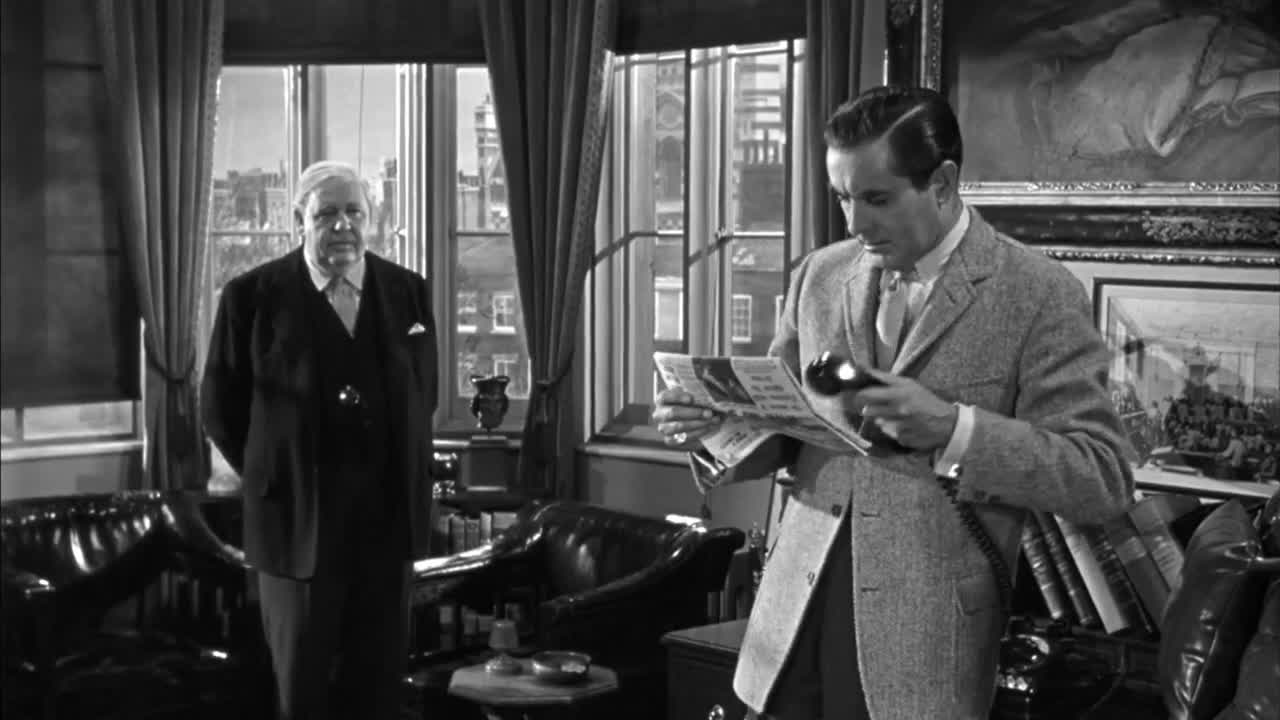
Leonard Recounts the Night of the Murder, Explained

Leonard walks Sir Wilfrid through the night Mrs French died: he visited her at eight, left at nine, and walked home. The lawyer presses on money and motive, then warns that a loving wife's testimony does not count for much, because "Blood is thicker than evidence." What looked like a defence is slowly turning into a case.

InterrogationsPolice questioningExplainingConfrontingLawyer & clientB2fastbritishClean

Key moments

Start here, then watch the full scene
  1. Sir Wilfrid Warns About the Wife's Testimony

    1:18–2:32
    73s
  2. ❝ Monólogo · 8 frases the no-motive argument

    Layered hypotheticals and rhetorical questions dismantle the motive until it collapses.

    2:51–3:18
    27s
  1. ❝ Monólogothe no-motive argument8 frasesPracticar ↗

Leonard Recounts the Night of the Murder, explained

What happens

Leonard tells Sir Wilfrid the story of the night Mrs French was killed: he went to her house about eight, listened to music with her, and left around nine. Sir Wilfrid questions him about money and about why he never brought his wife, then warns that Christine's testimony will not be worth much. Brogan-Moore joins the case.

What's really going on

Leonard keeps answering like a man with nothing to hide, which only makes the lawyer more careful. His alibi is real but useless — "I can prove that. I can swear to it, in or out of court, in the witness box, anywhere!" — because the only witness is his devoted wife, and Sir Wilfrid warns him that such testimony "does not carry much weight," adding, "Blood is thicker than evidence." The interview is really a rehearsal for court: every honest answer gives the prosecution another thread, from the money he hoped to borrow to the housekeeper's day off. Sir Wilfrid's summary of the case, "they don't look bad, Mr Vole, they look terrible," is the film's sharpest joke and its fairest warning. Leonard may be innocent, but the evidence does not need him to be guilty.

Key lines & what they mean

“As for things looking bad, they don't look bad, Mr Vole, they look terrible.”
Sir Wilfrid's summary of Leonard's position: worse than bad, delivered dryly so the joke lands as a warning.
“I can prove that. I can swear to it, in or out of court, in the witness box, anywhere!”
Leonard's insistence that his alibi is real, which sounds convincing until you notice the only witness is his wife.
“It has been known, Mr Vole. Blood is thicker than evidence.”
Sir Wilfrid's twist on an old proverb: a devoted spouse may lie to protect you, so a jury will not trust the testimony.
“Or, if he'd been hoping for a golden egg, why kill the goose before it was laid?”
The defence argument Sir Wilfrid builds: a man hoping to profit would not kill the source of his money.

Theme

  • Justice — Circumstantial evidence and a weak alibi can make an innocent man look guilty, as Sir Wilfrid warns.
  • Trust — Leonard's most reliable defence is his wife's word, which the lawyer says a jury will discount.

Qué aprendes en este capítulo

Puntos de enseñanza

Repasa justo después de ver
Mi nivel2/6

A1–C2 es la escala MCER. Las tarjetas por encima del nivel elegido se atenúan y la reproducción no se pausa en ellas.

Witness for the Prosecution: tu progreso

Capítulo 6 de 27 · quedan unos 72 min

← Anterior
Siguiente · 07with flying coloursLa escena: Inspector Hearne Arrests Leonard

Ideas clave

Lo que te llevas
  1. A tidy alibi can still leave a motive wide open.
  2. The will turns sympathy into suspicion in one line.
  3. Courtroom talk hides threats inside polite questions.
  4. A twisted proverb can be a warning, not comfort.

Preguntas frecuentes

La pregunta, luego la frase
Why does Sir Wilfrid doubt Leonard's alibi?

Leonard says he left Mrs French at nine, but no one saw him on the way home except Christine, his wife. The lawyer warns that a devoted wife's testimony carries little weight.

What does Sir Wilfrid ask Leonard about money?

He asks whether Mrs French gave Leonard money and whether he was after her money. Leonard admits he hoped for a loan for his invention, which gives the prosecution a possible motive.

Why is the case called a hot potato?

There is a mass of circumstantial evidence and no alibi, so it is awkward and dangerous to handle. Brogan-Moore says it is a hot potato as he hands it to Sir Wilfrid.

What is Sir Wilfrid's planned defence?

He argues there was no motive: if Leonard was sponging off Mrs French, killing her would cut off his supply, just as killing the goose destroys the golden egg.