00:00 / 04:23
00:00 / 04:23

Hearne Testifies About the Prints, Explained

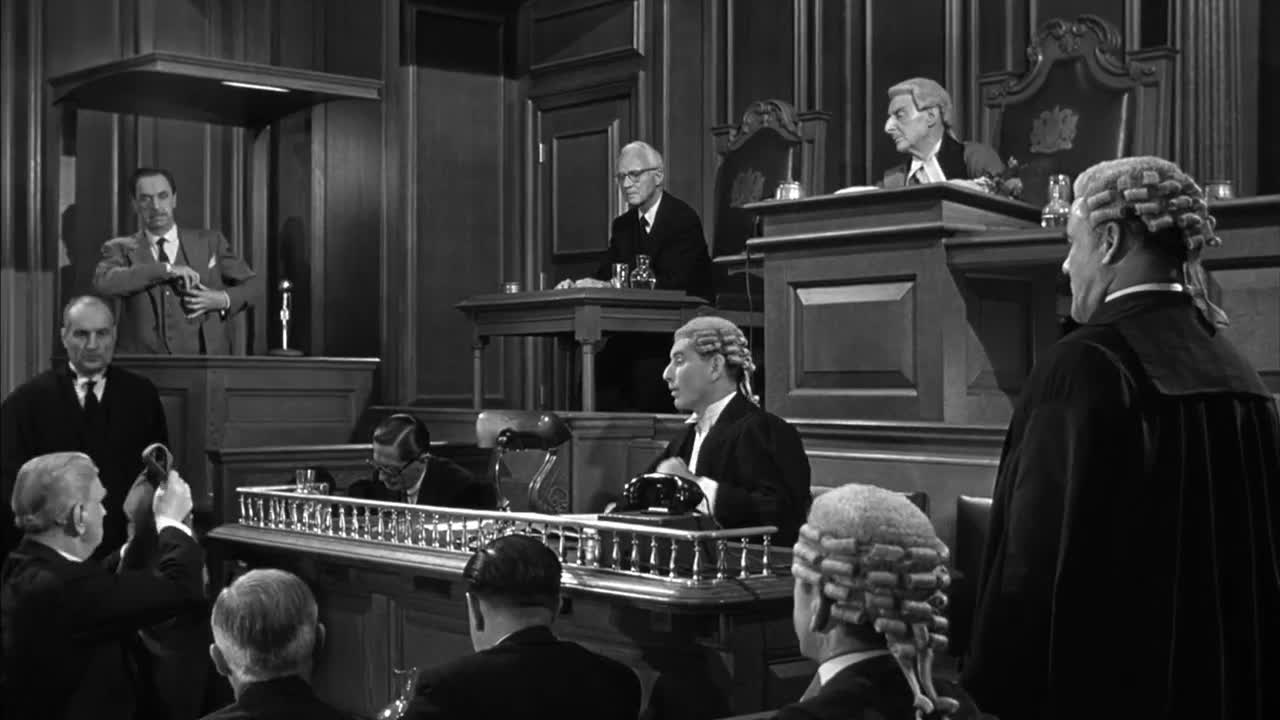
The court hears how Mrs French died: one blow, no struggle, a staged break-in, and Leonard's fingerprints. Underneath, the case rests on a single word — whether the attacker caught her "by surprise." Sir Wilfrid pounces when Myers calls the assailant "the murderer," and the judge makes Myers rephrase. It is a battle over grammar that could decide a man's life.

CourtroomAt the doctorExplainingWarningB2mediumbritishClean

Key moments

Start here, then watch the full scene
  1. ❝ Monólogo · 4 frases objection speech

    One objection doubles as a grammar lesson, exposing the gender hidden in murderer.

    1:52–2:06
    14s
  2. Myers Puts Words in the Witness's Mouth

    3:35–3:56
    21s
  1. ❝ Monólogoobjection speech4 frasesPracticar ↗

Hearne Testifies About the Prints, explained

What happens

At home, a doctor treats Sir Wilfrid with calcium injections, nitroglycerin and hourly pills, while Miss Plimsoll confiscates his cocoa — he's not above lacing it with brandy. Then it moves to the Central Criminal Court, where Inspector Hearne describes Mrs French's death: one blunt blow, no signs of a struggle, a staged break-in, and fingerprints belonging to the victim and Leonard Vole.

What's really going on

The murder facts do the talking: "Death was instantaneous, caused by one blow from a heavy and blunt instrument," and "None. Just the one blow." No struggle, nothing stolen, and a window broken from the inside — the prosecution's own evidence hints the scene was arranged. Myers wants the inspector to agree the killer took Mrs French "by surprise," letting him suggest a planned, cowardly attack; Sir Wilfrid blocks him, pointing out the assailant might as well be female. When Myers keeps answering his own questions, the judge sides with Sir Wilfrid: "the presence of the witness would seem superfluous." Meanwhile the medical framing keeps Sir Wilfrid alive and under watch — he wins the round but is being managed by everyone around him.

Key lines & what they mean

“This is ridiculous. Just nervous heartburn. I always get it the first day of a trial.”
Sir Wilfrid dismisses his own nerves as heartburn, revealing how much he hates being kept from court on the opening day.
“It may interest you to know that I am descended from a warrior family which traces its brave past back to Richard the Lion-Hearted.”
He answers medical orders with pompous family pride, insisting he is a fighter, not an invalid.
“Mr Myers, Sir Wilfrid has joined us just in time to catch you on a point of grammar.”
The judge rules that Sir Wilfrid may object to Myers calling the attacker "the murderer" before anyone has been convicted.
“After all, if he insists on answering his own questions, the presence of the witness would seem superfluous.”
Sir Wilfrid's dry jibe: if Myers keeps answering for the witness, there is no point having the witness there at all.

Theme

  • Justice — A murder trial turns on one word — murderer or murderess — showing how fragile and verbal the search for truth can be.
  • Deception — A staged break-in and a lawyer's leading questions suggest the evidence itself may be arranged to mislead.

Qué aprendes en este capítulo

Puntos de enseñanza

Repasa justo después de ver
Mi nivel1/6

A1–C2 es la escala MCER. Las tarjetas por encima del nivel elegido se atenúan y la reproducción no se pausa en ellas.

Witness for the Prosecution: tu progreso

Capítulo 15 de 27 · quedan unos 45 min

← Anterior
Siguiente · 16account forLa escena: The Bloodstained Jacket in Court

Ideas clave

Lo que te llevas
  1. Fingerprints and fake glass tell the story of a staged break-in.
  2. A single blow suggests the killer took her by surprise.
  3. Grammar becomes a weapon in Sir Wilfrid's objection.
  4. The judge's dry humour keeps the room in order.

Preguntas frecuentes

La pregunta, luego la frase
Why does the inspector's own evidence suggest the break-in was staged?

The glass outside does not match a window forced from the outside, and nothing was stolen — details that undercut the idea of a burglary gone wrong.

Who is Myers questioning when Sir Wilfrid objects to the word "murderer"?

Inspector Hearne. Myers calls the attacker "the murderer" before anyone is convicted, and Sir Wilfrid seizes on the wording, noting it could have been a "murderess".

Is it fair for the judge to side with Sir Wilfrid over a point of grammar?

The judge only asks Myers to rephrase, since a witness should give facts, not opinions. Myers then withdraws the question, so the point stands but the trial goes on.

What does "superfluous" mean here?

Unnecessary. Sir Wilfrid jokes that if Myers keeps answering his own questions, there is no point having a witness at all.

Why does Myers want Hearne to say the killer took Mrs French by surprise?

A surprise attack implies planning and suggests the victim could not resist, strengthening the case that this was deliberate murder rather than a bungled burglary.