00:00 / 04:18
00:00 / 04:18

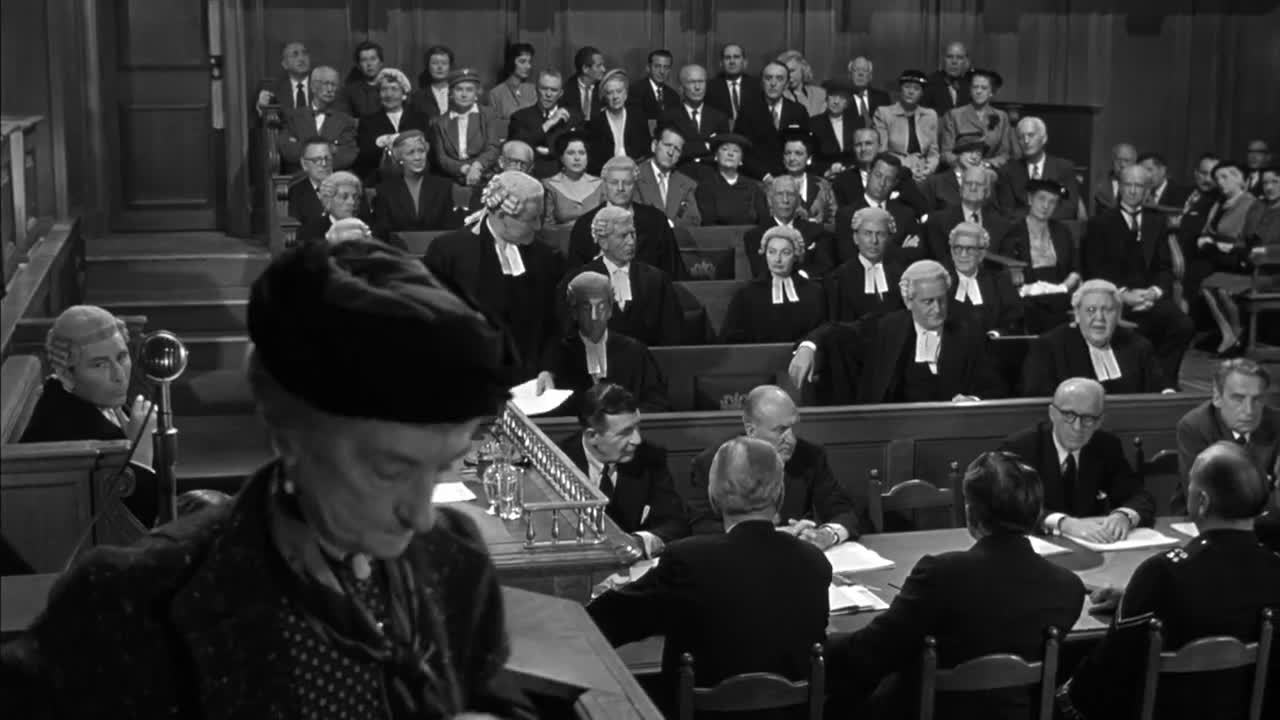
Janet McKenzie Takes the Stand, Explained

The housekeeper comes to sink Leonard, not save him: she insists she is a housekeeper, not a 'companion,' and admits slipping back to the house that Friday. Then she lands the blow the prosecution needs — Leonard was already married, and a new will left his elderly employer everything. 'He was to have all her money.' Motive, delivered as gossip.

CourtroomExplainingConfrontingB2mediumbritishClean

Key moments

Start here, then watch the full scene
  1. Housekeeper Finds Mrs French Dead

    1:27–2:38
    71s
  2. Mrs French's New Will Names Leonard

    3:42–4:13
    31s

Janet McKenzie Takes the Stand, explained

What happens

Janet McKenzie, Mrs French's housekeeper of ten years, takes the witness box at the Central Criminal Court and swears the oath. She describes the Friday she went to her niece's, realised she had left a dress pattern behind, and slipped back — only to hear the prisoner talking and laughing with Mrs French. The next day she returned and found her mistress dead, the room ransacked.

What's really going on

Janet is not a neutral witness. She bristles at the word 'companion', snapping that companions are 'poor feckless bodies, afraid of a bit of honest domestic work', and she wants the court to know she 'prevented her doing a foolish thing' for ten years. But her testimony cuts both ways: it puts Leonard in the house the night of the murder, and it also hands the prosecution its motive. Leonard was married already, she says, and Mrs French had a new will drawn up leaving him everything a week before she died — 'He was to have all her money.' Even her grudging admission that she heard the two talking and laughing makes the relationship look intimate, then gives the Crown a reason: money, and a secret wife.

Key lines & what they mean

“I was her housekeeper! I've no opinion of companions, poor feckless bodies, afraid of a bit of honest domestic work.”
Janet defends her position and sneers at the softer label 'companion', showing pride in hard domestic work.
“Many's the time I prevented her doing a foolish thing.”
She presents herself as her mistress's practical guardian, claiming ten years of steering her away from foolish decisions.
“Yes. He was to have all her money, she told him, as she had no near relations nor anybody that meant to her what he did.”
Janet confirms the new will left Leonard everything, supplying the prosecution with a clear motive.
“And there she was, dead. And everything tossed hither and thither.”
Her flat description of finding the body and the ransacked room is the scene's hardest, quietest blow.

Theme

  • Secrets — The housekeeper reveals Leonard's hidden marriage and the will that made him heir a week before the killing.
  • Justice — Testimony meant to define her role as servant quietly supplies the motive the prosecution needs.

Qué aprendes en este capítulo

Puntos de enseñanza

Repasa justo después de ver
Mi nivel0/6

A1–C2 es la escala MCER. Las tarjetas por encima del nivel elegido se atenúan y la reproducción no se pausa en ellas.

Witness for the Prosecution: tu progreso

Capítulo 17 de 27 · quedan unos 37 min

← Anterior
Siguiente · 18a scheming rascalLa escena: Wilfrid Cross-Examines the Housekeeper

Ideas clave

Lo que te llevas
  1. A housekeeper's pride can shape how a jury hears her.
  2. Small domestic details often carry the strongest evidence.
  3. The new will turns affection into a clear motive.
  4. Careful timing claims are the lawyer's real target here.

Preguntas frecuentes

La pregunta, luego la frase
Why does Janet insist on being called a housekeeper, not a companion?

She is proud of doing real domestic work and looks down on companions as 'poor feckless bodies' — but the label also matters, because closeness to Mrs French is exactly what her evidence is meant to establish.

Why did Janet slip back to the house on her night off?

She had left the dress pattern she promised her niece at home. Going back only to fetch it is what puts her in the house and lets her hear Leonard with Mrs French.

Why does the housekeeper's evidence damage Leonard so badly?

She places him with Mrs French the night of the killing and reveals two facts the jury did not have: he was already married, and a will made a week earlier left him all her money.

Why does Sir Wilfrid object to Janet's answer about what Mrs French knew?

He calls it 'pure conjecture' — Janet can testify to what she saw and heard, not to what the dead woman was thinking, and the judge agrees the opinion cannot be admitted.

Who is the 'prisoner' Janet keeps referring to?

Leonard Vole, the man on trial for the murder. In court he is referred to as the prisoner until the verdict is reached.