00:00 / 04:20
00:00 / 04:20

Coogan and Brydon Compare Careers, Explained

The Trip · 2011

Capítulo 16 de 20 · 4'20"

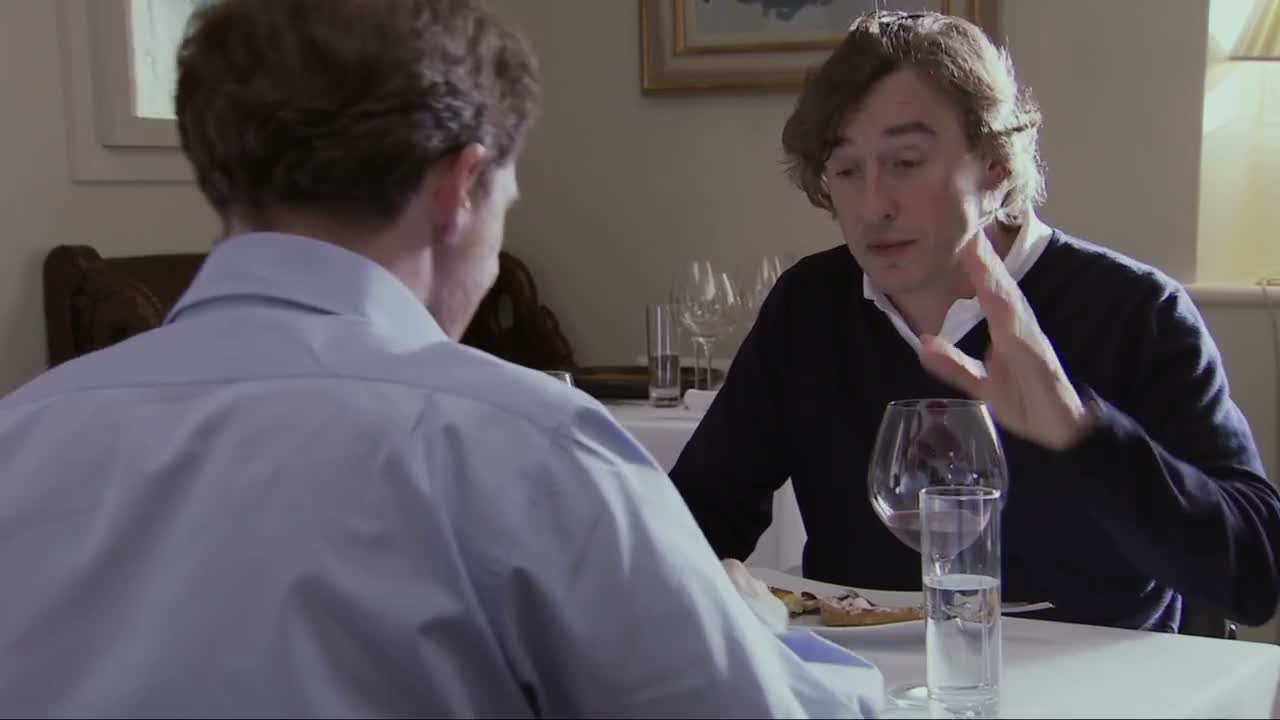
Over an elaborate tasting menu, two actors trade impressions and needle each other about who is the better performer. The talk sounds playful, but a line like "I've got an albatross around my neck, and it's got the face of Michael Sheen" reveals real career envy underneath.

TeasingTeasingComplainingFriendsB2fastbritish

Key moments

Start here, then watch the full scene
  1. The Albatross Line: Career Envy at Dinner

    1:22–2:06
    44s
  2. David Frost, Peter Sellers and Lost Roles

    2:10–3:19
    70s
  3. The Bad Food, Small Portions Punchline

    3:24–4:19
    55s

Coogan and Brydon Compare Careers, explained

What happens

At a fine-dining restaurant, two actor friends work through course after course while slipping into impressions — Michael Caine as Bond, Dustin Hoffman — and bickering about success, envy and who deserves which roles. One of them admits he lost parts to Michael Sheen; the meal ends with a withering verdict on the food.

What's really going on

Strip away the impressions and this is a scene about two men measuring themselves against a more successful peer. The impersonations — Bond, David Frost, Dustin Hoffman — are a party trick, but they keep circling the same anxiety: being good and still not getting the part. "I've got an albatross around my neck, and it's got the face of Michael Sheen," one of them says, and the joke lands because it is only half a joke. The other pushes back — "He's not brilliant; he's good. He's solid." — and the argument becomes about the difference between talent and stardom. By dessert, the grand restaurant setting has collapsed into a punchline: the food is terrible and there is too little of it, which is its own comment on getting a taste of something you cannot hold on to.

Key lines & what they mean

“I've got an albatross around my neck, and it's got the face of Michael Sheen.”
He jokes that a rival's success is a weight he can never shake off, blaming that comparison for the roles he does not get.
“He's not brilliant; he's good. He's solid.”
A backhanded compliment: calling another actor merely good and solid instead of brilliant, quietly placing him below true greatness while sounding generous.
“I got to tell you, the food here is terrible, and such small portions.”
A deadpan attack on the restaurant: the food is bad and the servings are tiny, delivered as a punchline rather than a review.
“I don't believe that you really believe that I couldn't play David Frost.”
He refuses to accept that his friend genuinely thinks he could not play the part, turning a casual jibe into a challenge about respect and self-worth.

Theme

  • Ambition — Two actors trade impressions while quietly comparing careers, each measuring himself against a more famous peer.
  • Friendship — The bickering stays affectionate — they needle each other about success but keep sharing the meal and the laughter.

Qué aprendes en este capítulo

Puntos de enseñanza

Repasa justo después de ver
Mi nivel1/4

A1–C2 es la escala MCER. Las tarjetas por encima del nivel elegido se atenúan y la reproducción no se pausa en ellas.

The Trip: tu progreso

Capítulo 16 de 20 · quedan unos 21 min

← Anterior
Siguiente · 17as empty experiences goLa escena: Dad Phones Joe About Drinking

Ideas clave

Lo que te llevas
  1. Albatross as a hanging burden
  2. About to as the next second
  3. Small portions as a borrowed gag

Preguntas frecuentes

La pregunta, luego la frase
Why do the two men spend the meal doing impressions?

Impressions are their professional party trick, and the scene uses them to show off as much as to compete. Each one keeps trying to prove he is the more versatile, more watchable performer.

Why does Michael Sheen keep coming up when he isn't even there?

He is the more successful contemporary the pair measure themselves against. Mentioning him turns a friendly dinner into a quiet contest about who gets the good roles.

Is the 'terrible food, such small portions' line a real complaint?

It plays as a joke about expensive tasting menus: beautiful plates, tiny servings, and an absurd parade of chocolate desserts served before the deadpan verdict.

Which of the two actors is being unfair?

Neither, really. The scene keeps things balanced: each man praises the other's strengths while insisting his own talent goes unrecognized, so the audience is never told who is right.