00:00 / 05:22
00:00 / 05:22

Gatsby Refuses to Let the Past Go, Explained

The Great Gatsby · 2013

Capítulo 12 de 18 · 5'22"

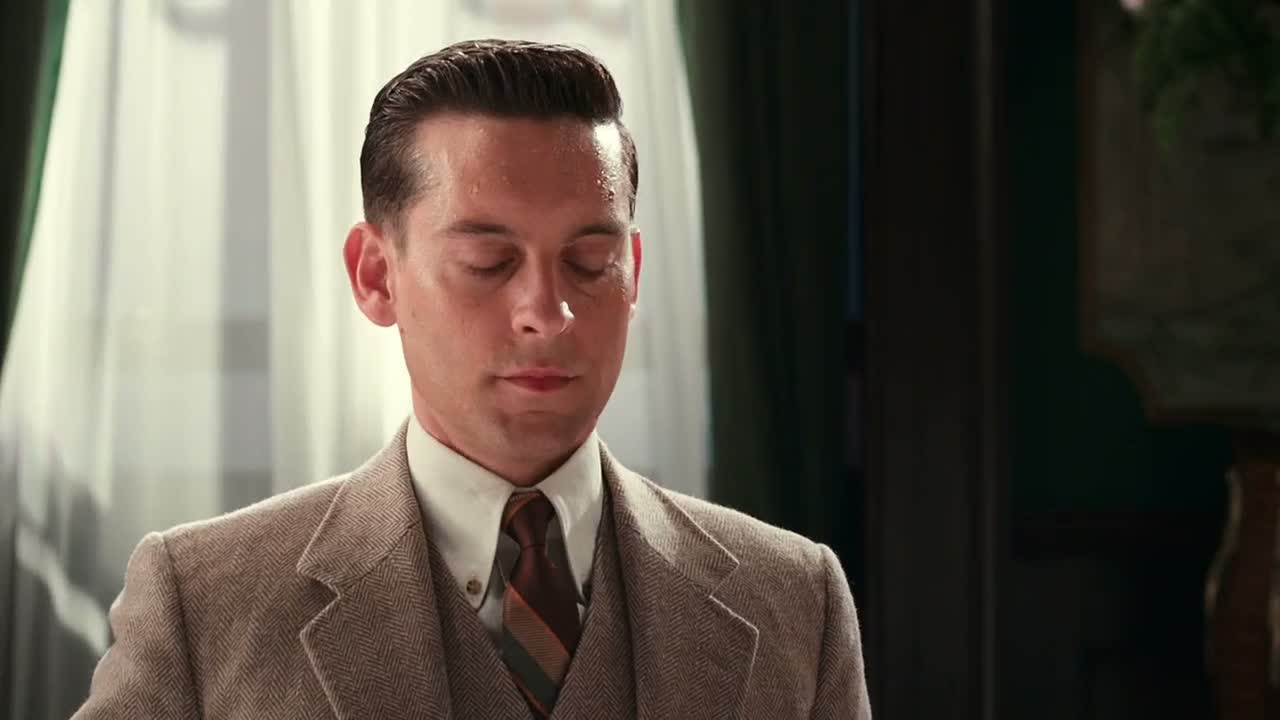
Gatsby insists Daisy can still be his, and that they can go back to how things were five years ago. One line cuts at the fantasy: "You can't repeat the past." His reply is flat refusal to accept it — "Why, of course you can" — and the film then shows where that belief was born.

Comforting a friendArgumentsComfortingConfessingFriendsB1slowamericanClean

Key moments

Start here, then watch the full scene
  1. Gatsby Refuses to Accept the Past

    1:09–1:37
    28s
  2. ❝ Monólogo · 13 frases The pause before the kiss

    The climber stops at her mouth, waits one extra beat, then jumps.

    2:40–3:15
    36s
  3. ❝ Monólogo · 5 frases Life only goes up

    He calls love a mistake, then draws a life that is not allowed to fall.

    4:07–4:29
    22s
  1. ❝ MonólogoThe pause before the kiss13 frasesPracticar ↗
  2. ❝ MonólogoLife only goes up5 frasesPracticar ↗

Gatsby Refuses to Let the Past Go, explained

What happens

After the party, Gatsby tells Nick that Daisy was unhappy and now wants to run away, and he reveals his plan: Daisy will tell Tom she never loved him, and they will return to Louisville to be married. Nick objects that the past cannot be repeated, but Gatsby refuses to believe it and describes how they fell in love five years earlier.

What's really going on

Gatsby's whole plan depends on a sentence he wants Daisy to say — "she never loved him" — as if erasing Tom from the past would restore the five years he lost. Nick's warning, "You can't repeat the past," is answered with "Why, of course you can," because Gatsby is not talking about memory but about control. The flashback that follows shows the source: a young man who believed he could only climb if he climbed alone, and who fixed his dream onto one girl. What the scene shows is that his dream was built before she was.

Key lines & what they mean

“I knew it was a great mistake for a man like me to fall in love.”
Gatsby looks back and admits love was a risk he should not have taken, given where he came from.
“My life has got to be like this.”
A declaration that his life must keep climbing, with no room for standing still or for the past to catch him.
“You're wrong about the past, old sport.”
Gatsby's parting shot to Nick, insisting that the past is not fixed and can still be changed.
“It's got to keep going up.”
The rule Gatsby lives by: everything must rise, a self-made man's refusal to let his life level off.

Theme

  • Dreams — Gatsby believes the past can be recovered and rebuilt, treating his old love as a goal still within reach.
  • Memory — Nick narrates a man who keeps talking about the past as if trying to recover something he lost.

Qué aprendes en este capítulo

Puntos de enseñanza

Repasa justo después de ver
Mi nivel1/4

A1–C2 es la escala MCER. Las tarjetas por encima del nivel elegido se atenúan y la reproducción no se pausa en ellas.

The Great Gatsby: tu progreso

Capítulo 12 de 18 · quedan unos 24 min

← Anterior
Siguiente · 13Have it your own wayLa escena: Gatsby Meets Tom at Lunch

Ideas clave

Lo que te llevas
  1. Use you can't repeat the past as a warning
  2. Hear couldn't care less as total indifference
  3. Use start over and as if for a reset
  4. Catch old sport as Gatsby's pet name
  5. Hear of course you can as stubborn hope

Preguntas frecuentes

La pregunta, luego la frase
Why does Gatsby want Daisy to tell Tom she never loved him?

He wants the past rewritten so that only he was ever in her heart. If she says she never loved Tom, then the five years apart become a mistake he can undo.

What does Nick mean by "You can't repeat the past"?

Nick is warning Gatsby that time cannot be reversed. He thinks Gatsby is chasing a memory that no longer exists, no matter how much money or effort he spends.

Why does the film flash back to Louisville?

The flashback shows where Gatsby's belief comes from. It reveals him as a penniless young man who fell for Daisy and built his entire ambition around her.

What does "old sport" tell us about Gatsby here?

It is his signature old-fashioned address, used warmly and often. In these scenes it also keeps a distance, letting him stay calm and in control while insisting the past can be fixed.