
“I will tell you God's truth. God's truth about myself.”
Por qué es buena
He swears by God, and the oath itself sounds rehearsed.
Registro
literary
Úsala tú
I'll tell you the plain truth about what happened.
Capítulo 5 de 18 · 4'27"
Riding to lunch, Gatsby volunteers his whole life story — fortune, Oxford, war medals, Europe — the exact rumors he's trying to deny. Nick can't tell if any of it is real, and the narration says so: "Could it all be true?" Then Gatsby pivots to what he actually wants: a favor.
❝ Monólogo · 7 frases Gatsby Swears It's God's Truth
❝ Monólogo · 10 frases The bridge voice-over
New York looks first-seen, then the line lets even Gatsby happen.
Gatsby drives Nick into the city for lunch and, on the way, tells him the story of his life: a wealthy Midwestern family, an Oxford education, a heroic war record, and years drifting through Europe. Nick listens and doubts. Later Gatsby admits what he's after: a very big request.
Gatsby's confession is a performance, and the film knows it. He insists, "I will tell you God's truth," then recites a biography so polished it sounds rehearsed — "I am the son of very wealthy people from the Middle West," Oxford, jewels, big-game hunting. Nick's voice-over supplies the verdict: "The way he spoke. No wonder people thought he was lying." The point isn't whether the stories are true; it's that Gatsby needs Nick to believe him, which is why he protests too much. Even his disarmament is a move: "Of course, you don't need to take my word for it, old sport" — a line that dares Nick to do exactly that.
A1–C2 es la escala MCER. Las tarjetas por encima del nivel elegido se atenúan y la reproducción no se pausa en ellas.
“I will tell you God's truth. God's truth about myself.”
He swears by God, and the oath itself sounds rehearsed.
literary
“I am the son of very wealthy people from the Middle West.”
A polished pedigree line that quietly betrays the performance.
Formal
“Of course, you don't need to take my word for it, old sport.”
Confidence performed so hard it becomes a confession.
Formal
“You see, old sport, I'm going to make a very big request of you today.”
Small talk first, then a big ask: instant suspense.
Informal
I will tell you God's truth. God's truth about myself. I am the son of very wealthy people from the Middle West. Sadly, all of them are dead. I was brought up in America... ...but educated at Oxford... ...because all my ancestors... ...have been educated there for years. It's a family tradition.
But the city seen from the Queensboro Bridge... ...is always the city seen for the first time... ...in its first wild promise of all the mystery... ...and the beauty... ...in the world. Anything... ...can happen now that we've slid over... ...this bridge, I thought. Anything at all. Even Gatsby could happen.
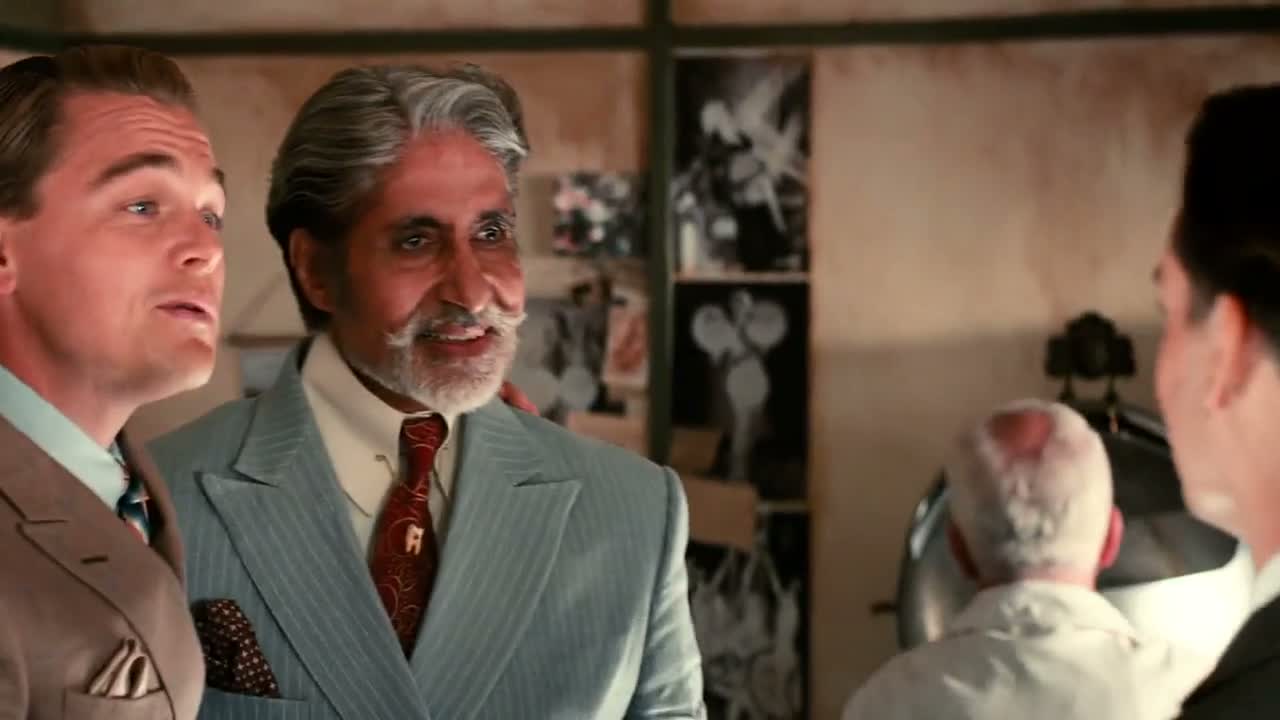 Siguiente · 06keeps his mouth shutLa escena: Gatsby's Lunch with a Gambler
He needs Nick's trust before he can ask for a favor involving Daisy. The biography is groundwork: Gatsby is trying to replace the rumors with his own version of himself.
Nick wants to. He notes the photograph looks authentic, yet admits he was "impossibly confused," because Gatsby's manner makes an impressive life sound rehearsed. The film leaves the truth deliberately unresolved.
He doesn't say in the car. He tells Nick that Jordan Baker will explain everything when Nick takes her to tea — which turns out to be about arranging a meeting with Daisy.
Gatsby calls him "my good friend" and one of New York's most distinguished businessmen, and offers him as someone who can vouch for Gatsby's character. He later turns out to be a gambler tied to organized crime.