
“I saw it. It was a yellow car.”
Por qué es buena
A flat eyewitness line that quietly starts a manhunt.
Registro
Neutral
Úsala tú
I saw it. It was a red van.
Capítulo 16 de 18 · 4'12"
After a woman is struck and killed, the crowd at the wreck settles on one detail: "It was a yellow car." Wilson, barely holding together, insists he already knows whose it is — and someone names Gatsby. Sympathy turns into a verdict in a single breath: he must have done it, so he'll pay.
The Crowd Blames Gatsby
A fatal crash has drawn a crowd. Wilson's wife is dead in the road, and onlookers trade the one detail they agree on: a big yellow car. Wilson keeps saying he knows the make. Then someone supplies a name — Gatsby — and the talk turns from accident to murder, with a promise that he'll pay.
The scene is a study in how a story becomes a fact. No one saw a driver; the crowd only saw a car, and "I saw it. It was a yellow car" is enough for a town to settle on the owner of that color. Wilson, stunned, repeats that he knows the vehicle, and the bystanders finish the thought for him: if the car is Gatsby's, Gatsby is guilty, and if Gatsby is guilty, Gatsby will pay. Nick's narration lets the leap stand without correcting it, which is exactly the film's point — grief and gossip, not evidence, do the convicting here. Even the sympathetic impulse, "Can't you see the man needs peace and quiet?", is about clearing the room, not about the truth.
A1–C2 es la escala MCER. Las tarjetas por encima del nivel elegido se atenúan y la reproducción no se pausa en ellas.
“I saw it. It was a yellow car.”
A flat eyewitness line that quietly starts a manhunt.
Neutral
“I know what kind of car it was.”
The more he insists he knows, the guiltier it sounds.
Neutral
“Can't you see the man needs peace and quiet?”
Ordinary kindness echoing against an unbearable loss.
Neutral
“Something ought to be done about a fella like that.”
Vigilante certainty born from grief and gossip.
Informal
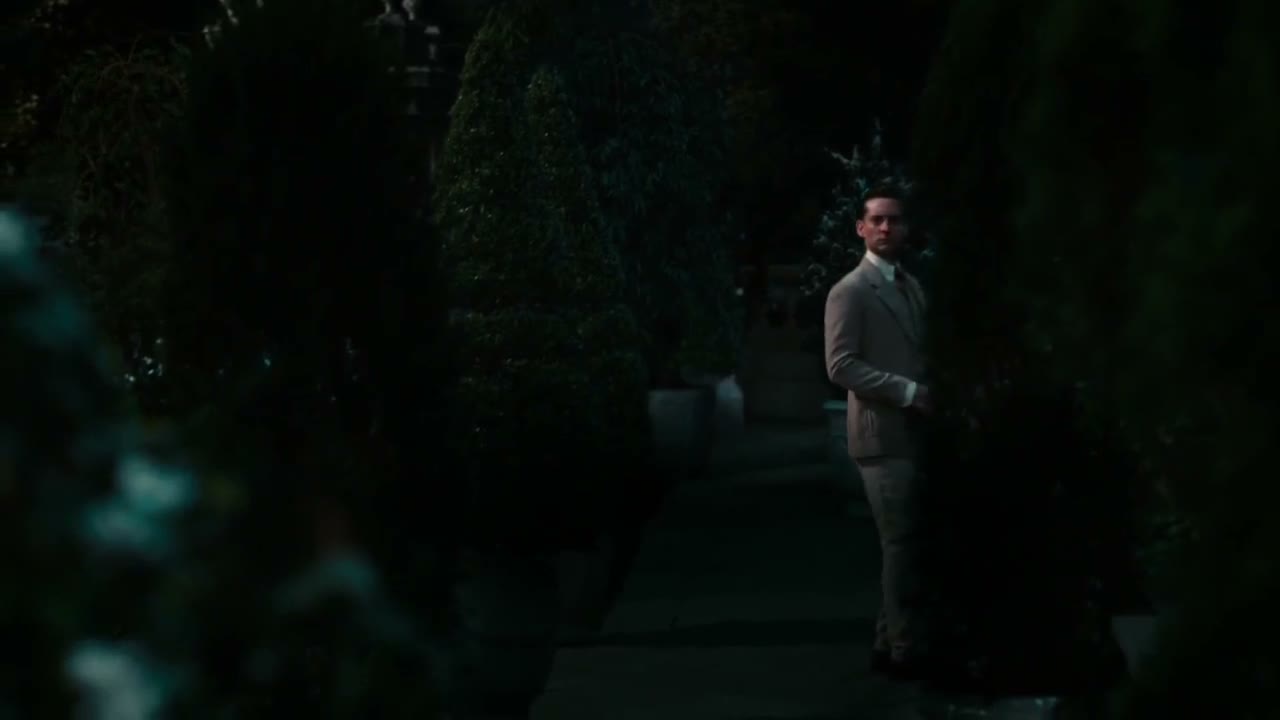 Siguiente · 17keep your voice downLa escena: Gatsby Waits Outside Daisy's House
Daisy was driving when the car hit Myrtle; Gatsby takes the blame to protect her. The crowd at the wreck has none of this information, which is why their certainty is so dangerous.
He grieves by grasping at the one clue he understands: the yellow car. Once someone tells him the car is Gatsby's, Wilson supplies the motive — that Gatsby was the man fooling around with Myrtle — and the story closes.
Tom is at the scene and hears the crowd name Gatsby. He doesn't correct them. Whether he knows Daisy was driving is left ambiguous, but he does nothing to protect Gatsby.
People reach a judgment in minutes, on almost no evidence, and then act. The party world that looked glamorous earlier now looks like a mob deciding who should pay.