
“A year later, Tom Buchanan of Chicago swept in and stole her away.”
Por qué es buena
Two forceful verbs make the marriage look like a heist.
Registro
literary
Úsala tú
A month later, a stranger swept in and stole her away.
Capítulo 7 de 18 · 3'15"
The request is almost comically small: get Daisy to tea so a certain someone can "happen to pass by." Jordan fills in five years of history—Louisville, the war, the letter on her wedding morning, Tom's affair splashed across the papers—and reveals that the house across the bay was never an accident.
Tom Sweeps In and Steals Daisy
❝ Monólogo · 4 frases Why he bought the house
Four beats drop the mask: coincidence, then the house, the parties, the tea.
Over drinks, someone relays Gatsby's plan: no direct meeting, just an invitation to tea so he can stroll past by chance. To explain it, the same person rewinds five years to Louisville, where Daisy waited for Gatsby through the war, then married Tom Buchanan and left Gatsby buying a house directly across the bay.
On the surface it's a favor, but the ask is a tell. A dinner invitation becomes the whole architecture of Gatsby's five-year obsession: the house across the bay, the endless parties, all of it arranged around a single chance encounter. One line spells out the scale: "He bought that house to be near her." Another line admits, "He constantly asked about Daisy. I was just the first person that knew her." The Louisville story also quietly indicts the Buchanan marriage: Tom crashes a car with a chambermaid a week after the honeymoon, and the papers cover it. Against that, Gatsby's patience looks less like stalking than faith. The closing aside—"I remember feeling torn"—names the cost: he is being asked to hand his married cousin to a near stranger.
A1–C2 es la escala MCER. Las tarjetas por encima del nivel elegido se atenúan y la reproducción no se pausa en ellas.
“A year later, Tom Buchanan of Chicago swept in and stole her away.”
Two forceful verbs make the marriage look like a heist.
literary
“He bought that house to be near her.”
A mansion reduced to a single purpose: to be near her.
Neutral
“He constantly asked about Daisy. I was just the first person that knew her.”
Understatement that reveals years of quiet obsession.
Neutral
“All that for a girl he hasn't seen in five years.”
An entire campaign measured against one person he hasn't seen in years.
Neutral
It's no coincidence. He bought that house to be near her. He threw all those parties hoping she'd wander in one night. He constantly asked about Daisy. I was just the first person that knew her.
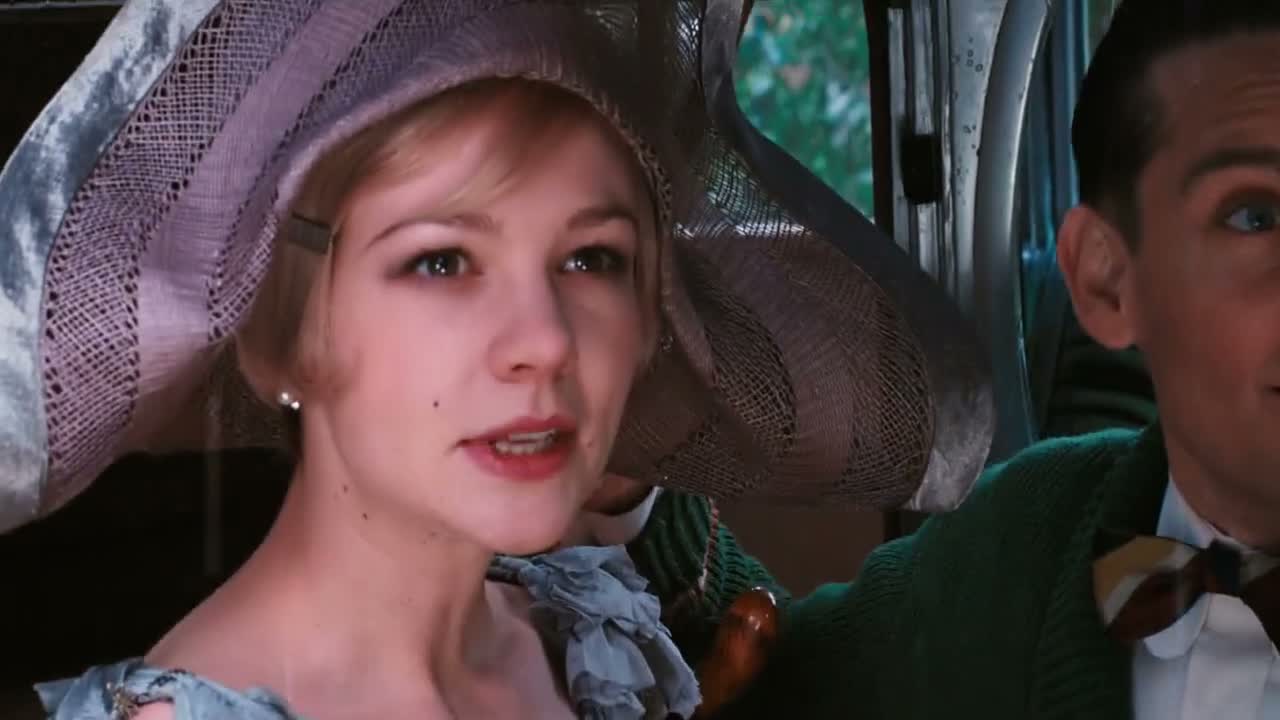 Siguiente · 08acting like a little boyLa escena: Gatsby's Awkward Reunion with Daisy
The scene gives the answer in one line: "He bought that house to be near her." It isn't about the view; he puts himself within sight of Daisy's dock, and the parties are bait for the night she might wander in.
She was there when it arrived and heard Daisy say she'd changed her mind, but Daisy wouldn't tell her. What the letter contained stays private, which is exactly the kind of secret the wedding is built to bury.
No. Getting Daisy to tea is tiny on its face, but everything behind it is huge: the house across the bay, the years of parties and questions. The line "The modesty of it" is wry, because the ask hides a five-year plan.
It is used ironically. The request sounds modest—just come to tea—but it caps years of obsession, so the smallness of the ask is both the point and the joke.