00:00 / 03:57
00:00 / 03:57

Turgidson Argues for a First Strike, Explained

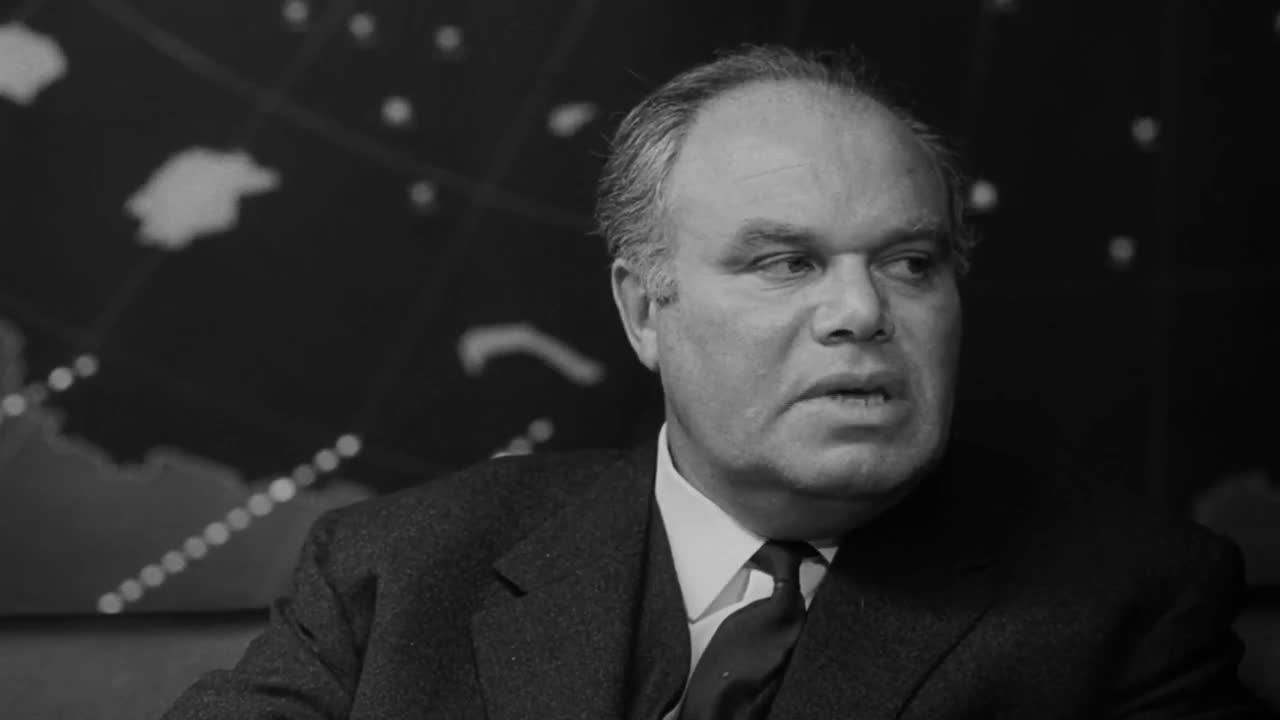
Turgidson lays out the case for striking first: catch the Soviets with their pants down and the war can be won. The president answers that America's policy is never to strike first, and that the general is describing not war but "mass murder." The argument ends with the president refusing to be history's greatest killer.

MeetingsArgumentsPersuadingConfrontingBoss & employeeB2mediumamerican

Key moments

Start here, then watch the full scene
  1. ❝ Monólogo · 7 frases Turgidson Pitches a First Strike

    0:58–1:45
    47s
  2. The President Calls It Mass Murder

    2:27–3:40
    73s
  1. ❝ MonólogoTurgidson's first-strike pitch7 frasesPracticar ↗

Turgidson Argues for a First Strike, explained

What happens

In the War Room, General Turgidson argues for a pre-emptive all-out attack on the Soviet Union. Striking first, he says, would catch the enemy with their pants down and leave America with a reserve force. President Muffley replies that the country's policy is never to strike first, and calls the plan mass murder rather than war.

What's really going on

The scene is the film's central argument, played as a policy discussion and heard as a confession. Turgidson's case is built on numbers and euphemism: a five-to-one missile superiority, three missiles per target, and "only modest and acceptable civilian casualties." His most revealing line is not about the enemy but about the cost at home — "I'm not saying we wouldn't get our hair mussed" — a way of talking about nuclear deaths as a bad haircut. The president's objection is moral, but it is also practical: he will not "go down in history as the greatest mass murderer since adolph hitler." What makes the exchange chilling is that both men are calm, and the plan is defended as a choice between two "postwar environments" rather than as an atrocity. The comedy and the horror are the same thing: the language of strategy cannot describe what it is proposing.

Key lines & what they mean

“Three, when they do, they are going to go absolutely ape.”
Part of Turgidson's numbered argument: if the Soviets do retaliate, they will do it in total fury.
“On all their airfields and missile bases, We'd stand a damn good chance of catching 'em with their pants down.”
His pitch for a first strike: hit everything at once and the enemy will be caught unprepared.
“That was not an act of national policy. There are still alternatives open to us.”
The president's answer to Ripper's rogue order: the attack does not represent the country, and options remain.
“Now, truth is not always a pleasant thing.”
Turgidson's preface to his proposal, framing mass killing as an unpleasant but necessary truth.
“You're talking about mass murder, general, not war.”
The president's blunt verdict: the general's plan is not strategy but slaughter.
“I will not go down in history as the greatest mass murderer since adolph hitler!”
The president's refusal, stated in the strongest terms he can find, to authorise the attack.
“That is precisely the idea, general. That is precisely the idea.”
The president's calm reply about letting the Soviet ambassador into the War Room: the leak of the big board is deliberate.

Theme

  • Satire — A plan for nuclear slaughter is argued with missile ratios, reserve forces and the phrase 'modest and acceptable civilian casualties.'
  • Power — A general pushes the president toward a first strike, and the president's only defence is his place in history.

Qué aprendes en este capítulo

Puntos de enseñanza

Repasa justo después de ver
Mi nivel0/7

A1–C2 es la escala MCER. Las tarjetas por encima del nivel elegido se atenúan y la reproducción no se pausa en ellas.

Dr. Strangelove or: How I Learned to Stop Worrying and Love the Bomb: tu progreso

Capítulo 7 de 20 · quedan unos 38 min

← Anterior
Siguiente · 08come throughLa escena: The President Calls Dimitri

Ideas clave

Lo que te llevas
  1. Numbered arguments can make atrocity sound like logistics.
  2. One redefinition can undo a whole military case.
  3. Rank still shows in who may interrupt whom.
  4. Even a president measures himself against the history books.

Preguntas frecuentes

La pregunta, luego la frase
What is Turgidson arguing for?

A pre-emptive all-out nuclear attack on the Soviet Union. He claims a first strike would catch the enemy with their pants down and let America prevail with only 'modest and acceptable' casualties.

Why does the president refuse the first strike?

He says it is against the country's declared policy never to strike first, and that the general's plan is not war but mass murder. He also refuses to be remembered as history's greatest killer.

What does 'get our hair mussed' mean?

It is Turgidson's euphemism for taking damage, here meaning American deaths in a nuclear exchange. He uses it to make the cost of war sound minor.

Why is the Russian ambassador brought into the War Room?

The president orders it, even though the general warns it is a breach of security and that the ambassador will see the big board. The president says seeing it is precisely the idea.

How does the argument end?

The president cuts Turgidson off, saying he has heard quite sufficient from him. He then has the Soviet ambassador brought in and asks to be connected to Premier Kissoff on the hot line.