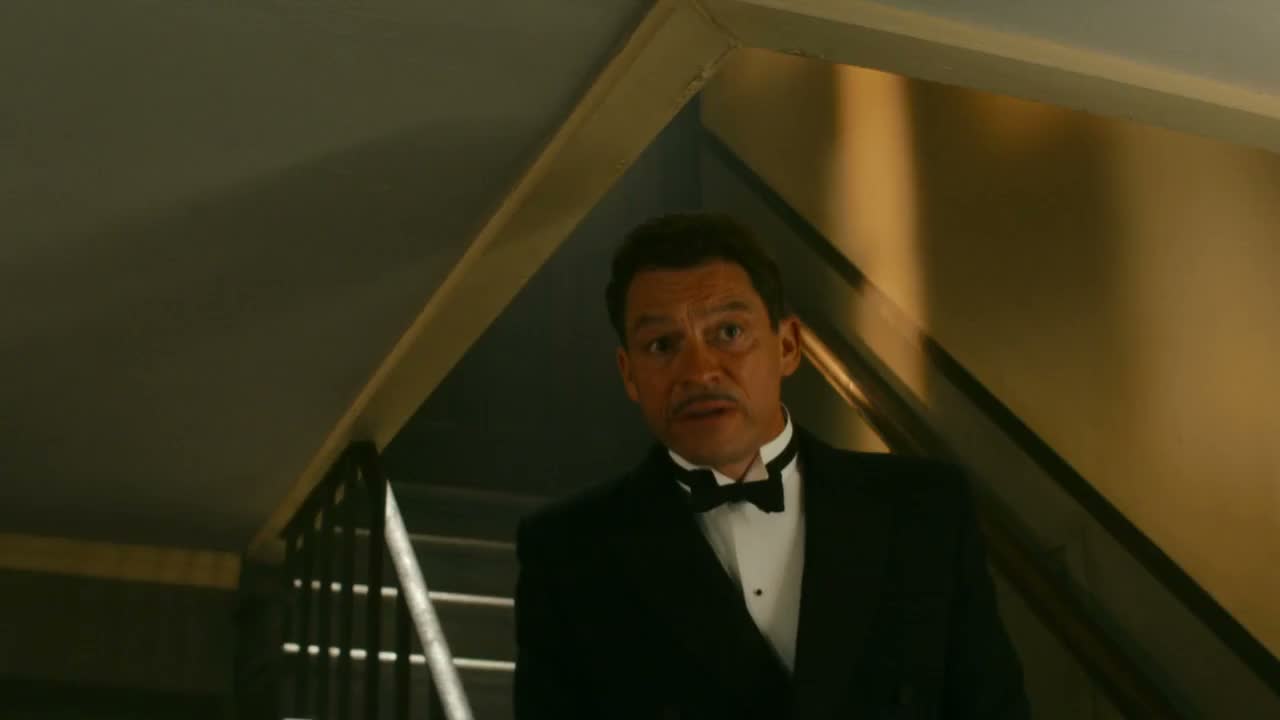
“You weren't quite what we had in mind for Sybil, but we got past it.”
An old prejudice admitted, then set aside: not what we had in mind, but we moved on.
Formal
Capítulo 13 de 18 · 1'59"
On the surface, Violet and Tom trade gentle memories in her sickroom. Underneath, she is putting her affairs and her family in order before the end. "You weren't quite what we had in mind for Sybil, but we got past it," she tells him — an old disapproval finally laid to rest.
❝ Monólogo · 5 frases Violet Makes Peace with Tom
❝ Monólogo · 6 frases How the miniature happened
Old feeling told as a walk and a shop; burning it would have been cleaner than sending it back.
In the final stretch of Downton Abbey: A New Era, Violet Crawley is confined to her bed. Tom Branson, the widower of her granddaughter Sybil, sits with her. They talk about the family's plan to gather at the French villa each summer, and Violet recalls the miniature portrait and the man who once sent it to her.
Violet has spent the film being corrected and losing her grip on a world she once ran. This quiet exchange is her settling accounts. "You weren't quite what we had in mind for Sybil, but we got past it," she tells Tom, admitting that the family once judged him unworthy of her granddaughter and that time proved them wrong. She also praises him as "a good friend through the years" and reports that he is finally "settled," with Maud back in the family — she is blessing the life he built after Sybil died. Tom answers with honesty rather than flattery, which is exactly what she wants. When she refuses to join them at the villa, "That's all over for me," it is not self-pity but a clear-eyed acceptance that her travels, and her life, are winding down.
A1–C2 es la escala MCER. Las tarjetas por encima del nivel elegido se atenúan y la reproducción no se pausa en ellas.
“You weren't quite what we had in mind for Sybil, but we got past it.”
An old prejudice admitted, then set aside: not what we had in mind, but we moved on.
Formal
“I am happy to have known you, Tom.”
A farewell without farewells: glad, in the perfect tense, to have known you.
Formal
“I'd never have got anywhere if I were as rotten a liar as you.”
An insult that is really a compliment, delivered through a subjunctive.
Informal
“You're such a bad liar, Tom.”
An affectionate jab: calling honesty a bad habit tells the other person they're good.
Informal
“And that's life, isn't it?”
A shrug that invites agreement: that's life, isn't it?
Neutral
In the end. You weren't quite what we had in mind for Sybil, but we got past it. And that's life, isn't it? Getting past the unexpected. And perhaps learning from it, which I think we can say we've done.
No, we... we went for a walk in the town one day, and there was a shop where a man was taking photographs. Yeah, I remember 'cause he was the first photographer' I'd ever seen. They must have copied it from that. Montmirail sent it to me in London with a silly scribbled letter. I sent it back. Of course, I should have burned it.
Siguiente · 14await developmentsLa escena: Guy Offers Barrow a Hollywood JobIt is a late confession. The family once thought Tom, a former chauffeur, was beneath Sybil, and Violet is now admitting they were wrong and that they made their peace with the marriage long ago.
Yes. A New Era is set in 1928, and these bedside talks, first with Tom and later in the film, are Violet's long goodbye. Her illness shapes the whole ending.
She says "That's all over for me." Too frail to travel and near the end of her life, she accepts, without self-pity, that such trips are behind her.
The little portrait came from the Frenchman she once loved, and she had sent it back rather than keep it. She calls it something she should have destroyed for discretion and for her family's sake.
She has just teased him as a bad liar, so he fires back: his honesty, not charm, is what won him his place. It is affection dressed up as a joke.