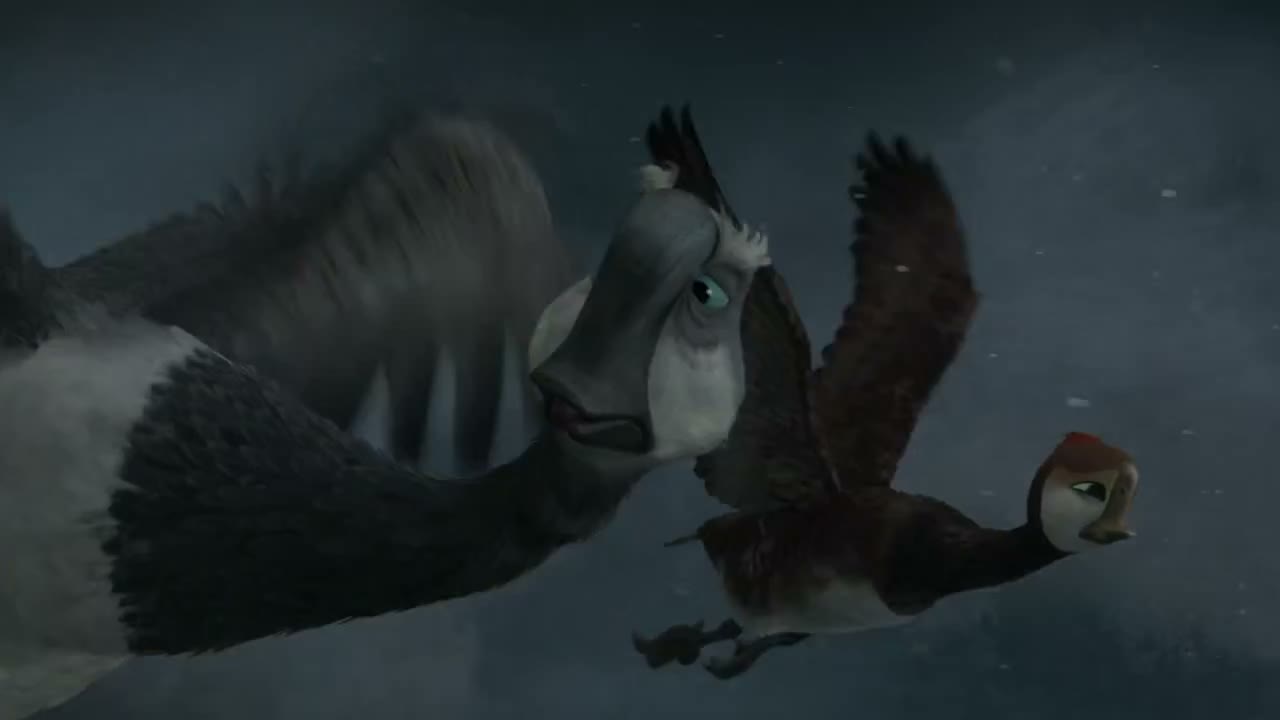
“How do you know if you love something?”
She treats love like a missing subroutine, and the more careful the question, the clearer she already feels it and missed the moment to say so.
Informal
Capítulo 9 de 15 · 5'54"
A flock prepares to migrate, and the leader invites the young goose Brightbill into his formation, telling him the accident that killed his family is what saved him. Then comes the film's quiet heart: "How do you know if you love something?" and the reply's fear, "What if it is too late?"
❝ Monólogo · 4 frases Longneck’s migration brief
He sells the brutal miles as what shapes the flock, then drops a quiet blessing and lets them go.
Fly Like You, Not Like Them
How Do You Know If You Love Something?
Before the great migration, the geese gather as the leader tells everyone to join their families and invites the young Brightbill to fly in his group. He explains that the accident which killed the gosling's family is the very thing that saved him, then offers the boy a place.
The scene hides its real subject inside logistics. A flock organizes for a long flight, and the big feeling arrives sideways, in an invitation nobody expected the outsider to receive. The leader reframes the boy's tragedy with a single sentence, "The accident that killed your family saved you," turning grief into a strange kind of luck. Then the young one asks the question the whole film has been building toward: "How do you know if you love something?" It is answered only by its own fear, "What if it is too late?" Everything wholesome here has an edge, because the migration is a gift and also a goodbye.
A1–C2 es la escala MCER. Las tarjetas por encima del nivel elegido se atenúan y la reproducción no se pausa en ellas.
“How do you know if you love something?”
She treats love like a missing subroutine, and the more careful the question, the clearer she already feels it and missed the moment to say so.
Informal
“What if it is too late?”
Four words close the window: if the feeling is real, the boy is already gone.
Informal
“Will you be here when I get back?”
He treats coming home as a promise. One question names the cruelty of a parent who will not wait.
Informal
“The accident that killed your family saved you.”
Disaster and rescue collapse into one sentence, cruel and impossible to deny.
Neutral
The time has come again. This flight is thousands of unforgiving miles. It has shaped us and tested us over millennia. Now, join your families, and good luck.
Siguiente · 10buy you some timeLa escena: Roz Leads the Flock OutHe admires the young goose's spirit and says it has been ages since a youngster flew with him, so he offers the first-time migrant a place to learn the route.
It means the disaster that orphaned Brightbill also spared him, so his survival came from the same event. The leader is turning grief into a way to keep going.
He is about to leave home and is unsure how to name his feelings for the one who raised him. The question is his way of admitting he does not want to say goodbye.
Because staying in one place is not part of her life, and she wants the young goose to migrate without holding back. Her answer is honest rather than cruel.