
“- This is where evil lives. - Let's just hope that Allison's still alive.”
Why it's great
One line judges the house, the next only worries about a friend, and the dread is set.
Register
Neutral
Use it yourself
This is where bad ideas live.
Chapter 15 of 19 · 3'22"
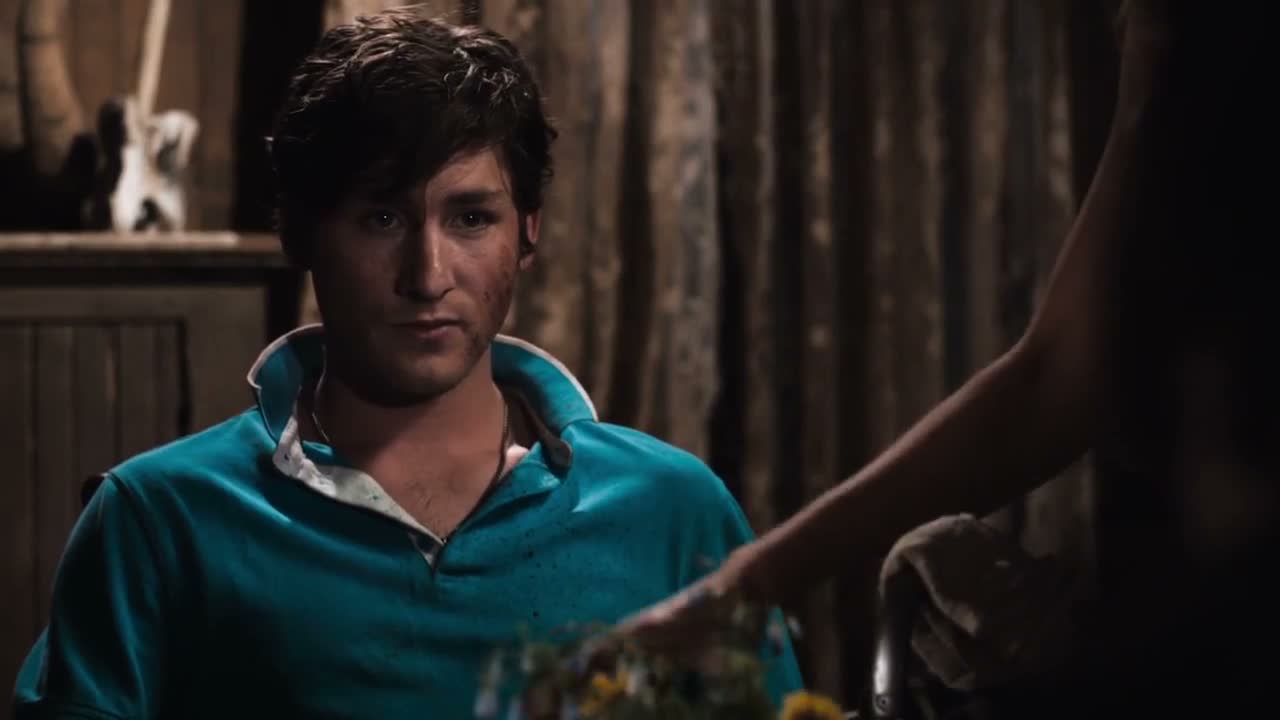
Chad and his friends break into the cabin to rescue Allison, and she tells them the whole thing is a misunderstanding. Chad will not hear it: he wants to 'burn this place to the ground' and calls Allison brainwashed, throwing out the term Stockholm syndrome. The scene ends on a tea truce so absurd it nearly works.
❝ Monologue · 4 lines Chad Wants to Burn the Cabin
Stockholm Syndrome and a Tea Truce
Chad and the other students sneak into the cabin, sure they are walking into the lair of two killers. Allison tries to tell them that Tucker and Dale are innocent, but Chad announces he will burn the place down and accuses her of Stockholm syndrome. Just as it turns into a standoff, a truce is proposed over tea.
The scene is the whole movie in miniature: the college kids are certain they have found evil, and every piece of evidence that could correct them is read as more proof. Allison explains the truth plainly, and Chad answers with a diagnosis instead of a question: "It's called Stockholm syndrome." The joke is that the term is meant to explain why she likes her captors, when the real explanation is that there are no captors at all. Even the truce keeps the irony going, because the one thing both sides can agree to do is drink tea. The scene ends with a body-permed student trading insults with a hillbilly over Earl Grey, which is the film's idea of a ceasefire.
A1–C2 is the CEFR scale. Cards above the level you pick fade, and playback will not auto-pause on them.
“- This is where evil lives. - Let's just hope that Allison's still alive.”
One line judges the house, the next only worries about a friend, and the dread is set.
Neutral
“We have to burn this place to the ground. Destroy it completely.”
Two blunt commands show a mind that has already decided, and that certainty is scary.
Informal
“and they deserve everything that's coming to them.”
He justifies violence with one cold word, and the calm makes it worse.
Neutral
“When someone who's been kidnapped falls in love with their kidnapper.”
A textbook definition dropped into a farce makes the whole accusation ridiculous.
Formal
“You could have fooled me.”
A five-word comeback flips the reassurance into proof of the opposite.
Informal
“Wait! How about I make some tea, and we all sit and talk this out?”
Offering tea at the brink of violence is so mismatched that it becomes the joke.
Informal
“Is that camomile tea? I can't have that. It fucks with my asthma.”
Declining tea because of asthma, seconds before a fight, is absurd and perfectly him.
Informal
What? No, no. Chad... Chad! Stop. No, Chad, no. Chad, stop! You can't do this. This is their vacation home.
 Up next · 16in their shoesThe scene: Chad and Dale Talk It Out
He believes Tucker and Dale are killers who have been murdering his friends. Burning the place down is his idea of destroying the evil and rescuing Allison.
No. Chad uses the term because she defends Tucker and Dale, but the joke is that she is simply telling the truth and they are not captors.
Not at first. They think she has been brainwashed, so her attempts to explain the misunderstanding only make Chad more determined.
Dale offers to make tea and have everyone sit down and talk. The scene shifts from a fight to an awkward, half-comic truce over tea.
He wants to defuse the situation without violence. It is the same instinct that made him kind and awkward all along, now used to stop a fight.