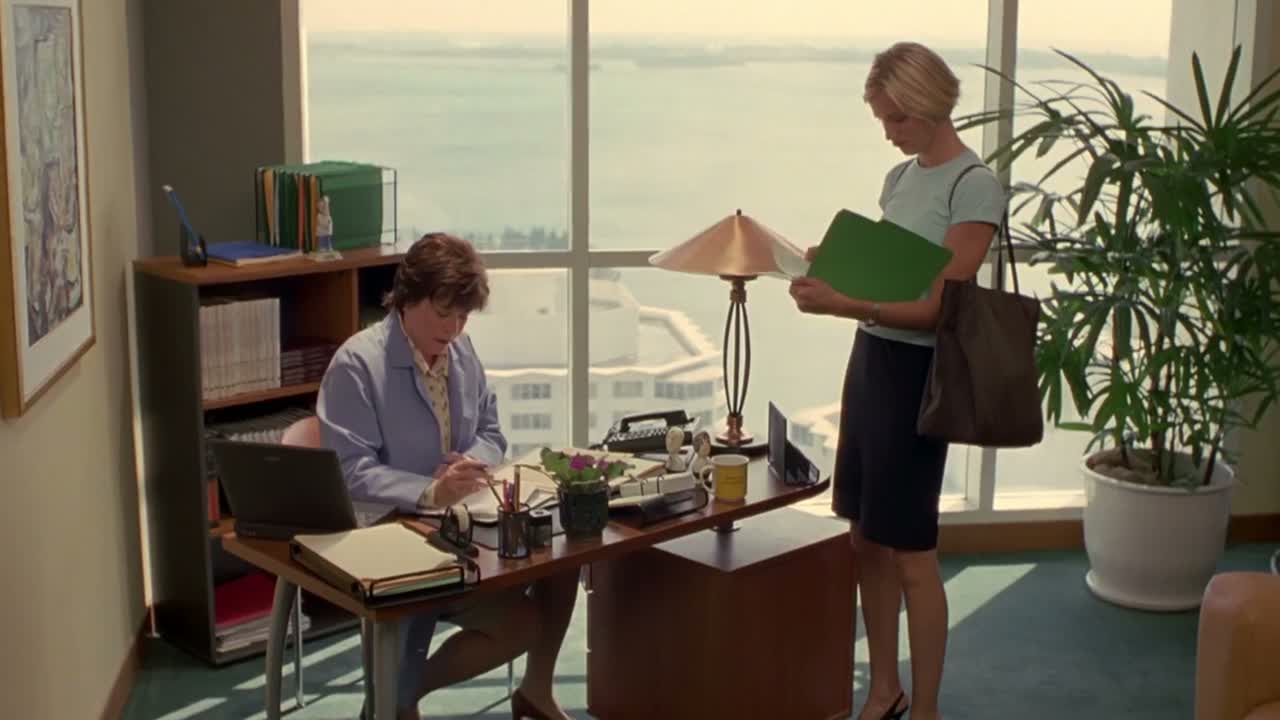
“Can we cut to the chase? I mean, am I. Like, in a lot of trouble here. or...?”
One impatient question exposes how badly he has misread the whole room.
Informal
Chapter 15 of 24 · 2'16"
Ted is questioned by two detectives who think he was soliciting. He insists it is all a mistake, then panics and admits everything anyway: "Yeah. Guilty as charged." He explains he was only bored, admits it was not his first time, and finally asks the detectives to get to the point.
Not That Big a Deal
Two detectives question Ted about a hitchhiker found in his car. Ted protests that it is a misunderstanding, but he keeps talking, admits to picking up hitchhikers, and even says he was bored. Asked whether this was his first time, he answers no. He wants the detectives to get to the point, and the interview turns ugly.
The scene is a comedy of a man who cannot stop making things worse. Ted is innocent of the charge that brought him in, and he says so at once: "This is a huge misunderstanding." But he cannot leave it there. He talks about the hitchhiker, says he was bored, and agrees with the detectives' summary of the crime, which is what turns a mistake into a confession. The film gets its laugh from the gap between what Ted means and what his words do, and then sharpens it with a sudden turn to violence, when one detective loses his temper. The joke is that Ted is guilty of something — just not the thing he is being accused of, and his worst enemy in the room is his own need to explain.
A1–C2 is the CEFR scale. Cards above the level you pick fade, and playback will not auto-pause on them.
“Can we cut to the chase? I mean, am I. Like, in a lot of trouble here. or...?”
One impatient question exposes how badly he has misread the whole room.
Informal
“Hey, I know this is the Bible belt, but where I come from...”
He reaches for a regional excuse and makes his case sound even worse.
Informal
“This is a huge misunderstanding.”
The louder he calls it a misunderstanding, the guiltier he sounds.
Neutral
“And I'm really sorry. I did it. I admit it.”
Three sentences shrinking toward confession, each shorter than the last, land harder than any excuse.
Neutral
Up next · 16funny vibeThe scene: Tucker Warns Mary About HealyHe thinks he was brought in for something else. He did not realise the police found the hitchhiker in his car, so he keeps explaining the wrong situation.
It is a formal-sounding way of saying yes, I did it. Ted uses it lightly, not realising how seriously the detectives will take him.
Because he panics and cannot stop talking. He thinks he is explaining, but every detail he gives makes the charge against him look more serious.
One of the detectives loses his temper and attacks Ted. The questioning breaks down into shouting, and Ted is left with a bleeding nose.
Because he compares the local attitudes with where he comes from. It is meant to calm things down, but it insults the detectives and makes his position worse.