00:00 / 04:56
00:00 / 04:56

Doug Meets Claire at the Laundromat, Explained

The Town · 2010

Chapter 4 of 20 · 4'56"

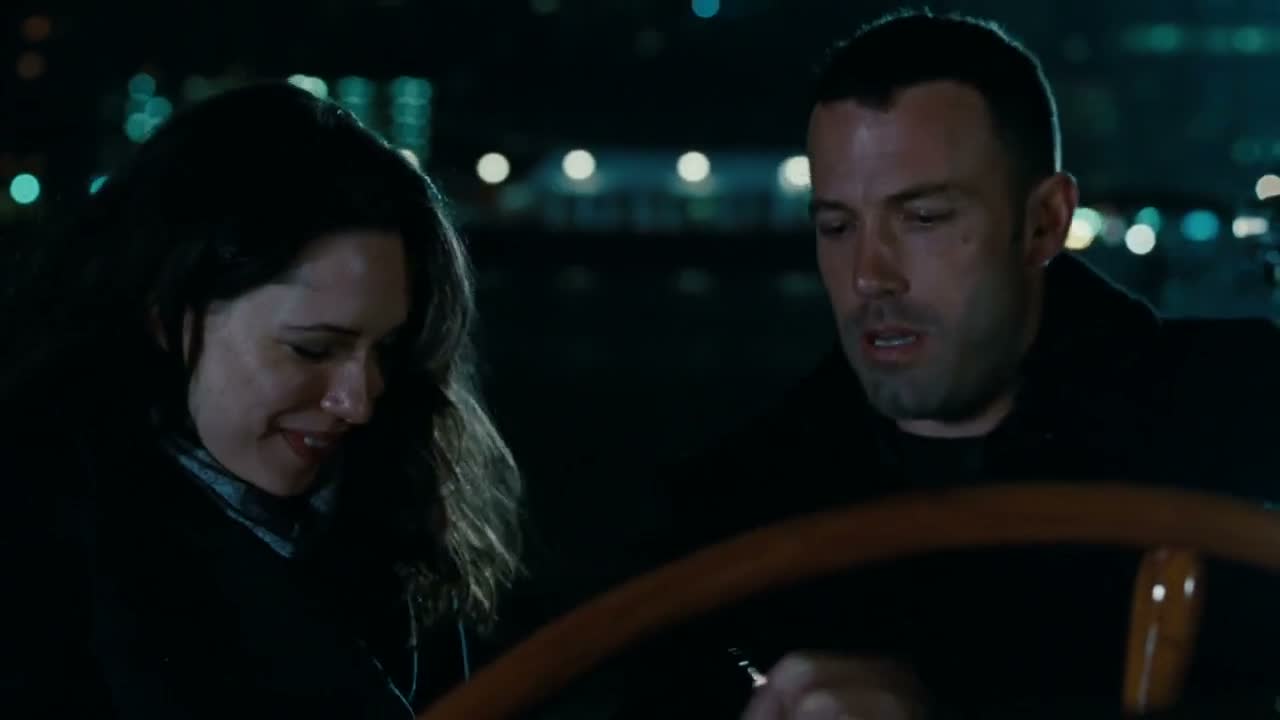
A chance meeting turns tender: Claire is crying over a bad week, and Doug tells her, “You got nothing to be embarrassed for,” then asks her out. “What's the worst that could happen?” he jokes — right before an FBI raid cuts the mood, hinting the date hides more than either admits.

First datesInterrogationsComfortingInvitingStrangersB1mediumamerican

Key moments

Start here, then watch the full scene
  1. Doug Makes His Life Sound Ordinary

    2:40–3:15
    35s

Doug Meets Claire at the Laundromat, explained

What happens

At a laundromat, Doug runs into Claire, who is quietly falling apart after a bad week. He comforts her, offers to buy her a drink, and asks her out — “What's the worst that could happen?” The film then cuts to an FBI raid, and later to their first date, where Doug and Claire trade stories about work, Charlestown and where they grew up.

What's really going on

The laundromat scene reads as a gentle meet-cute, but the film keeps shifting the ground under it. Doug comforts a stranger — “You got nothing to be embarrassed for” — then coaxes her into a drink with a joke, “What's the worst that could happen?” The answer lands almost at once: “FBI! Open the door.” Later, on the date, both of them perform versions of themselves. Claire explains her background by whether a family owned a boat, and Doug describes his job as breaking rocks and sliding “down the back of a brontosaurus.” The charm is real, but so is the sense that each is editing what they say, which is what makes the scene tense.

Key lines & what they mean

“No, you got nothing to be embarrassed for.”
Doug's quick reassurance, treating Claire's public tears as nothing she needs to apologize for.
“I like to have a good cry at the nail salon.”
A joke about where it is fine to cry, offered to make the tears feel ordinary rather than shameful.
“What's the worst that could happen?”
A throwaway line used to coax Claire into a drink, which the film answers almost at once with an FBI raid.
“I break rocks. Punch a ticket at the end of the day...”
Doug's deliberately dull version of his work, framing his life as manual labor that ends at a time clock.
“It just means a yuppie. Someone who's not from Charlestown, that's all.”
An explanation of the local nickname for outsiders, showing how clearly the neighborhood divides residents from newcomers.

Theme

  • Romance — A comforting stranger becomes a date, and the scene builds a fragile new connection out of a bad week.
  • Class — Backgrounds are measured in boats and neighborhoods, from Marblehead's poor to Charlestown's locals.

What this chapter teaches

Teaching points

Review right after watching
My level3/7

A1–C2 is the CEFR scale. Cards above the level you pick fade, and playback will not auto-pause on them.

The Town: your progress

Chapter 4 of 20 · about 67 min to go

← Previous
Up next · 05pull a jobThe scene: Doug Takes Claire Out on His Boat

Takeaways

What you walk away with
  1. The drink offer is a small excuse to keep talking.
  2. Class shows up the moment Marblehead is named.
  3. Owning or not owning a boat decides your worth in her hometown.
  4. The FBI raid reminds you what Doug actually does for a living.

People also search

Questions, then the lines
How do Doug and Claire meet?

They run into each other at a laundromat, where Claire is upset about a bad week; Doug comforts her, jokes with her, and asks her out for a drink.

Why is “What's the worst that could happen?” a notable line?

Doug says it to talk Claire into the drink, and the film immediately answers with FBI agents yelling at a door, turning the line into blunt irony.

What does “toonie” mean?

It is a local nickname for a yuppie, someone not from Charlestown; Claire says kids called her that because she was new to the area.

What do Doug and Claire talk about on their date?

Work and background: Doug says he breaks rocks at a sand and gravel company, and Claire explains she grew up in Marblehead, where status depended on whether your family owned a boat.