00:00 / 02:07
00:00 / 02:07

Rupert Pitches His Act to Jerry, Explained

The King of Comedy · 1982

Chapter 2 of 21 · 2'07"

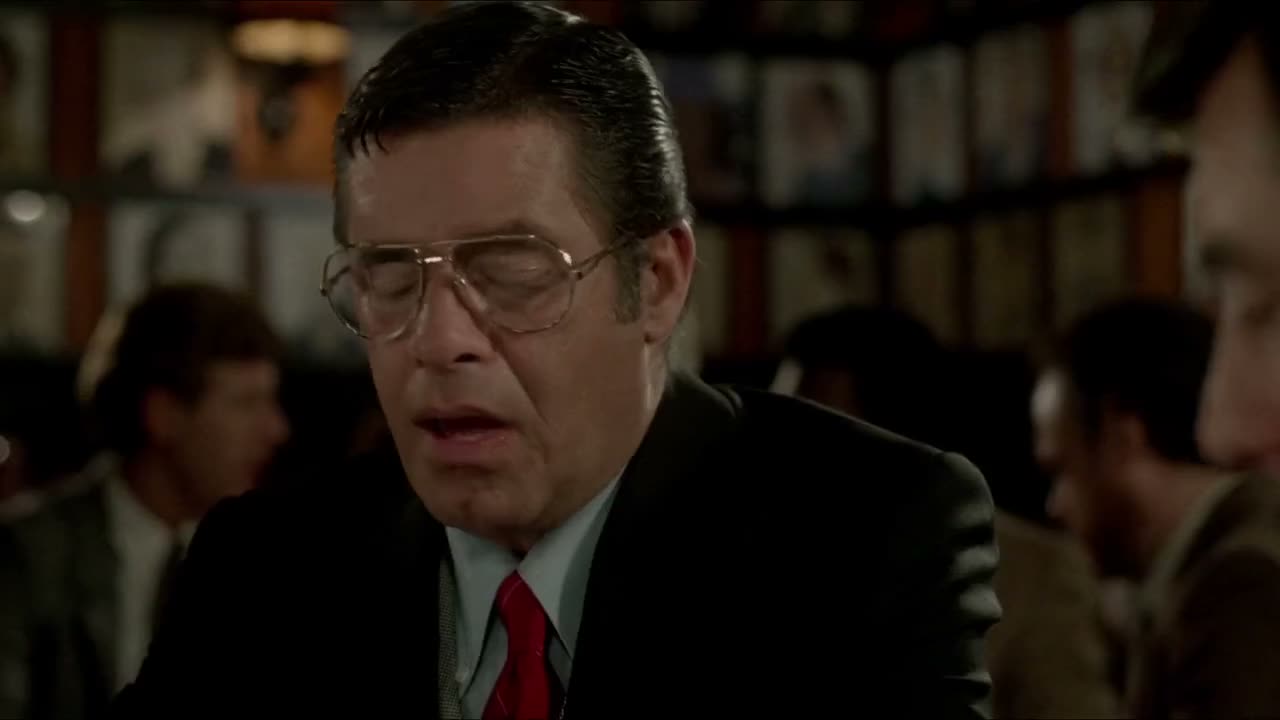
Rupert asks Jerry Langford to hear his comedy act, but Jerry answers with the industry cliché to start at the bottom. "You don't just walk on to a network show without experience." It sounds like advice; it's also a polite way to end the conversation.

Asking for helpJob interviewAskingExplainingStrangersB2fastamericanClean

Key moments

Start here, then watch the full scene
  1. Call My Office: Rupert's Rehearsed Fantasy

    0:52–1:20
    28s

Rupert Pitches His Act to Jerry, explained

What happens

After a TV taping, aspiring comic Rupert Pupkin corners Jerry Langford and begs the star to listen to his act. Jerry keeps it professional: start at the bottom, then call my office and ask for my secretary, Cathy Long. Rupert leaves beaming, certain this is his big break. He even offers Jerry dinner.

What's really going on

Jerry never says no. He answers with 'you've got to start at the bottom' and sends Rupert to 'call my office' — phrases that sound like a door opening but work as a door closing, the standard brush-off for hopefuls. Rupert hears a promise where Jerry offered a formality. The gap between them is the whole scene: Jerry is managing a stranger he can't shake, while Rupert has rehearsed this moment so often that reality hardly matters. 'You know how many times I've had this conversation in my head?' he asks. Even his dinner offer is compromised: 'I'm short on cash, but if you don't mind just appetizers, I'll take you to dinner sometime.' He wants to give, but has almost nothing to give.

Key lines & what they mean

“You don't just walk on to a network show without experience.”
You can't land a national TV spot with no track record; the industry won't let beginners skip the line.
“It's an old hackneyed expression, but it's the truth: you've got to start at the bottom.”
A cliché, but Jerry insists it's real: newcomers have to begin with the smallest jobs and work their way up.
“There's only one problem. I don't mean to interrupt you. I'm 34 years old.”
Rupert breaks in to say he's running out of time; 34 feels late to be starting a comedy career.
“I'm short on cash, but if you don't mind just appetizers, I'll take you to dinner sometime.”
Rupert wants to treat Jerry to dinner but admits he can't afford a full meal, only appetizers.

Theme

  • Ambition — Rupert's hunger for fame collides with Jerry's gatekeeping; the scene shows how showbiz keeps dreamers at arm's length.
  • Satire — A fan mistakes a formality for a promise; the scene satirizes how fame turns ordinary courtesy into a career dream.

What this chapter teaches

Teaching points

Review right after watching
My level4/6

A1–C2 is the CEFR scale. Cards above the level you pick fade, and playback will not auto-pause on them.

The King of Comedy: your progress

Chapter 2 of 21 · about 58 min to go

← Previous
Up next · 03take overThe scene: Rupert Rehearses Taking Over the Show

Takeaways

What you walk away with
  1. Every industry hides its rules inside a friendly talk.
  2. Starting low is sold as a law, not a choice.
  3. Encouragement can be the softest refusal.
  4. Poverty and pride share one sentence here.

People also search

Questions, then the lines
Why does Jerry tell Rupert to start at the bottom?

It's the standard line for a newcomer who wants a shortcut, and it lets Jerry stay friendly without promising anything. His follow-up — call my office and ask for Cathy Long — is more of the same.

Does Jerry actually intend to listen to Rupert's act?

The scene gives no sign of it. 'Start at the bottom' and 'call my office' are classic ways of moving a fan along, and Jerry mentions early that he has people waiting.

Why does Rupert mention that he's 34?

He fears time is running out. Jerry talks about years of honing a craft, but Rupert cuts in to say he's 34 — too old, in his mind, to keep waiting at the bottom.

Why does Rupert give Jerry the photo?

Rupert calls the photo his pride and joy and insists Jerry take it as a gift. It's a bid to turn a one-off meeting into a connection he can call on later.