
Dr. Strangelove or: How I Learned to Stop Worrying and Love the Bomb Speech: A Terrifyingly Simple Deterrent
Deterrence is the art of producing in the mind of the enemy...
· Dr. Strangelove or: How I Learned to Stop Worrying and Love the Bomb (1964)
AUDITION CUE SHEET & SCRIPT
Dr. Strangelove or: How I Learned to Stop Worrying and Love the Bomb (1964)
defining deterrence
Lines: 6 | Words: 45
Time: 0m 27s
Target Pace: 100 WPM
| # | Time | Dialogue & Cue Beats | Acting Notes / Subtext / Blocking |
|---|---|---|---|
| 1 | 1:13 | Deterrence is the art of producing in the mind of the enemy... | |
| 2 | 1:16 | The fear to attack. | |
| 3 | 1:21 | And so because of the automated and irrevocable decision-making process... | |
| 4 | 1:25 | Which rules out human meddling, The doomsday machine is terrifying... | |
| 5 | 1:34 | And simple to understand... | |
| 6 | 1:36 | And completely credible and convincing. |

Deterrence is the art of producing in the mind of the enemy...
The fear to attack.
No pauses, keep up with the actor
Space play/pause · ← → previous/next line · R replay
Why it's worth practising
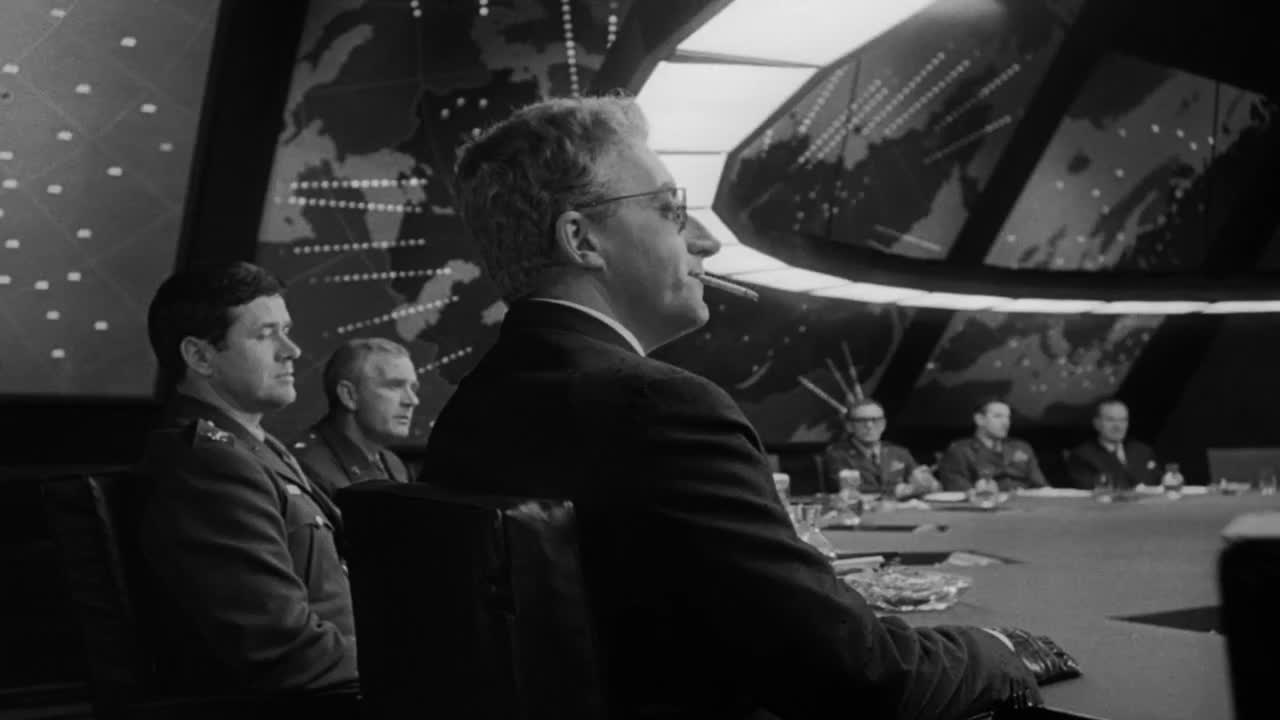
A clinical explanation of nuclear deterrence lands with absurd force because the delivery treats mass death like a tidy theory. The turn from definition to credibility gives actors a sharp control exercise.
Dr. Strangelove briefs the President and war cabinet after a nuclear crisis spirals beyond recall. He explains why an automatic doomsday system makes deterrence believable, even as the room edges toward catastrophe.
Delivery tip
Keep the first definition measured, then let the pace tighten on “rules out human meddling”. Land “credible and convincing” with dry certainty, not alarm.
Phrases in this speech
Sign in to save monologues and keep track of the lines you've practised.
More monologues from Dr. Strangelove or: How I Learned to Stop Worrying and Love the Bomb
 B218 lines · 1m 24s
The folks back home is countin' on ya.
Rally Before the Bomb RunDr. Strangelove or: How I Learned to Stop Worrying and Love the Bomb · 1964DeterminedMotivationalA plainspoken officer hides terror behind folksy confidence, then flips dread into pride and incentive. The fun is watching warmth, bluster, and dread jostle for control. B14 lines · 11s
Give elmo and charlie a blast and bump everything up to condition red.
Condition Red OrdersDr. Strangelove or: How I Learned to Stop Worrying and Love the Bomb · 1964IntenseConfrontationThe line shifts from uneasy small talk to blunt command in seconds. Its clipped rhythm, coded names, and calm menace make the stakes feel terrifyingly casual. B210 lines · 59s
But, today, war is too important to be left to politicians.
War Is Too ImportantDr. Strangelove or: How I Learned to Stop Worrying and Love the Bomb · 1964IntenseConfrontationThe speaker starts with a dry historical aside, then twists into blunt contempt and paranoia. It gives actors a clear shift from controlled logic to comic menace.- B27 lines · 27s
There will be only one course of action open.
The Wing Cannot ReturnDr. Strangelove or: How I Learned to Stop Worrying and Love the Bomb · 1964GrimConfrontationThe line lands like a verdict, moving from courteous small talk to irreversible military logic. Performers get a sharp exercise in controlled dread, with each pause making the last phrase feel heavier.
More monologues
 C121 lines · 1m 6s
Everything is safe. Everything is careful.
A Cruel Box SeatEscape Room · 2019GrimPower & MoneyThe speaker starts with stinging accusation, then widens into a cold defense of spectacle and cruelty. The shift gives actors a sharp study in controlled contempt and rising menace. C112 lines · 56s
I think all bullets should cost $5,000.
The $5,000 BulletBowling for Columbine · 2002WittyConfrontationChris Rock twists a serious gun debate into escalating absurdity, moving from deadpan proposal to mock outrage. The shift gives performers sharp timing practice and a bold punchline attitude. C19 lines · 23s
Do I have to tell you what kind of knife it was?
Controlled Courtroom FuryThe Lincoln Lawyer · 2011IntenseJustice & RevengeMickey's voice stays eerily controlled while the facts get uglier, then lands a final rhetorical punch. Great for practicing restraint, escalation, and courtroom pressure. C111 lines · 33s
I don't wanna come off like I'm hitting on her
Trying Not to Hit On HerWe're the Millers · 2013AwkwardLove & RomanceThe charm comes from the pivot from chivalry to awkward self exposure, then into vivid details and a quiet admission of attraction. It offers clear beats for timing, hesitation, and comic sincerity.