
“Oh, my God! Look at it! I wish I could take it with me.”
Why it's great
A child's wish to keep a memory in his pocket says everything about loss.
Register
Neutral
Use it yourself
I wish I could have seen her play live.
Chapter 13 of 20 · 3'21"
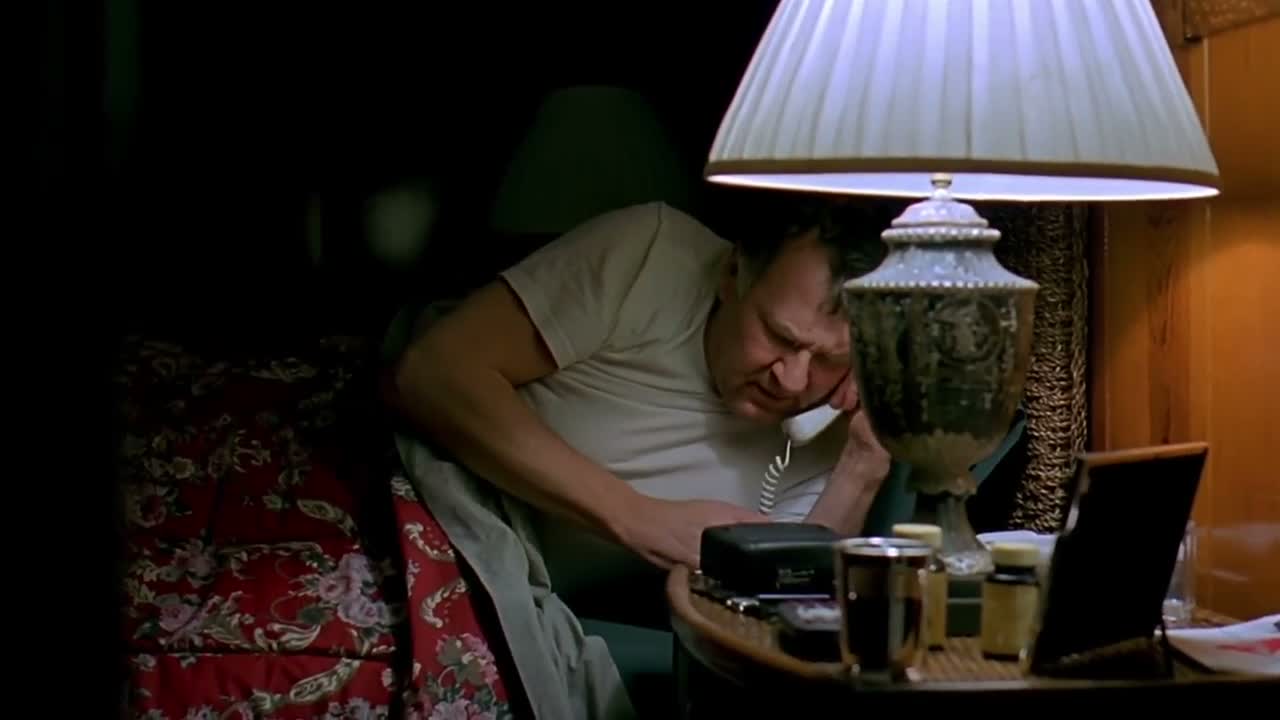
The machine stops mid-erase while Joel is reliving himself at four, hiding under the Hamlyn kitchen table. The technicians stare at a screen where he has simply vanished: "He's off the map." Their panic is the real drama — a job going wrong in a room they can't control.
Joel Is Off the Map
No One Wants to Call Howard
While Joel's procedure runs, his memory wanders back to when he was four, playing under the table in the Hamlyn kitchen. Upstairs, the machine suddenly stops erasing. Stan and Patrick check the screen, can't find Joel's position, and start arguing about whether to call Howard.
The comedy is that the professionals have no plan. One suggests calling Howard, the other refuses — "I can't call Howard." What worries them isn't just a machine error but what Joel might wake up as: "He could wake up all half-baked," someone says, imagining a mind left half-erased. Meanwhile the memory on screen is tender rather than technical: a four-year-old hiding from adults who never look at him, whispering "I want my mommy." The scene keeps cutting between the child's fear and the technicians' farce, and the two fears rhyme: neither the boy nor the men in the room have anyone steady to rely on.
A1–C2 is the CEFR scale. Cards above the level you pick fade, and playback will not auto-pause on them.
“Oh, my God! Look at it! I wish I could take it with me.”
A child's wish to keep a memory in his pocket says everything about loss.
Neutral
“He's off the map. He's off the map.”
The line repeats itself like a siren, turning a technical failure into dread.
Informal
“I can't call Howard. He's an unbaked cookie.”
Calling a colleague a half-baked cookie is a panic-stricken excuse, not a joke.
Informal
“This is bad. This is very, very bad news.”
The repetition and piled-up verys capture panic that is too flustered to be articulate.
Informal
 Up next · 14get to the bottom ofThe scene: Joel Disappears Off the Map
Joel's memory wandered into a part of his mind the map doesn't cover — he is "off the map" — so the program lost its target and stalled. The technicians have no manual answer, which is why they panic.
Calling the boss means admitting they lost control of a procedure they were trusted to run. One of them insists, "I can't call Howard," preferring to handle it — or hide it — themselves.
Literally, the tracking display can't place Joel; he has moved into unmapped territory. Figuratively it means lost, untraceable, beyond where anyone can follow — which is exactly why the technicians freeze.
No, though the fear runs through the scene. The worry that he could wake up all half-baked sets up the danger the film resolves later, when Joel wakes with his memories of Clementine gone but the feeling still there.
In the memory he is a four-year-old under a table while the adults talk above him. "No one ever looks at me" is a child's complaint, but it also fits the grown Joel, who is being quietly erased while everyone talks over his head.