00:00 / 03:04
00:00 / 03:04

Fire Hydrant Soaks a Car, Explained

Do the Right Thing · 1989

Chapter 5 of 20 · 3'04"

On the surface, a driver's car got soaked by kids at an open hydrant, and he wants an arrest. But the cops keep asking "where are they" and "what are their names," while his rage curdles into a rant about race. "Would you please calm down, sir, and tell us what happened?"—already treating him as the problem.

Police questioningThreatsThreateningConfrontingStrangersB1fastamerican

Key moments

Start here, then watch the full scene
  1. The Driver Demands an Arrest

    1:20–1:45
    26s
  2. Fake Names and a Warning

    1:45–2:16
    30s

Fire Hydrant Soaks a Car, explained

What happens

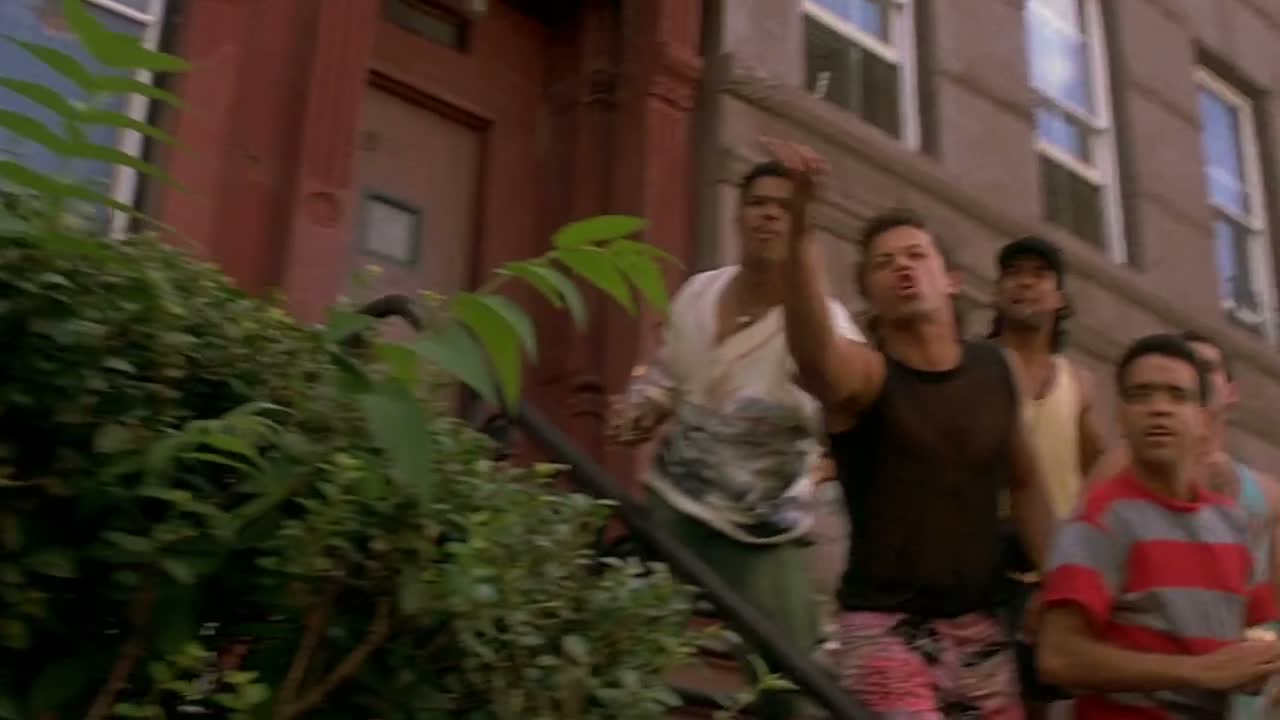
It's a hot summer day in Bed-Stuy. Kids crack open a fire hydrant and spray the street. When a passing car gets drenched, its driver storms out and demands the police arrest whoever did it. The officers calmly take his complaint, but his rage only builds as the block watches.

What's really going on

What looks like a neighborhood nuisance becomes a study in how authority handles anger. The driver is soaked, but the cops rarely ask about the water; they ask "where are they?" and "did you catch the name of the suspect?"—questions he hears as mockery, and his answer, "Moe and Joe Black," is pure contempt. When a watching neighbor, Da Mayor, is pressed to identify the kids, he shrugs them off: "those that'll tell don't know, and those that know won't tell." The officers never defend the driver's dignity; they manage him, then warn him to leave before the crowd strips his car clean. The scene shows how a small insult exposes the lines of race, power, and belonging already drawn across the block.

Key lines & what they mean

“This hydrant better not come back on again, or there's going to be hell to pay!”
A warning that anyone who opens the hydrant again will face serious consequences; "hell to pay" means real trouble is coming.
“I suggest you get to your car quick before these people start to strip it clean.”
A dry, polite threat: leave now, because the crowd will take everything off the car. It sounds like advice but is really a dismissal.
“Would you please calm down, sir, and tell us what happened?”
The officer's rehearsed calm—formally polite while treating the furious driver as a disturbance to be handled, not a victim to help.
“and those that know won't tell.”
Da Mayor's riddle: people who talk don't really know, and people who know stay silent. He refuses to inform on anyone.

Theme

  • Power — The police control the encounter, deciding whose anger counts and whose complaint gets heard.
  • Justice — A soaked car becomes a demand for arrest, but the law moves mainly to manage the complainant.

What this chapter teaches

Teaching points

Review right after watching
My level4/7

A1–C2 is the CEFR scale. Cards above the level you pick fade, and playback will not auto-pause on them.

Do the Right Thing: your progress

Chapter 5 of 20 · about 45 min to go

← Previous
Up next · 06might as wellThe scene: Stepping on the New Jordans

Takeaways

What you walk away with
  1. A heatwave shows how fast patience runs out on the block.
  2. The owner weaponizes politeness to demand an arrest.
  3. Police procedure collides with street slang and goes nowhere.
  4. Hell to pay warns that the consequences are personal.

People also search

Questions, then the lines
Why won't Da Mayor name the kids who soaked the car?

He's the block's witness, and the cops press him to identify them. Instead he answers with a riddle—those who talk don't know, those who know won't tell—refusing to become an informer on his own neighbors.

Why does the driver give the names Moe and Joe?

He doesn't actually know the kids. When the officer asks for a last name, he invents "Moe and Joe Black." It's contempt and frustration, not real information.

Are the police on the driver's side?

Not really. They take his complaint and ask for details, but their priority is clearing the scene. The final advice to leave before his car is stripped makes clear whose comfort they're protecting.

What does "hell to pay" mean here?

It's a threat of serious consequences. The driver warns that if the hydrant is switched on again, someone will have to answer for it.

Why are the kids playing in the hydrant at all?

It's a hot day, and opening a hydrant is a free way to cool off in the neighborhood. The block treats it as ordinary summer fun—until a passing car gets soaked and the owner demands an arrest.