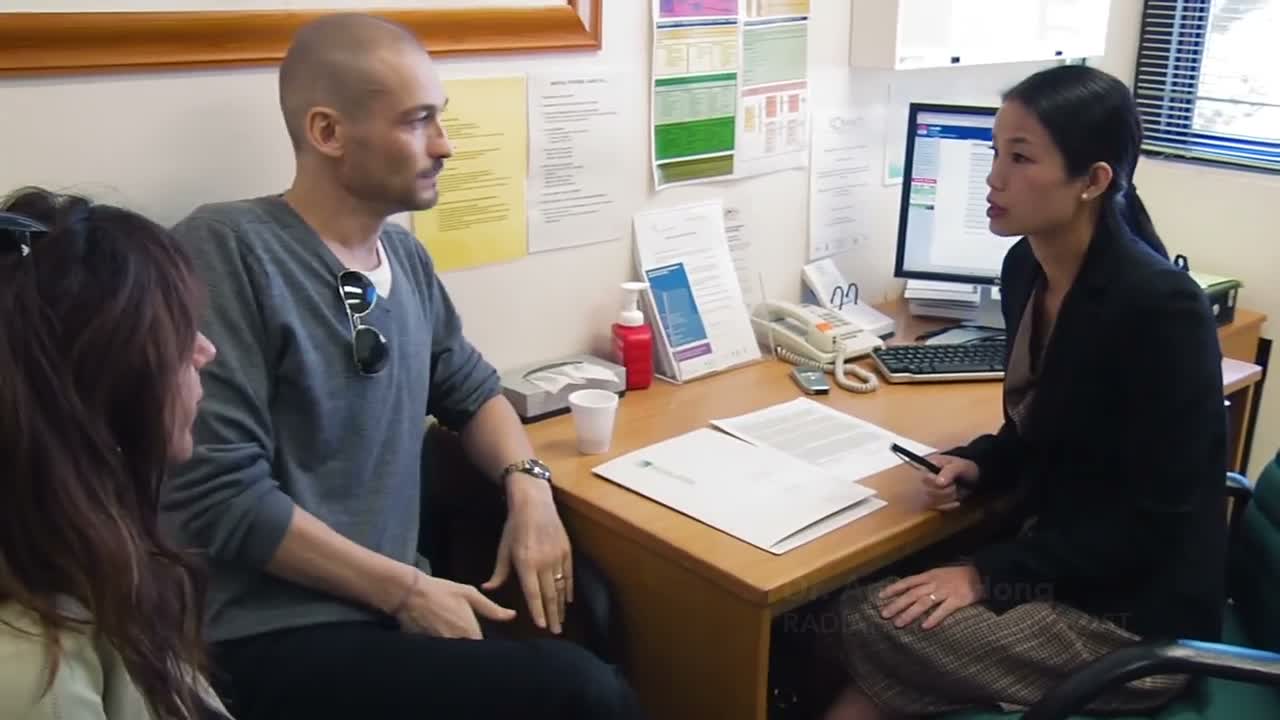
“I'm now in the minority group where I'm not responding to chemo.”
It delivers a devastating fact in the flat tone of a statistic, which makes it colder.
Neutral
Chapter 21 of 27 · 2'05"
Andy admits he's now in the minority of patients who aren't responding to chemo, and calls it "truly frightening." Instead of staying in fear, he tries to reframe it: fear and anger are outward and draining, while "the opposite of that is love, compassion, and forgiveness" — inward and healing.
❝ Monologue · 10 lines Nine Months Later, Chemo Stops Working
Andy Turns Fear Into Love
You Shouldn't Wait to Think This Way
Nine months into treatment, Andy has landed in the minority of patients whose cancer isn't responding to chemo, and he's honest about how frightening that is. Rather than sit in the fear, he describes a deliberate turn: fear and anger burn outward and drain him, while love, compassion, and forgiveness move inward and heal. He adds that no one should wait until they're sick to think this way.
This is the film's most distilled statement of its philosophy, and it comes from a man with every reason to give in. Andy reports the news clinically — "I'm now in the minority group where I'm not responding to chemo" — then names the feeling underneath: "it's truly frightening." What he does with that fear is the scene's real subject. He argues that fear and anger are "outward" and depleting no matter how much energy you invest in them, while love, compassion, and forgiveness are "an inward thing," a healing one. It would sound like a platitude if it weren't someone in treatment saying it about himself. That's why the closing line lands: you shouldn't wait to get cancer before you start to think that way. The scene turns a terminal report into an argument for how to live now.
A1–C2 is the CEFR scale. Cards above the level you pick fade, and playback will not auto-pause on them.
“I'm now in the minority group where I'm not responding to chemo.”
It delivers a devastating fact in the flat tone of a statistic, which makes it colder.
Neutral
“And the opposite of that is love, compassion, and forgiveness.”
One phrase flips the whole scene from draining emotion to the three things that heal.
Neutral
“You know you shouldn't wait to get cancer before you start to think that way.”
He turns his illness into advice, telling people not to wait for a crisis to wake up.
Informal
“Here I am, nine months later.”
A plain marker of time: months of treatment collapsed into here I am, still standing.
Neutral
“Because I think that brings together the whole psychological, emotional, spiritual side of a person.”
Three parallel adjectives bring the whole person together: a tender definition of healing spoken in a sickroom.
literary
I'm just trying to find some serenity, and some calm in it. I know that, you know, with fear and anger, which is probably the same thing, really, they're all outward. It's all depleting, you know. When you invest in it, it's all, it's kind of not helpful. And the opposite of that is love, compassion, and forgiveness. And if you can convert into that, that's an inward thing. That's a... that's a healing thing. And I guess it's part of my evolution to get through this.
Up next · 22battle throughThe scene: Andy's Scan Results and RadiationIt isn't. He says he's in the minority of patients who don't respond to chemo, which is why the situation feels so frightening.
Because the clarity he's found came at a terrible price. He'd rather people adopt that mindset before a crisis forces it on them.
It means completely exhausted, with no energy left. Andy uses it to describe how the treatment has drained him.
He groups them together because both point outward and burn energy without helping him, whereas love and forgiveness turn inward and heal.
He wants to convert the fear into love, compassion, and forgiveness, framing that inward turn as part of his evolution to get through this.