00:00 / 03:19
00:00 / 03:19

Clouseau Demands New Prison Furniture, Explained

A Shot in the Dark · 1964

Chapter 5 of 12 · 3'19"

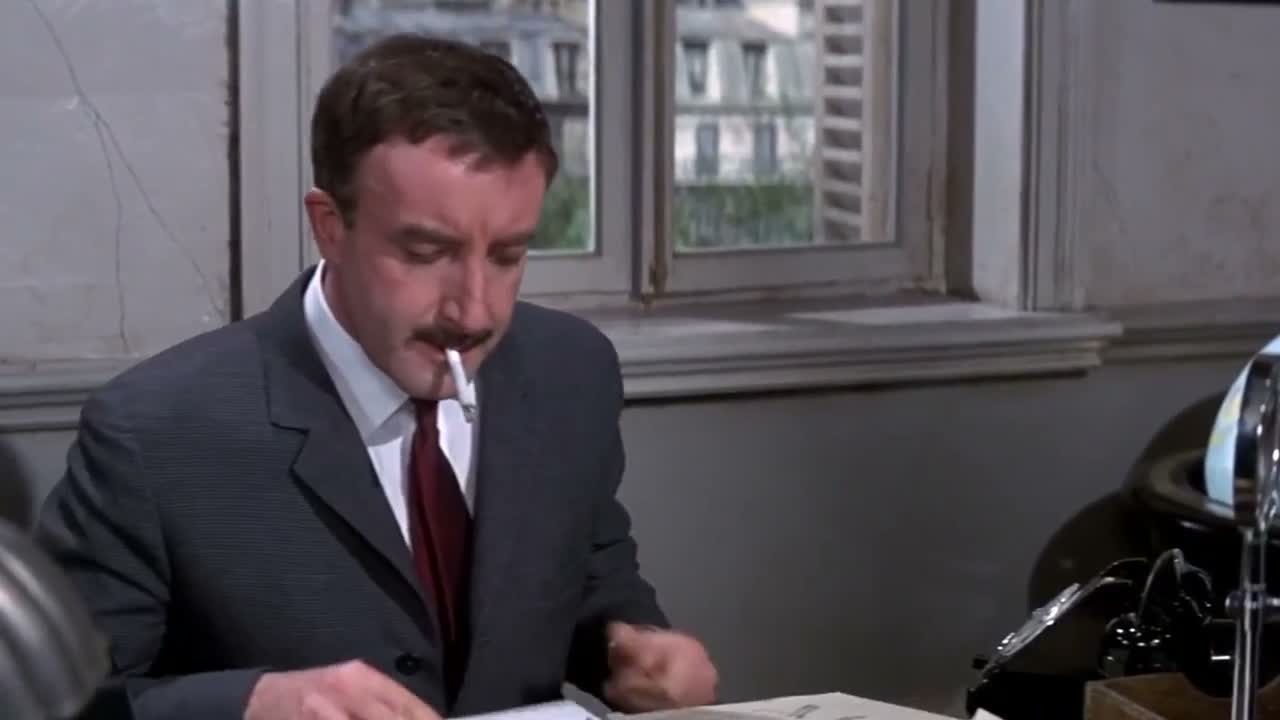
Clouseau sits down to interrogate Maria Gambrelli about the chauffeur's murder, but the nicest thing in the room is his own chair. Within minutes he is phoning the prison superintendent to demand modern furniture, declaring "You are running a house of correction, not a torture chamber." The interrogation barely happens.

InterrogationsPhone callsComplainingAskingPolice & suspectB2slowother-accentClean

Key moments

Start here, then watch the full scene
  1. ❝ Monologue · 7 lines Clouseau Demands Better Furniture for the Prison

    1:28–2:48
    81s
  1. ❝ MonologueThe furniture phone rant7 linesPractice page ↗

Clouseau Demands New Prison Furniture, explained

What happens

At the police station, Clouseau sits Maria Gambrelli down for a few simple questions. First he offers her a cigarette and lights it the wrong way round; then the talk turns to how uncomfortable prison chairs are, and he becomes obsessed with the furniture. He calls the prison superintendent and orders him to modernize the cells.

What's really going on

Clouseau's interrogation never gets past the small talk. He offers a cigarette, gets thanked, and promptly lights the wrong end; then a passing remark about uncomfortable chairs swallows the whole scene. "The furniture is deplorable, extremely bad taste," he fumes, and within moments he is on the phone to the prison superintendent, demanding modern cells. The absurdity is that he treats upholstery as a matter of principle — "Sometimes it's necessary to cut though the red tape and strike at the heart of the matter," he lectures, as if furniture were the crime. Maria, the actual murder suspect, sits largely ignored while Clouseau tells a civil servant "You are running a house of correction, not a torture chamber." The scene establishes his comic method: monumental confidence, zero focus, and a talent for turning a murder investigation into a complaint about chairs.

Key lines & what they mean

“Sometimes it's necessary to cut though the red tape and strike at the heart of the matter.”
Clouseau's justification for phoning the superintendent directly: skip the paperwork and attack the real problem — which, to him, is the chairs.
“You can't have a contemporary prison without contemporary furniture.”
His closing argument on the phone: modern cells demand modern furniture, delivered as if it were criminology.
“I always keep my important documents under lock and key because one can never be too sure.”
Said while handling Maria's dossier — Clouseau explaining his caution about files, though the caution never extends to his casework.
“We are not savages! This is not the Middle Ages.”
His outrage on the phone: bad prison furniture is, to him, a mark of barbarism rather than a minor budget issue.

Theme

  • Absurdity — Clouseau turns a murder interrogation into a crusade for better prison chairs, treating the furniture as the case's real mystery.
  • Satire — Prison bureaucracy gets lectured about modern methods and red tape by a detective who never asks a single useful question.

What this chapter teaches

Teaching points

Review right after watching
My level1/5

A1–C2 is the CEFR scale. Cards above the level you pick fade, and playback will not auto-pause on them.

A Shot in the Dark: your progress

Chapter 5 of 12 · about 23 min to go

← Previous
Up next · 06you don't sayThe scene: Maria Gambrelli's Testimony

Takeaways

What you walk away with
  1. Red tape means slow bureaucratic rules
  2. Under lock and key means safely locked away
  3. Deplorable is much stronger than bad
  4. Cope with means to handle a problem

People also search

Questions, then the lines
Why does Clouseau call the prison superintendent?

Because Maria mentions how uncomfortable the prison chairs are, and Clouseau decides the furniture is a disgrace worth fixing immediately — more urgent, in his mind, than the murder questions.

Does Clouseau actually interrogate Maria in this scene?

Barely. He offers her a cigarette, lights it the wrong way, and then the conversation drifts entirely to furniture. The promised 'few simple questions' are never really asked.

Why does the superintendent react badly to Clouseau's call?

Clouseau lectures him as if the furniture were a crime, insisting the prison is 'a house of correction, not a torture chamber.' The superintendent apparently insults him, and Clouseau hangs up calling him 'Filthy swine.'

Who is Maria Gambrelli and why is she in custody?

She is the maid accused of shooting the chauffeur Miguel Ostos, found with the murder weapon in her hand. Clouseau has been assigned to the case and doubts she is the real killer.