
“It's got to be personal.”
Por qué es buena
He makes a name a feeling, not a file number.
Registro
Informal
Úsala tú
The note's got to be personal, not a template.
Capítulo 4 de 15 · 6'24"
Roz searches for a name for the gosling, rejecting numbers because a name has to feel personal. The result, Brightbill, is one of the film's warmest beats. Later, a bedtime story is justified with a joke: "Storytelling is lying-adjacent, and I lie for a living."
❝ Monólogo · 16 frases Fink Tells Brightbill a Bedtime Story
❝ Monólogo · 2 frases Roz's task speech
Contracts, damage, warranty—love read out like a fault report.
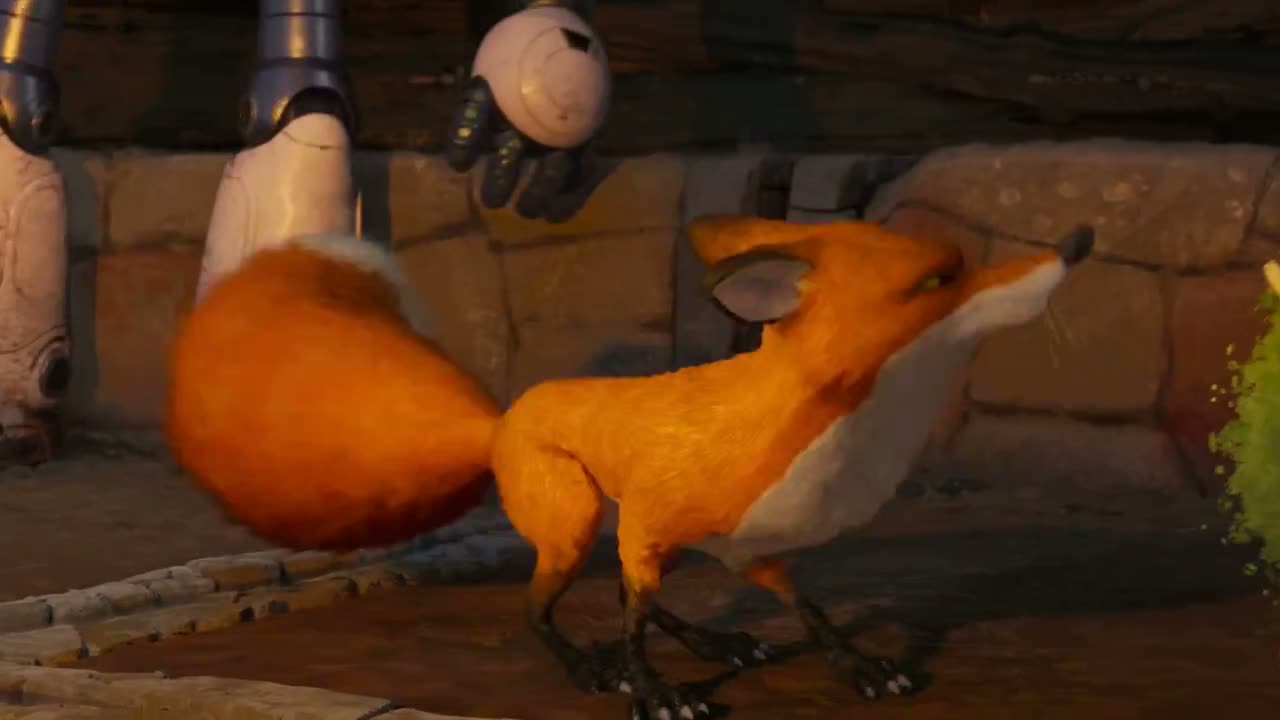
On the island, the animals mock Paddler for trying to cut down the biggest tree, while Roz and Fink move into his home without asking. Roz then hunts for a name for the gosling and settles on Brightbill. At night, Fink tells the chick a bedtime story.
The scene works on two levels at once. On the surface it is about naming a chick, and Roz's insistence that a name must be personal is both funny and quietly moving for a machine. Underneath, it is about what stories do: Fink, the fox who lies for a living, is the one who can soothe the gosling, and he says so outright — "Storytelling is lying-adjacent, and I lie for a living." The film is comfortable with the paradox that a made-up story can carry a true feeling. The closing joke, that a robot's emotional speech translates as "She loves you very much," makes the same point in reverse.
A1–C2 es la escala MCER. Las tarjetas por encima del nivel elegido se atenúan y la reproducción no se pausa en ellas.
“It's got to be personal.”
He makes a name a feeling, not a file number.
Informal
“Storytelling is lying-adjacent, and I lie for a living.”
It admits storytelling is a respectable cousin of lying, said by a professional liar.
Informal
“Kids need to feel safe and loved and all that junk.”
It lists the deepest needs of a child and then waves them off as 'that junk'.
Informal
“How did my mama come to me from so far away?”
A child asks the impossible question of how his mother found him from so far away.
Informal
“So, what are you gonna name him?”
A mundane naming question dropped into a tense moment is the joke.
Informal
Let me see here. Once, there was, uh, this island with a little gosling. Brightbill? And he was all alone. Because the rest of his family was destroyed. Not yet. And what this little gosling needed - was a mother. - Ooh. - [laughing] - So he looked up at the stars and asked the brightest one if it could send him one of their extras. Funny thing is there's this beautiful robot that happened to be sitting on the edge of that star. And she hears him. - Okay, now. - ROZ: Which is impossible since sound does not travel through the vacuum of space. Ugh. But she still heard him because she was listening with a different part of herself. A part that, up to that point, she didn't even know she had. Her heart.
And I will not leave until I have completed this task, which has delayed me, damaged me and violated my protocols, potentially voiding my warranty.
 Siguiente · 05do someone a favorLa escena: Brightbill Takes the Swimming Test
She decides a name has to be personal, rejects numbers, and processes the idea until the words bright and bill combine into Brightbill, the chick's new name.
Because the chick cannot sleep and stories are what comfort children. Fink, who lies for a living, is the natural storyteller in the group.
Roz and Fink move into it while he is away, which makes him furious. His reaction lines up with the earlier jokes about him being the island's laughingstock.
He says storytelling is lying-adjacent and that he lies for a living. It is a joke, but it also argues that a made-up story can carry real comfort.