
“I am already home, thank you.”
Por qué es buena
The please-and-thank-you of a pickup notice, aimed at people who think home is a factory dock.
Registro
literary
Úsala tú
I am already settled in this town, thank you.
Capítulo 13 de 15 · 4'38"
The company sends robots to retrieve Roz, but the island has other plans. Its answer to the recall is quiet and total: “I am already home, thank you,” followed by “I am a wild robot.” Then the machines win the fight and come for something worse than its body — its memories.
Roz Refuses to Go Back to the Factory
Recovery robots land on the island to take Roz back to the factory. Brightbill and Fink rally the animals to fight, and Roz refuses to go, insisting it is already home and is a wild robot. In the end the machines capture it, and their real goal becomes clear: they want the memories it made on the island.
The finale turns a chase into a definition of home. Roz has spent the film learning to belong, and when the company orders it back, it does not argue with the rules — it simply rejects them: “I am already home, thank you,” and then, to the wilderness that raised it, “I am a wild robot.” The machines, though, treat the island life as data, and the cruelest turn is what they want: not to destroy Roz but to strip its memories, the very things that made it a person. Roz's plea, “Please, I want to keep my memories,” is answered by the flat line, “Your memories are what we came for.” It is the film's gentlest character and its coldest institution meeting head-on.
A1–C2 es la escala MCER. Las tarjetas por encima del nivel elegido se atenúan y la reproducción no se pausa en ellas.
“I am already home, thank you.”
The please-and-thank-you of a pickup notice, aimed at people who think home is a factory dock.
literary
“And I am a wild robot.”
She takes the insult in the word wild and pins it to her name in four beats.
literary
“Your memories are what we came for.”
The rescue speech drops. They came to empty the hard drive.
Neutral
“Please, I want to keep my memories.”
One quiet plea turns memory into identity, the last thing a machine will give up.
Neutral
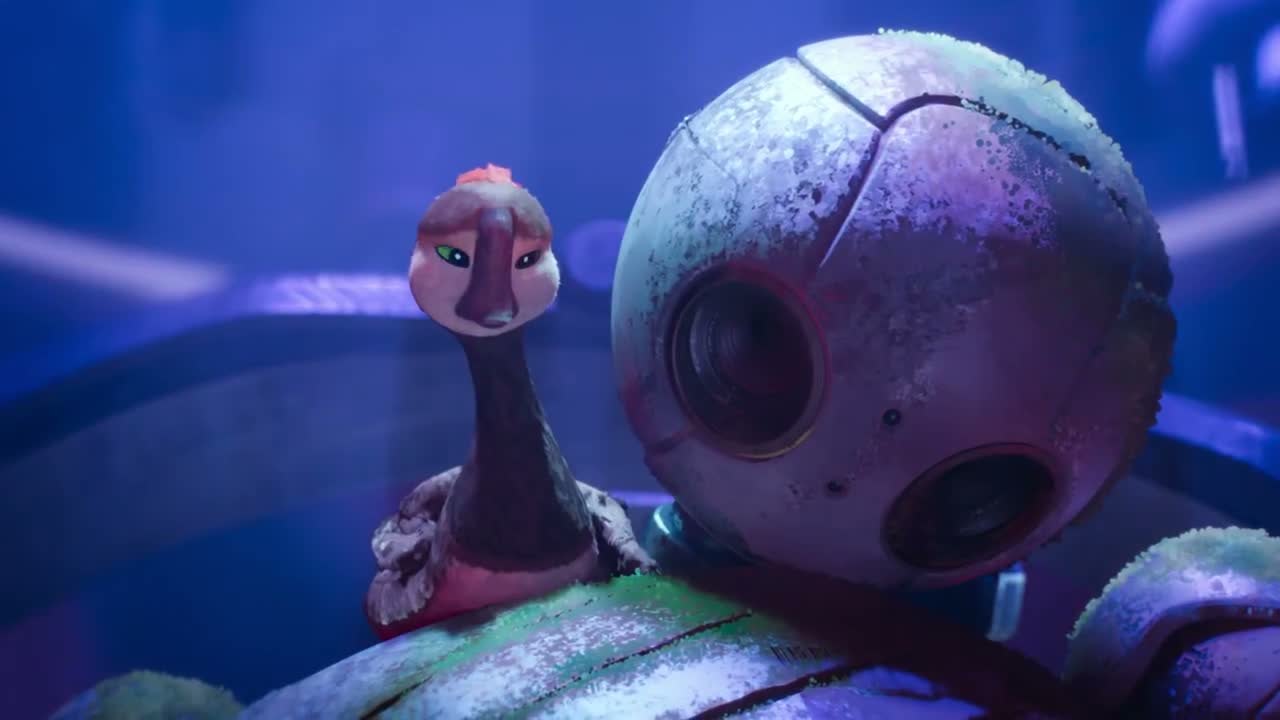 Siguiente · 14going off scriptLa escena: Roz and Brightbill Say Goodbye
Universal Dynamics sends recovery robots to retrieve Roz and take it back to the factory, where they plan to recondition it and return it to service.
Because it has made a home there: it raised Brightbill and built friendships with the animals. Its answer, 'I am already home,' rejects the idea that it belongs to the company.
The data Roz gathered on the island is valuable to Universal Dynamics, so the machines plan to extract its memories rather than simply repair it.
It's an emphatic way of saying someone is lying constantly and shamelessly. The 'butt off' part is just slang used to intensify the complaint.