00:00 / 04:08
00:00 / 04:08

Oliver Agrees With His Mother, Explained

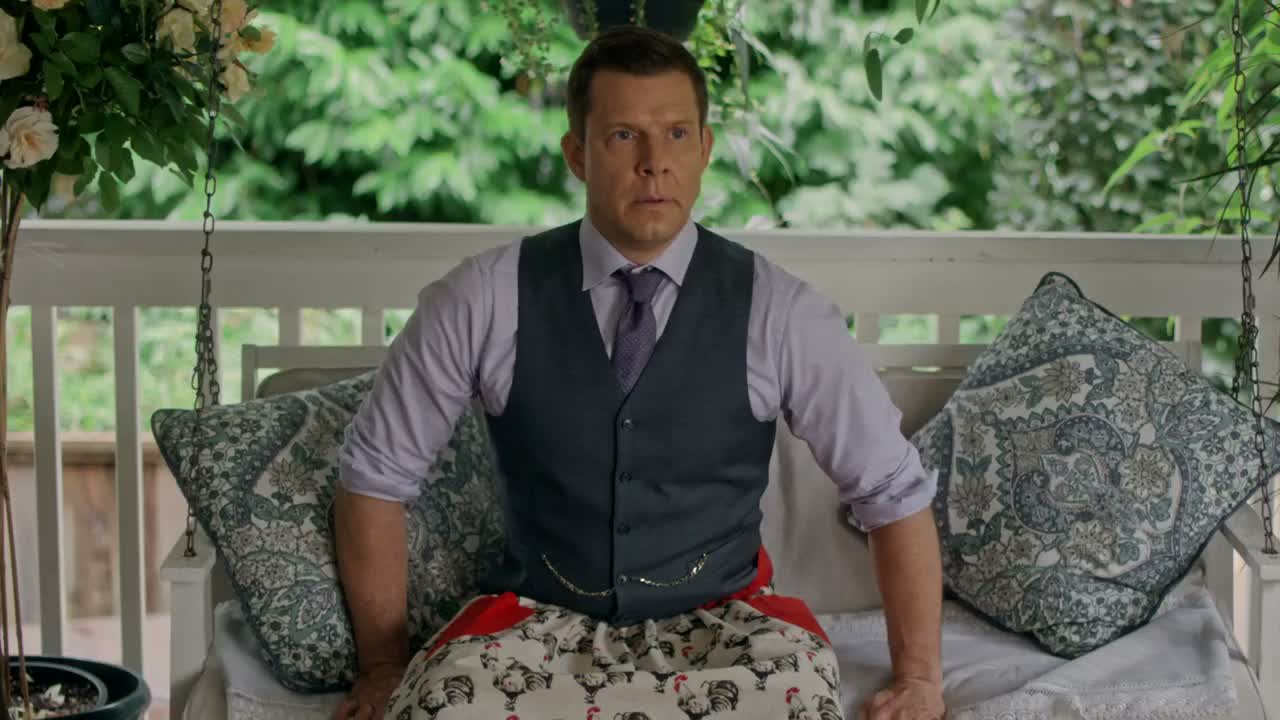
A backyard barbecue turns into a debate over a child's drawing, then into a small confession. After poking at the picture, one of them admits: "I can't believe I am about to say this, but..." - and finishes with "I agree with my mother." The joke is that agreeing feels like a defeat worth announcing.

Family dinnersPartiesConfessingSmall talkCoupleB1mediumamericanClean

Key moments

Start here, then watch the full scene
  1. I Agree With My Mother

    1:27–2:11
    44s
  2. ❝ Monólogo · 3 frases Oliver on why he planted the roses

    He takes the long, careful road and still lands on wanting her to feel at home.

    3:19–3:33
    14s
  1. ❝ MonólogoOliver on why he planted the roses3 frasesPracticar ↗

Oliver Agrees With His Mother, explained

What happens

At a backyard barbecue, the group studies a child's drawing and argues whether the figure is a firefighter. Someone jokes about fire lines versus fire lawns, and a visitor admits she cannot keep up with the talkative mother, who is "a handful." Then comes the punchline: "I can't believe I am about to say this, but..." - before agreeing with his mother.

What's really going on

The scene is light on its surface and pointed underneath. A children's drawing becomes a test of reading, and the banter about "fire lines" versus "fire lawns" lets the group show off without anyone losing. But the real beat is the confession that follows: "I can't believe I am about to say this, but..." then, a beat later, "I agree with my mother." The comedy is in the framing - agreeing is treated as something embarrassing, worth a dramatic build-up. It lands because the mother has just been described as "a handful," so siding with her is both a surrender and an act of love. The same tenderness shows up when someone says, "I just want to make her happy," and in the planted roses and the grandfather's watch: this is a scene about choosing to keep family close, even when it costs a little pride.

Key lines & what they mean

“What frightened little boy wouldn't want someone like that to come save him when everything's burning down around him?”
The rhetorical question that makes Fred the firefighter feel true: a scared child would want a hero to rescue him.
“I can't believe I am about to say this, but...”
A dramatic lead-in to an admission he finds surprising, setting up that he agrees with his mother.
“I wind it every morning, and it has never failed me.”
About his grandfather's pocket watch: a small daily ritual that stands for steadiness and old-fashioned values.
“I just want to make her happy.”
The simple reason behind his gestures, like planting the roses his mother loves.

Theme

  • Family love — The confession "I agree with my mother" and the planted roses show affection through small, stubborn gestures.
  • Pride — Agreeing is staged as an embarrassing defeat, yet the scene treats surrendering to family as the warmer choice.

Qué aprendes en este capítulo

Puntos de enseñanza

Repasa justo después de ver
Mi nivel0/4

A1–C2 es la escala MCER. Las tarjetas por encima del nivel elegido se atenúan y la reproducción no se pausa en ellas.

Signed, Sealed, Delivered: The Vows We Have Made: tu progreso

Capítulo 7 de 18 · quedan unos 47 min

← Anterior
Siguiente · 08made for each otherLa escena: The Fire Station on the Envelope

Preguntas frecuentes

La pregunta, luego la frase
Why does the group argue about the drawing?

They are trying to decide whether the child drew a firefighter, a superhero, or something else, and the details - a hose, orange scribbles, a "line" - become the evidence.

Why does agreeing with his mother feel like a big deal?

He frames it as something he can barely bring himself to say, joking about her being "a handful," so siding with her costs him some pride.

Who is Fred?

Fred is the friend in the child's drawing, and the group concludes he is a firefighter; the letter about him was sent to someone named John.

What does the pocket watch represent?

It belonged to his grandfather, and winding it each morning is his old-fashioned ritual, a quiet contrast with digital watches that need charging.