00:00 / 03:01
00:00 / 03:01

Calloway Exposes Harry Lime, Explained

The Third Man · 1949

Capítulo 1 de 17 · 3'01"

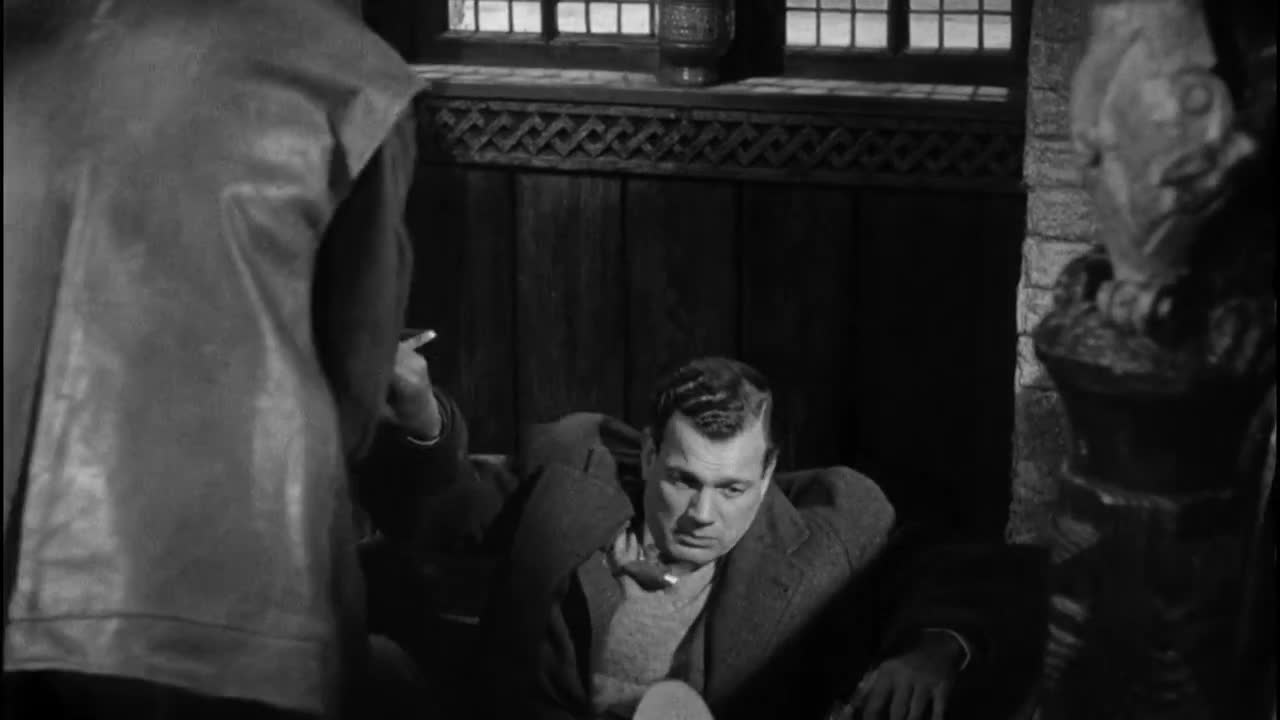
Calloway offers Martins a drink and then tells him the truth about his dead friend: Harry Lime was 'about the worst racketeer that ever made a dirty living in this city.' Martins, who insists Lime was the best friend he ever had, refuses to believe it, and the two men circle each other in a bar.

InvestigationPolice questioningWarningExplainingStrangersB2mediumamericanClean

Key moments

Start here, then watch the full scene
  1. The Writer Defends His Dead Friend

    0:22–1:18
    57s
  2. The Worst Racketeer in Vienna

    1:36–2:24
    48s
  3. The Police Want Martins Out of Vienna

    2:26–2:59
    33s

Calloway Exposes Harry Lime, explained

What happens

Calloway drives Martins into town and takes him to a bar. There he tells the shocked writer that Harry Lime, the friend he came to Vienna for, was the worst racketeer in the city. Martins defends Lime's memory, and Calloway answers with a drink, a warning, and a plane seat home.

What's really going on

The scene is an interrogation dressed as a drink. Calloway never raises his voice; he simply replaces Martins' grief with a fact, and the fact is worse than the death: 'He was about the worst racketeer that ever made a dirty living in this city.' Martins, still loyal, reaches for the language of his westerns, and Calloway turns that against him — friendship that 'sounds like a cheap novelette.' What Martins cannot yet see is the pattern Calloway is naming: a man who made his living by dirty dealings and could always 'pin it on a dead man.' The offer of army money and a seat on tomorrow's plane is not kindness so much as a deadline, and the warning 'you'll look so silly' is the real message.

Key lines & what they mean

“You've had a bit of a shock, haven't you? You could do with a drink.”
Calloway's opening move: he names Martins' state and offers a drink, framing the coming revelations as something a man needs steady nerves to hear.
“- Best friend I ever had. - That sounds like a cheap novelette.”
Martins reaches for the vocabulary of his pulp westerns to defend his friend, and Calloway's reply mocks the sentiment as something out of cheap fiction.
“He was about the worst racketeer that ever made a dirty living in this city.”
The sentence Calloway has been building to: not a eulogy but a verdict, naming Lime a professional criminal who lived off the city.
“You're not going to close your files at a dead man's expense.”
Martins accuses the police of wanting an easy ending, closing their files by blaming a man who cannot answer for himself.
“When I'm finished with you, you'll leave Vienna, you'll look so silly.”
A polite threat: Calloway predicts that the investigation will make Martins look ridiculous rather than uncover a conspiracy.
“Why don't you catch a few murderers for a change?”
Martins' jab at the police: instead of chasing small rackets, they should go after real killers for once.

Theme

  • Deception — Calloway strips away Martins' image of Lime, replacing a dead friend's legend with the truth that he was a racketeer.
  • Friendship — Martins' loyalty to a friend he barely knows is tested against the evidence that the friend preyed on the city.

Qué aprendes en este capítulo

Puntos de enseñanza

Repasa justo después de ver
Mi nivel4/6

A1–C2 es la escala MCER. Las tarjetas por encima del nivel elegido se atenúan y la reproducción no se pausa en ellas.

The Third Man: tu progreso

Capítulo 1 de 17 · quedan unos 48 min

Siguiente · 02hunt someone downLa escena: Martins Checks Into a Military Hotel

Ideas clave

Lo que te llevas
  1. A condolence call here doubles as a deportation notice.
  2. Calloway's politeness is a weapon, not warmth.
  3. One word, racketeer, rewrites a dead friend's whole life.
  4. The drink is offered before the knife goes in.

Preguntas frecuentes

La pregunta, luego la frase
Why does Calloway tell Martins about Lime so bluntly?

Because he wants Martins to leave Vienna and stop asking questions. The drink and the army money are meant to soften a message he intends Martins to take as final.

Is Calloway right about Harry Lime?

In this scene he presents it as established fact rather than opinion. The film treats Lime's racket as real, and Calloway's job is to shut it down, so the claim is not merely bait.

What does 'pin it on a dead man' mean?

It means blaming someone who cannot defend himself. Martins accuses the police of closing the case cheaply by putting the guilt on Lime now that he is dead.

Why does Martins defend Lime?

Because Lime was the best friend he ever had, or so he believes. He came to Vienna for Lime and cannot accept that the man he admired was a criminal.

What does Calloway want Martins to do?

He wants him to leave Vienna and stop digging. He gives him army money for a night at Sacher's Hotel and says a seat is being kept for him on tomorrow's plane.