
“I knew him for 20 years. At least, I thought I knew him.”
Por qué es buena
Twenty years of friendship is undone by the half-step back in at least, I thought.
Registro
Neutral
Úsala tú
I worked with her for years. At least, I thought I knew her.
Capítulo 14 de 17 · 2'38"
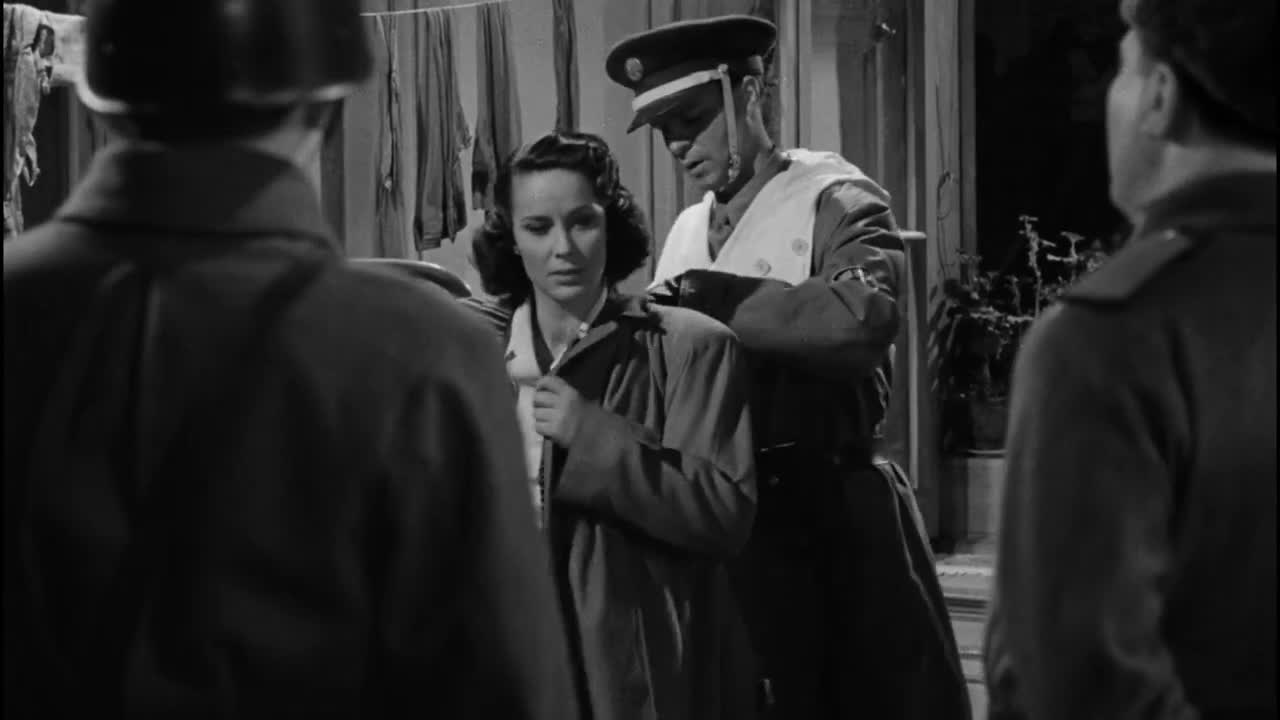
After learning what Harry Lime really did, Martins and Anna argue over who he was. She insists "Harry was real," while Martins offers a bleak view of human nature and belittles himself: "I'm just a hack writer who drinks too much and falls in love with girls." Anna says she is leaving Vienna.
Stop Making Harry in Your Image
The First Time I Saw You Laugh
Martins and Anna Schmidt sit in her flat and quarrel about the dead man they both cared for. Anna will not let Harry be reduced to his crimes, while Martins, who has learned more than he wanted, mocks his own trade — he is just a hack writer. Anna says she is leaving Vienna, and Martins asks, half joking, whether he ever had a chance with her.
The scene is the emotional centre of the film, and it is an argument about how to remember someone who turns out to have been a criminal. Anna refuses to let the investigation define Harry: "A person doesn't change because you find out more." For her he was a person, not a case. Martins, who has just learned the worst, cannot share that comfort — "I knew him for 20 years. At least, I thought I knew him" — and turns his bitterness on himself, calling himself a hack writer who drinks too much. What holds the scene together is that neither of them is simply right. Anna's loyalty is not blindness, and Martins' disillusion is not proof. When she says she is leaving Vienna and he asks whether he would have stood a chance, the film lets the personal and the moral overlap, and the joke they share is the only answer it offers.
A1–C2 es la escala MCER. Las tarjetas por encima del nivel elegido se atenúan y la reproducción no se pausa en ellas.
“I knew him for 20 years. At least, I thought I knew him.”
Twenty years of friendship is undone by the half-step back in at least, I thought.
Neutral
“Suppose he was laughing at fools like us all the time?”
Suppose opens a whole private joke at their expense, with the speaker included.
Informal
“Oh, please. For heaven's sake, stop making him in your image.”
Two pleas build to in your image, exposing that he is being remade to suit the speaker.
Informal
“Harry was real. He wasn't just your friend and my lover.”
Real against just restores Harry as a whole person rather than two partial roles.
Neutral
“I'm just a hack writer who drinks too much and falls in love with girls.”
Three mocking clauses strip the writer's glamour down to drink and crushes.
Informal
“A person doesn't change because you find out more.”
It separates a person from our opinion of them, refusing to let new facts rewrite him.
Neutral
“Look. I've got a splitting headache, and you stand there and just talk and talk and talk.”
Talk repeated three times hammers patience flat, and the headache does the rest.
Informal
 Siguiente · 15a dead man walkingLa escena: Calloway Tells Anna Harry Is Alive
Because they remember him differently. Anna knew him as a lover with faults, while Martins has just learned about his crimes and cannot reconcile the friend with the criminal.
Because she knew him as a man, not as his crimes. She refuses to let either of them reshape him into something more respectable, and insists that knowing more does not change who he was.
It means a headache so bad it feels as if the head is splitting. Martins uses it to complain that the talk is going on and on while he feels terrible.
Whether he would have stood a chance with her. He says she once told him to find himself a girl, and asks half-jokingly whether he ever had any chance.
Out of self-mockery. He drinks too much and falls in love with girls, and he admits he is not the serious author the lecture audience expects.