
“I'd like to see you again.”
Por qué es buena
It states a wish as a quiet request and lets the silence do the rest.
Registro
Informal
Úsala tú
I'd like to see you again when the project cools down.
Capítulo 4 de 15 · 2'04"
On the surface, two men leaf through old photos and trade childhood stories. Underneath, Adam is quietly revealing the loss that shaped him: "No, they died." Harry's easy chat is less small talk than a way of reaching for him.
Adam Opens Up About His Parents
Late one night in London, Adam and Harry look through old photographs. Adam quietly admits his parents died in a car crash just before he turned twelve, and that he's been trying to write about them. At the end of the night, he asks to see Harry again, but gently turns down his offer to stay over.
Adam can talk about his parents' death in a flat, almost throwaway register — "Not the most original of deaths" — but the photos prove it still holds him. He is a writer circling the one subject he can't finish. Harry, meanwhile, keeps the tone light and keeps coming closer, asking about family, then admitting he doesn't see his father much. The tension is in the mismatch: Harry reaches for intimacy, Adam keeps offering the edited version. When Adam finally says "I'd like to see you again," it's the first time he asks for something. Harry's offer to stay the night and Adam's quiet "Not tonight" show how carefully both are handling something fragile. Nobody says the word loneliness; the whole scene is built around it.
A1–C2 es la escala MCER. Las tarjetas por encima del nivel elegido se atenúan y la reproducción no se pausa en ellas.
“I'd like to see you again.”
It states a wish as a quiet request and lets the silence do the rest.
Informal
“No, thanks, it was a long time ago.”
It accepts an apology and closes the subject without making it heavy.
Neutral
“We'd have been friends for sure, though.”
A counterfactual that turns a missed past into a warm compliment.
Informal
“Right, but, when you're a fat kid, no one asks why you don't have a girlfriend.”
Self-mockery turns a painful childhood rule into a wry, universal joke.
Informal
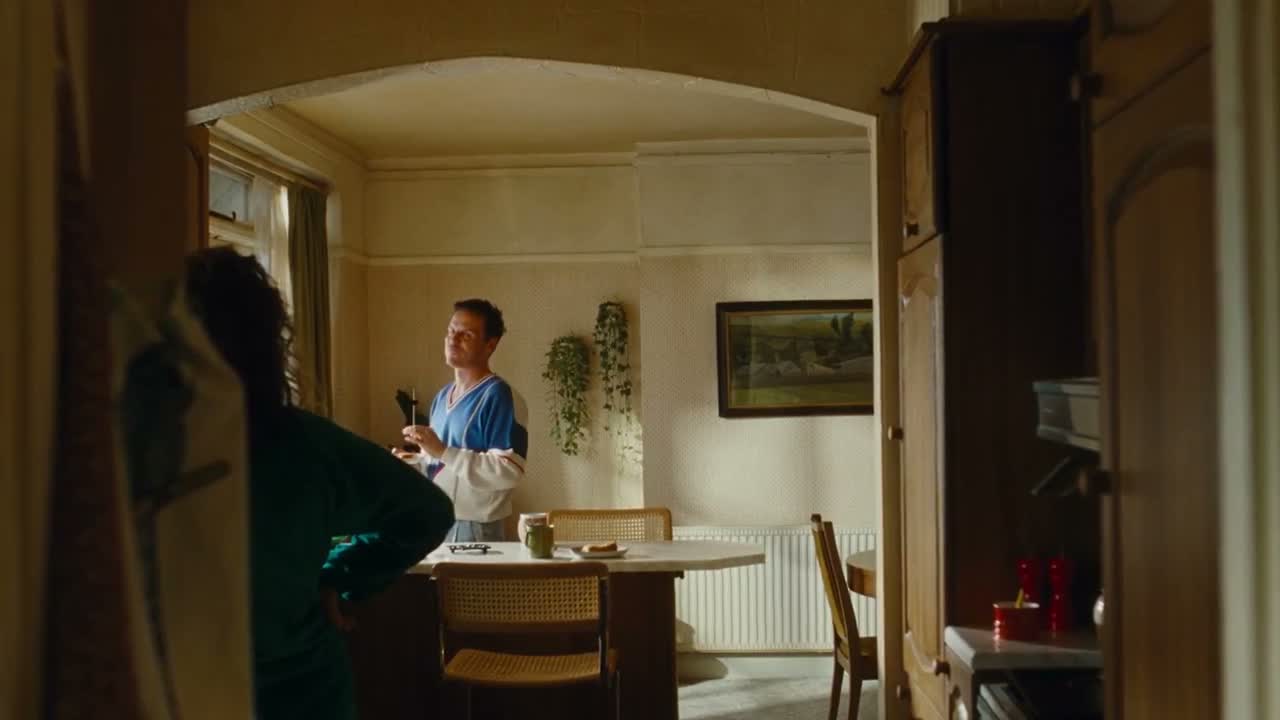 Siguiente · 05have your cake and eat itLa escena: Adam Comes Out to His Mum
It doesn't read as rejection. Adam is guarded and unpracticed at letting people close; he wants to see Harry again but brakes at the last step. "Not tonight" keeps the door open rather than closing it.
Dark humor is his armor. By calling it "not the most original of deaths," he controls how much the memory hurts and keeps Harry from feeling sorry for him.
In British slang, to bunk off is to skip something you're supposed to attend. He's recalling skipping football practice as a kid to watch the boys he had crushes on.
Not yet. This is the first night they really talk. Harry is the one pushing for closeness; Adam offers a future meeting but nothing more, so the relationship is still only beginning.