
“It's time to monetize the thing.”
Por qué es buena
One line starts the money-versus-love fight.
Registro
Informal
Úsala tú
It's time to monetize this hobby before it eats our savings.
Capítulo 11 de 23 · 3'12"
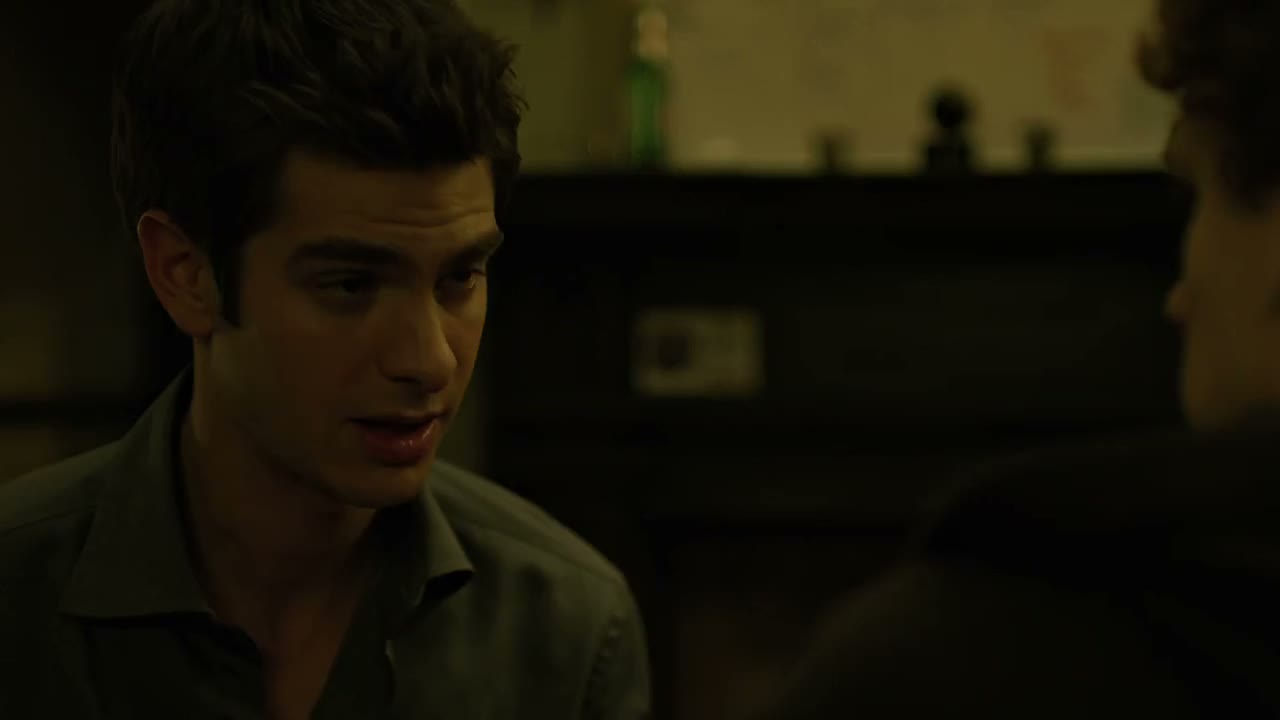
One partner wants to start making money from the site; the other refuses to add ads because they would kill what makes it cool. Their argument is interrupted by a cease-and-desist letter: "They came to me with an idea, I had a better one," Mark insists.
❝ Monólogo · 4 frases The Monetize-or-Cool Argument
The Cease-and-Desist Letter
Facebook is growing, and the two founders disagree about what to do next. One wants to monetize the site; the other calls its coolness a priceless asset and refuses ads. Then a cease-and-desist letter from the Winklevosses surfaces, and the trust between them starts to crack.
The scene is the friendship's first real fault line. The two founders want different things from the same success: one asks how to turn a hit into a business — "It's time to monetize the thing" — while the other treats popularity itself as the valuable thing that ads would ruin. Then the legal threat arrives, and the argument becomes about honesty. Mark's claim that he did nothing wrong, "They came to me with an idea, I had a better one," is clever and self-serving at once, and his quiet decision not to show his partner the letter is the real break. From here, the movie is less about building a company than about who trusted whom.
A1–C2 es la escala MCER. Las tarjetas por encima del nivel elegido se atenúan y la reproducción no se pausa en ellas.
“It's time to monetize the thing.”
One line starts the money-versus-love fight.
Informal
“They came to me with an idea, I had a better one.”
He reframes theft as competition and ideas as raw material.
Informal
“The grounds are our thing is cool and popular, and Harvard Connection is lame.”
He answers a lawsuit with a product ranking.
Informal
“I'm the guy that wants to help. This is our thing.”
A promise of loyalty that the rest of the film breaks.
Neutral
“That is a priceless asset I'm not giving up.”
A bottom line delivered without a single justification.
Neutral
“Look, a guy who builds a nice chair doesn't owe money to everyone who ever has built a chair, okay?”
A homely chair analogy that dissolves the whole ownership claim.
Informal
“Yes, have you ever heard so many different good things packed into one regular-sized sentence?”
A mock-grandiose question that makes one plain sentence feel like a jackpot.
Informal
We don't even know what it is yet. We don't know what it is. We don't know what it can be. We don't know what it will be. We know that it is cool. That is a priceless asset I'm not giving up.
 Siguiente · 12the minimum amountLa escena: Mark Answers with Minimum Attention
Whether to start making money from the site. Eduardo, thinking as the business side, wants revenue; Mark refuses advertising because he believes it would make the product uncool.
The Winklevosses claim that Mark stole their idea for Harvard Connection and built Facebook from it. The letter warns of legal action and is the first sign of the lawsuits to come.
Because Eduardo learns his partner kept a legal threat secret. The hiding, more than the idea dispute, damages the trust between them and points to the split later in the film.
It means something so valuable it should not be traded for money. Mark uses the phrase for the site's coolness, arguing that its appeal matters more than early advertising dollars.