“If you don't stop eating those chips you won't have any appetite for your lunch.”
It is the classic warning: one condition, one consequence, delivered as a fact.
Neutral
Capítulo 20 de 30 · 2'42"
A road-trip chat turns into the worst news Lolita could hear. She keeps asking to phone her mother at the hospital, and Humbert stalls, then refuses: "Because you can't." Finally he says it—"your mother is dead." She treats it as a sick joke and tells him to cut it out, and he simply repeats the sentence.
Small Talk on the Road
Your Mother Is Dead
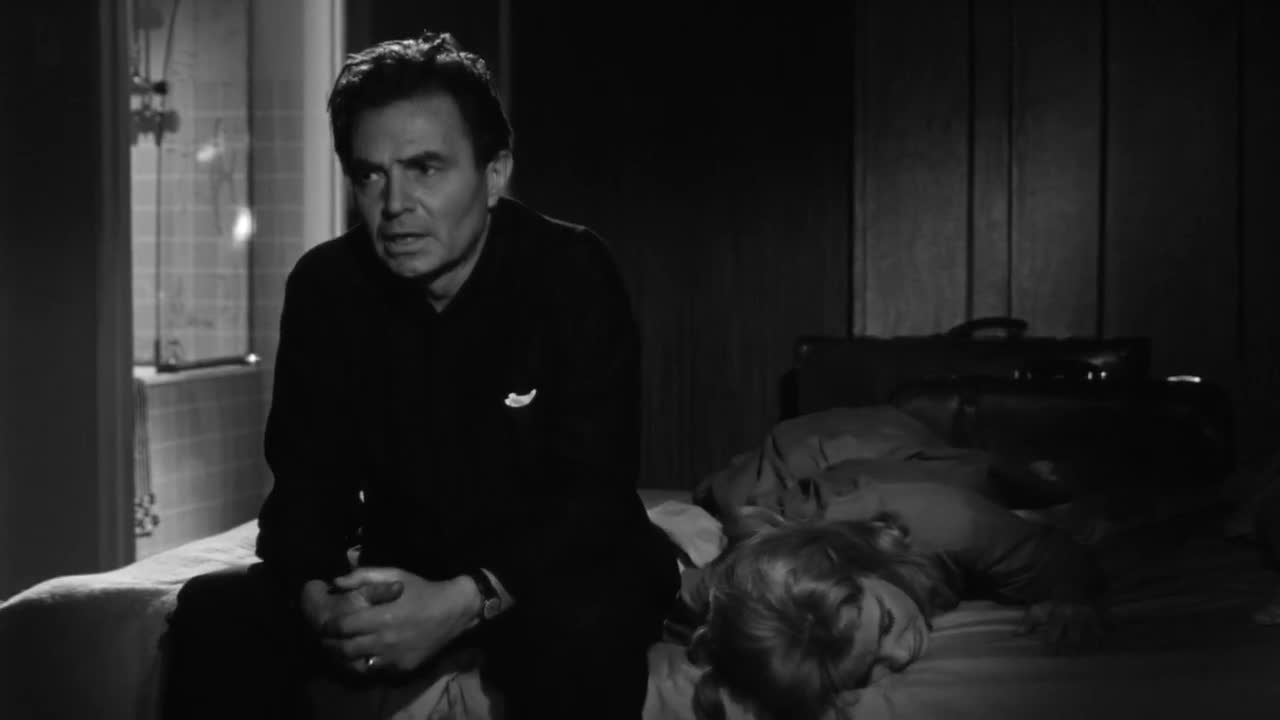
Driving toward Lepingsville, Lolita and Humbert pass the time with small talk about the Blarney Stone, movies and snacks. When Lolita asks to stop and call her mother at the hospital, Humbert puts her off, then finally tells her the truth: her mother is dead. She refuses to believe it.
The drive is a gentle comedy of small talk that hides a kidnapping. Humbert keeps Lolita distracted with talk of trips, movies and french fries, and every answer he gives is a way of managing her. When she asks to phone her mother, he stalls—"I think it will be just as well if you wait until we get to Lepingsville"—and when pressed, falls back on flat authority: "Because you can't." Only then does he admit the death, and the timing matters: he has already taken her far from everyone she knows. Lolita's reply, "Come on now, cut it out," shows she cannot absorb it, and Humbert's calm repetition of "Your mother is dead" is not comfort but a door closing. He needs her to know so that no future phone call can undo him.
A1–C2 es la escala MCER. Las tarjetas por encima del nivel elegido se atenúan y la reproducción no se pausa en ellas.
“If you don't stop eating those chips you won't have any appetite for your lunch.”
It is the classic warning: one condition, one consequence, delivered as a fact.
Neutral
“I think it will be just as well if you wait until we get to Lepingsville.”
The soft wording hides a hard delay: just as well makes a refusal sound like sensible advice.
Formal
“Come on now, cut it out. Why can't I call her?”
Cut it out dismisses the excuse, and the follow-up question refuses to be put off.
Informal
“Have you ever seen any of those-- You know, those, um, foreign films?”
The hemming and hawing is the point: she reaches for a grown-up topic and does not quite own it.
Informal
Siguiente · 21cross your heartLa escena: Lolita Makes Humbert PromiseBecause he has been hiding Charlotte's death. A phone call would expose the truth, so he delays and deflects until he has no choice but to tell her.
She hears the news as cruel teasing—"cut it out"—because Humbert has been hiding it and because, away from home, the death feels unreal to her.
He is cornered by her questions. Saying it also binds her to him: with her mother gone, she has no one else to turn to.
It is light talk to pass the drive—Lolita wishes she could kiss the famous Irish stone, and Humbert suggests a trip, keeping the mood relaxed.
Toward Lepingsville, where Humbert plans for them to stop, though he admits they will not arrive until after nightfall.