
“I have loved you from the minute I saw you.”
Por qué es buena
The present perfect with from makes the love feel continuous, still true at the moment of writing.
Registro
literary
Úsala tú
I have loved you from the minute you walked in.
Capítulo 10 de 30 · 2'07"
It looks like a love letter and ends like an eviction notice. Charlotte declares, "I have loved you from the minute I saw you," then orders Humbert to pack and go: "I am kicking you out." The letter's logic is that if he truly wanted her, he would stay—so leaving is proof he doesn't.
❝ Monólogo · 4 frases Charlotte Confesses and Evicts
❝ Monólogo · 5 frases Her case for his staying
She builds a conditional case that turns staying into a proposal he never agreed to.
Upstairs, Humbert is handed a letter from Charlotte. In it she confesses that she loves him—then, in the same breath, orders him to pack and leave. She calls it a landlady dismissing a lodger, effective at once, and admits the only thing that would prove he loves her back is if he stays anyway.
The letter sounds like two different women. One is romantic and religious, claiming divine guidance—"when I asked the Lord what to do about it, I was told to act as I am acting now." The other is a landlady doing paperwork, coolly evicting a tenant: "This is a landlady's order. I am dismissing a lodger." Charlotte uses that bureaucratic tone to protect herself. By making him leave, she avoids the risk of rejection, and she can tell herself the choice was never hers. The letter even turns his staying into a declaration of love—"that you want me as much as I do you"—so only his absence keeps her hope alive. It is a confession designed to be answered by obedience, and Humbert reads it in silence.
A1–C2 es la escala MCER. Las tarjetas por encima del nivel elegido se atenúan y la reproducción no se pausa en ellas.
“I have loved you from the minute I saw you.”
The present perfect with from makes the love feel continuous, still true at the moment of writing.
literary
“So you will please, at once, pack and leave.”
Polite words wrap a brutal order, and the contrast is what makes the sentence freeze the room.
Formal
“I am kicking you out. Go, scram, départez!”
The switch from polite letter to scram and a French command shows the mask slipping all at once.
Informal
“That you want me as much as I do you...”
The unfinished comparison says everything while pretending to hold back, which is its cruel charm.
literary
I have loved you from the minute I saw you. I am a passionate and lonely woman... ...and you are the love of my life. Now you know.
...the fact of your remaining would only mean one thing: that you.... That you want me as much as I do you... ...as a lifelong mate... ...and you are ready to link up your life with mine forever and ever... ...and be a father to my little girl.
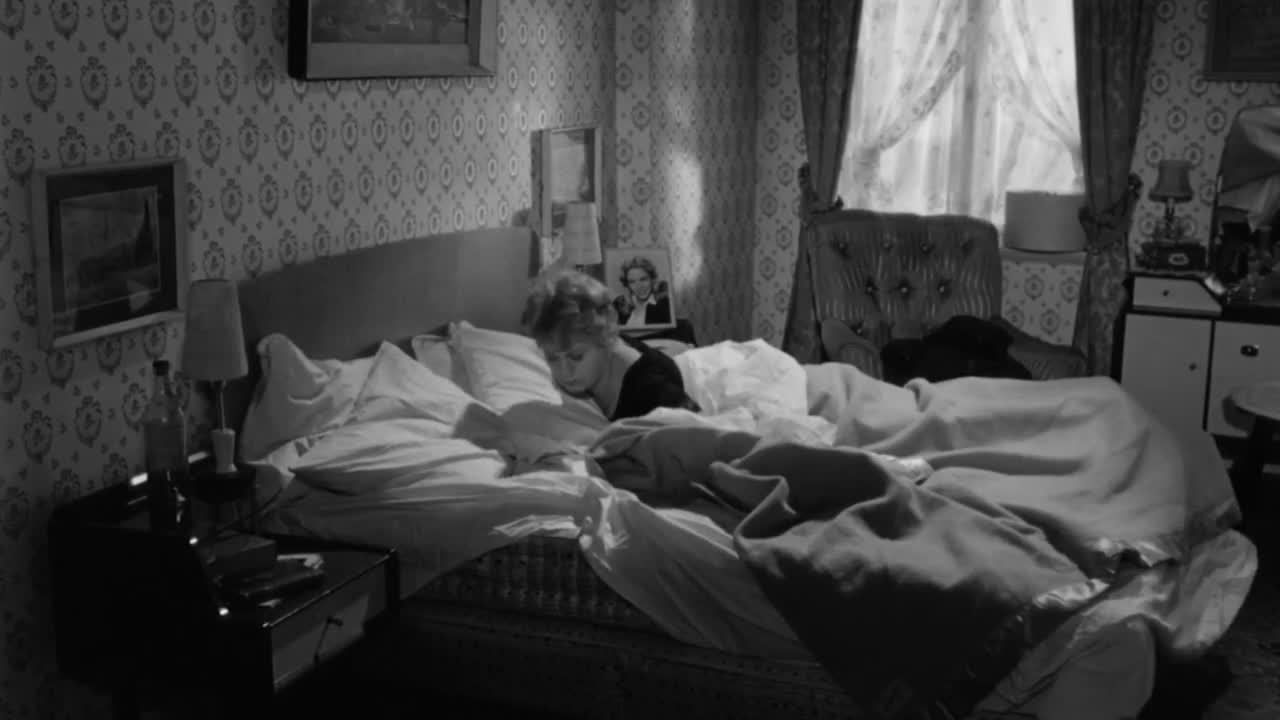 Siguiente · 11feel insecureLa escena: A Jealous Wife Questions Humbert
She is protecting herself. By ordering him to leave, she never has to risk being rejected; if he stays anyway, she gets to read it as proof he loves her.
She presents the eviction as forced on her—by God, by circumstance—so the decision looks like duty rather than wounded pride.
Partly. The love and loneliness are real, but the landlady language is a defense, letting her sound businesslike about a decision that clearly hurts her.
Charlotte makes that the test of his love: staying would mean he wants her as a lifelong mate and a father to Lolita, which is exactly what she is daring him to admit.
He is trapped. Leaving would lose Lolita, and staying means accepting Charlotte. The letter leaves him no comfortable answer, so he stays silent.