
“What difference does it make?”
Por qué es buena
A defensive shrug in question form, moving the fight from what she did to why he cares.
Registro
Informal
Úsala tú
What difference does it make which coffee I order?
Capítulo 22 de 30 · 2'42"
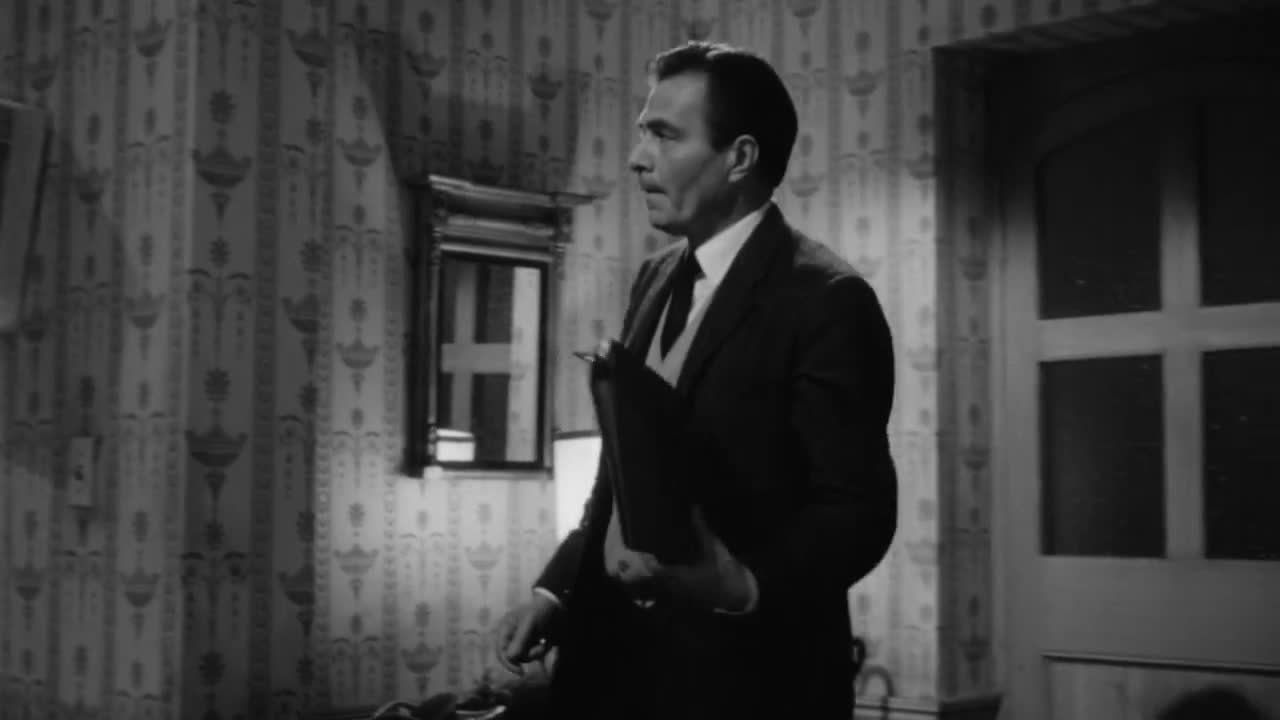
It starts as a curfew question and turns into a fight about control. Humbert says he saw Lolita at the Frigid Queen with two football players and lays down the rule—"no dates." She insists they just sat down, then throws his own behavior back at him: "You're a fine one to talk about someone else's mind."
The Only Friend I've Got
❝ Monólogo · 6 frases Humbert's list of favors
He stacks up gifts and chores to turn control into fatherly love, and each item sounds more defensive than the last.
Humbert interrogates Lolita about coming home late from school. He claims he drove past and saw her sitting with two boys at the Frigid Queen, and reminds her of their rule: no dates. Lolita denies it was a date, then mocks his own motives. He keeps digging, moving on to her Saturday piano lesson and her friend Michele.
A routine parental check becomes a power struggle because Humbert's rules are not really about Lolita's safety. He is jealous, and Lolita knows it. Her comeback, "You're a fine one to talk about someone else's mind," names exactly the thing he cannot defend: the reason he objects to the football captains is his own obsession. He answers by refusing the debate—"Don't avoid the issue. I told you no dates"—because arguing the substance would expose him. The same fear drives the rest of the scene: he objects to Michele's "searching looks" and asks, "Have you told her anything about us?" The list of concerts, museums and housework that follows is not affection but a ledger, an attempt to prove he deserves her compliance. Every answer he gives is about keeping her isolated and in view.
A1–C2 es la escala MCER. Las tarjetas por encima del nivel elegido se atenúan y la reproducción no se pausa en ellas.
“What difference does it make?”
A defensive shrug in question form, moving the fight from what she did to why he cares.
Informal
“Ho, ho. You're a fine one to talk about someone else's mind.”
A laugh and a reversal: she throws his judgment of the boys straight back at him.
Informal
“Whatever it was you had yesterday, I don't want you to have it again.”
He sidesteps the facts with whatever, then closes the door with what he wants.
Neutral
“Come on, she's the only friend I've got in this stinking world.”
She makes isolation her argument, packing hurt and anger into only and stinking.
Informal
“You never let me have any fun.”
Never plus any frames him as the permanent spoiler, a classic teenage accusation.
Informal
Whenever you want something I buy it for you automatically. I take you to concerts, to museums, to movies. I do all the housework. Who does the tidying up? I do. Who does the cooking? I do. You and I, we have lots of fun, don't we, Lolita?
 Siguiente · 23the facts of lifeLa escena: The School Psychologist Visits Humbert
He is jealous and wants to keep her to himself. The rule is dressed up as protecting her from "nasty-minded boys," but it is really about control.
She says Roy and Rex just happened to sit down with her at the Frigid Queen. Humbert insists it was a date anyway, and the argument never settles it.
Michele gives him "searching looks" and is close to Lolita, so he fears she may suspect their relationship. He asks if Lolita has told her anything about "us".
Concerts, museums, movies and all the housework—he presents his care as a debt she owes him, rather than as affection.
It is a sarcastic shot from Lolita: Humbert is the last person who should criticize anyone else's mind, since his own interest in her is the real problem.